
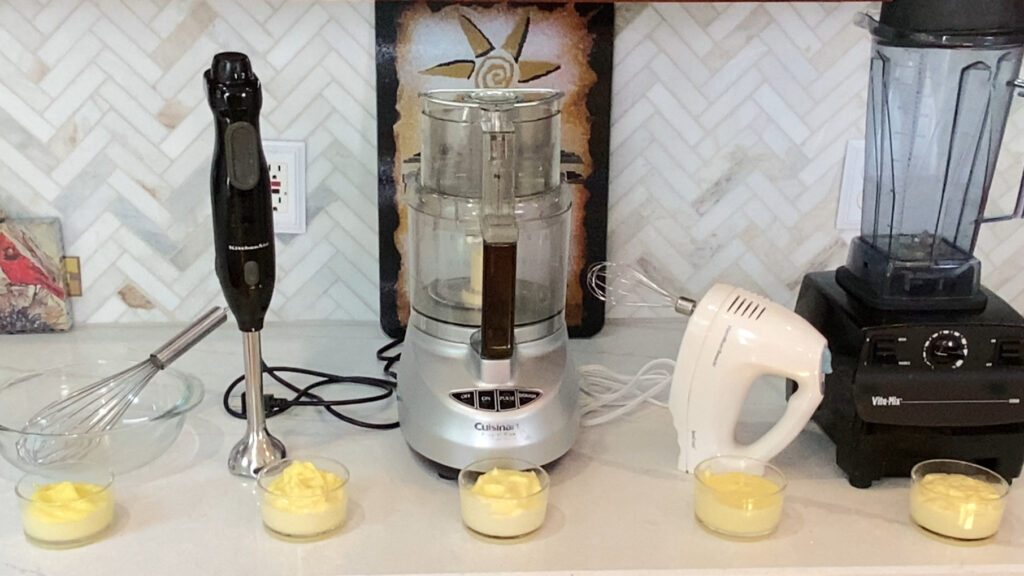
Mayonnaise looks like a kitchen miracle — two ingredients that don’t want to mix, held together into something smooth, rich, and glossy. But it isn’t magic. It’s chemistry, and once you understand it, you can make mayonnaise with whatever’s already sitting on your counter: a whisk, a hand mixer, an immersion blender, a food processor, or a regular blender. Same ratio, same result, five different paths to get there. You just need to follow the Mayonnaise Formula.
Why This Works
Egg yolk contains lecithin — a molecule with one end that loves fat and one end that loves water. When oil is introduced slowly, lecithin grabs each droplet and suspends it in the watery part of the yolk. That’s an emulsion: two things that don’t want to mix, held together anyway.
The reason oil goes in slowly at the start isn’t tradition — it’s chemistry. Lecithin can only wrap so many oil droplets at once. Add oil too fast before the emulsion is established, and you overwhelm it before it has a chance to take hold. That’s what causes broken mayonnaise (more on fixing that below).
The Formula
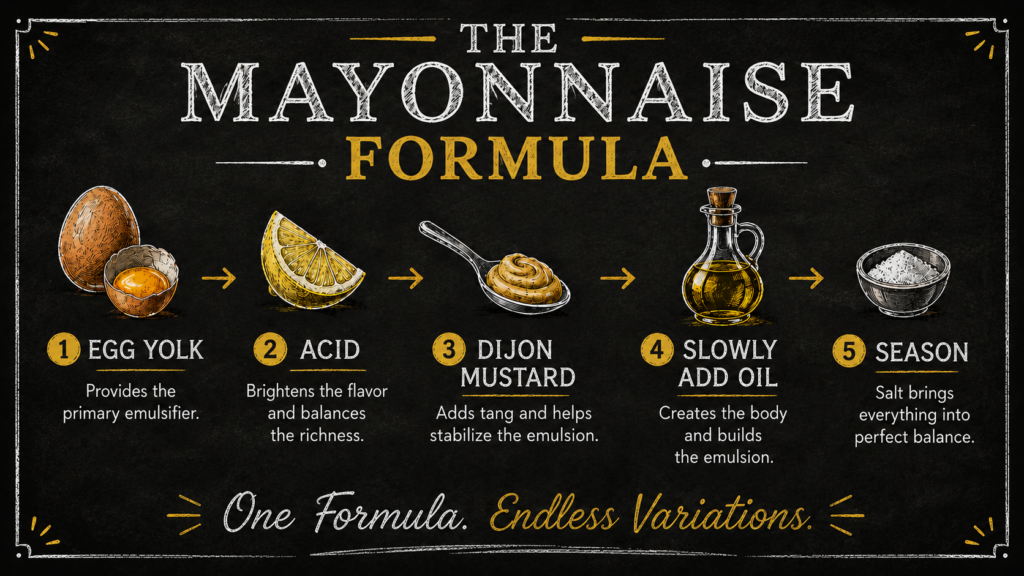
- 1 egg yolk — the emulsifier, does the actual work
- 1 tbsp lemon juice or vinegar — brightens the flavor and helps stabilize the emulsion
- 1 tsp Dijon mustard — adds tang and backup emulsifying insurance
- 3/4 cup to 1 cup neutral oil — creates the body, added slowly
- Salt, to taste — brings everything into balance
This is the base ratio for a single-yolk batch (the whisk or immersion blender method). Larger-batch methods scale up — see the method notes below.
How to Make It (Immersion Blender Method)
This is the fastest, most consistent method, and the one used throughout this post — a tall narrow container and an immersion blender.
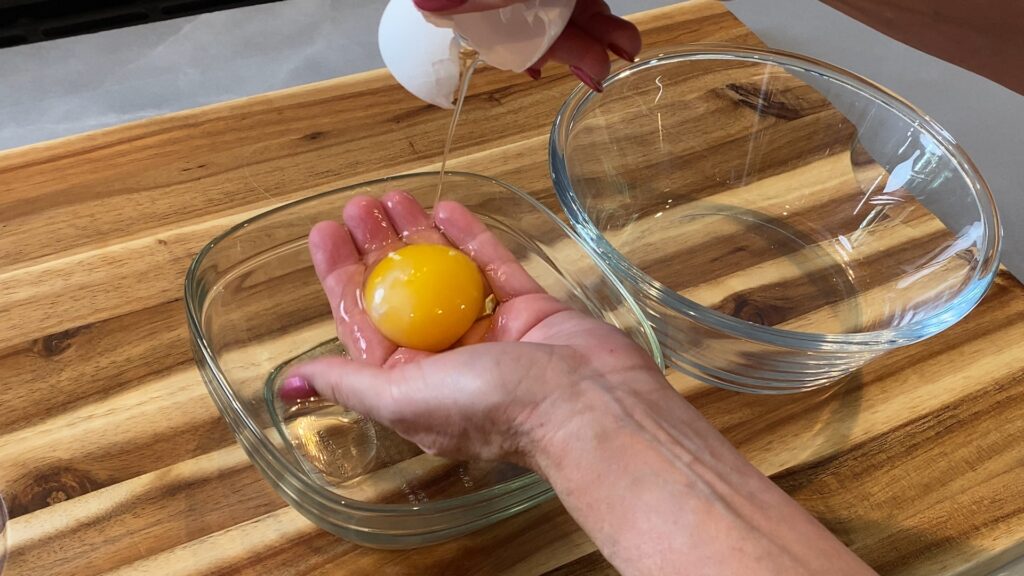
- Add the yolk, Dijon, and acid to a tall narrow container.
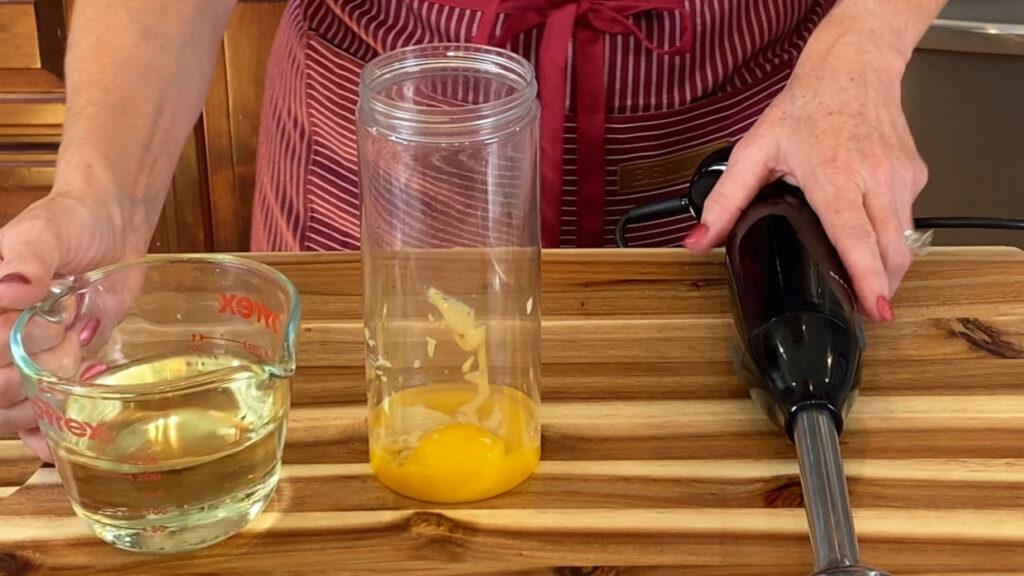
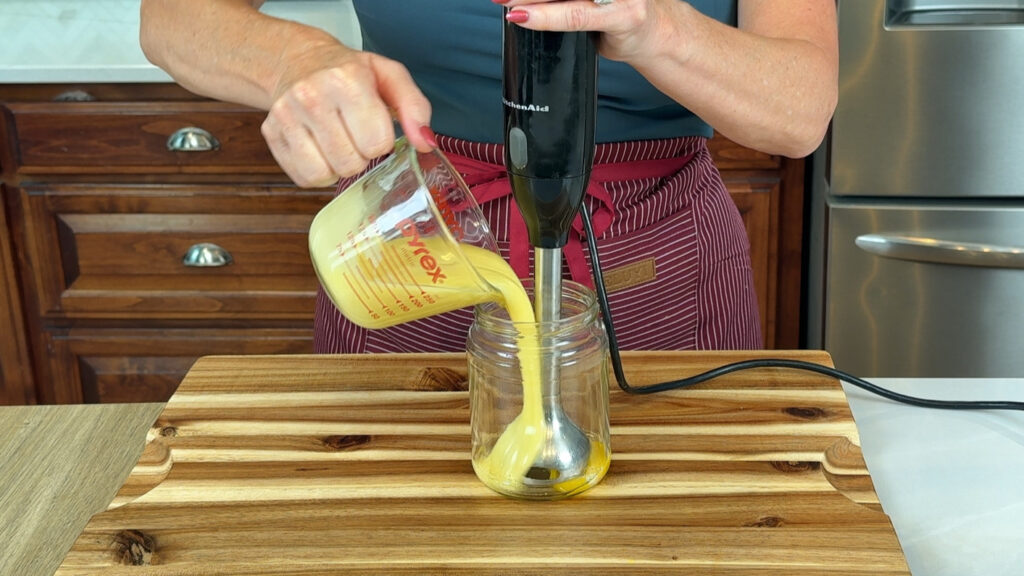
- Pour in all the oil at once — don’t stream it in for this method.
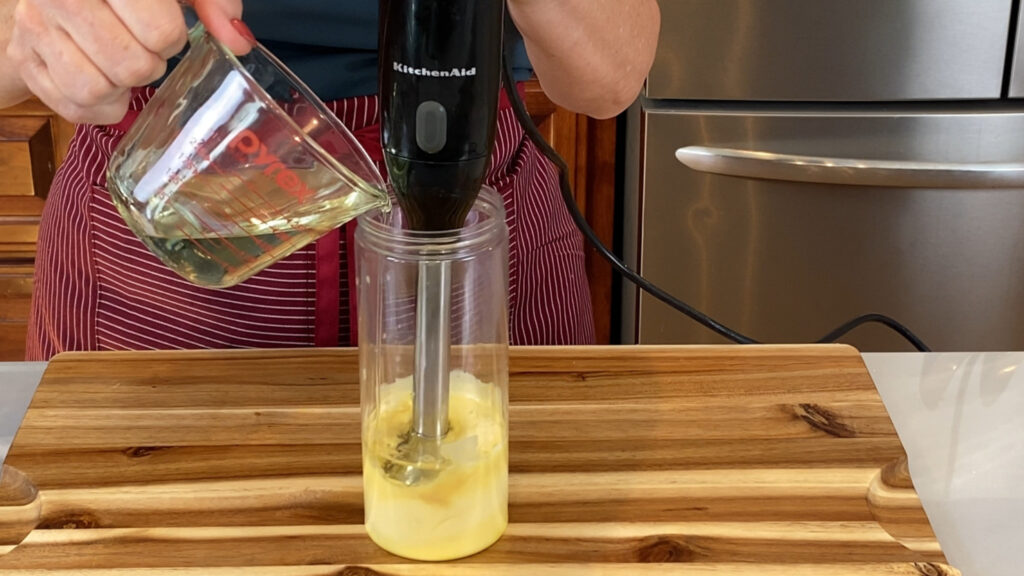
- Insert the immersion blender all the way to the bottom of the container. Turn it on and hold it still for several seconds — you’ll see the emulsion begin to form right at the blade.
- Once it’s established at the bottom, slowly draw the blender upward, pulling the emulsion up through the rest of the oil. Ten to fifteen seconds, done.
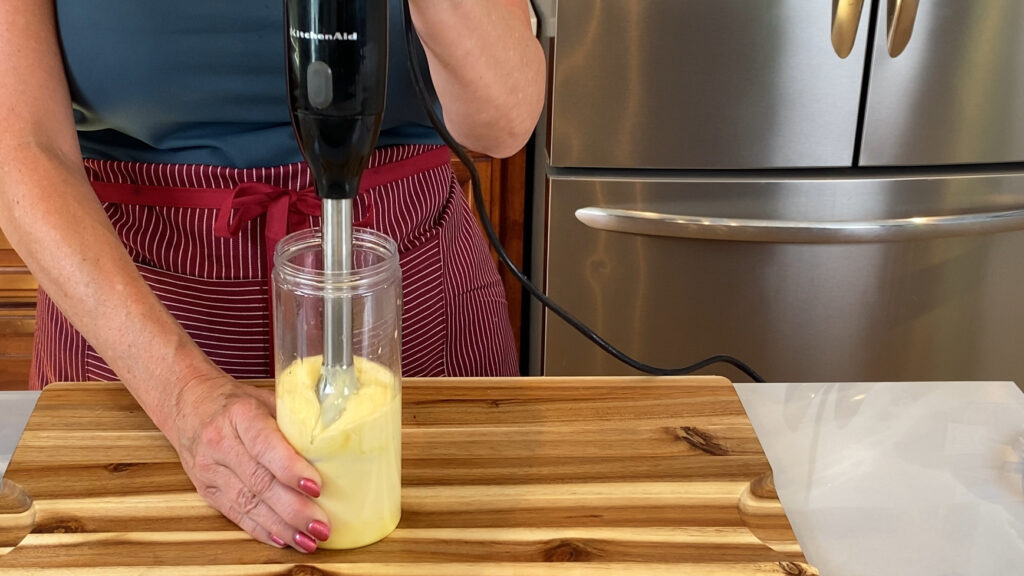
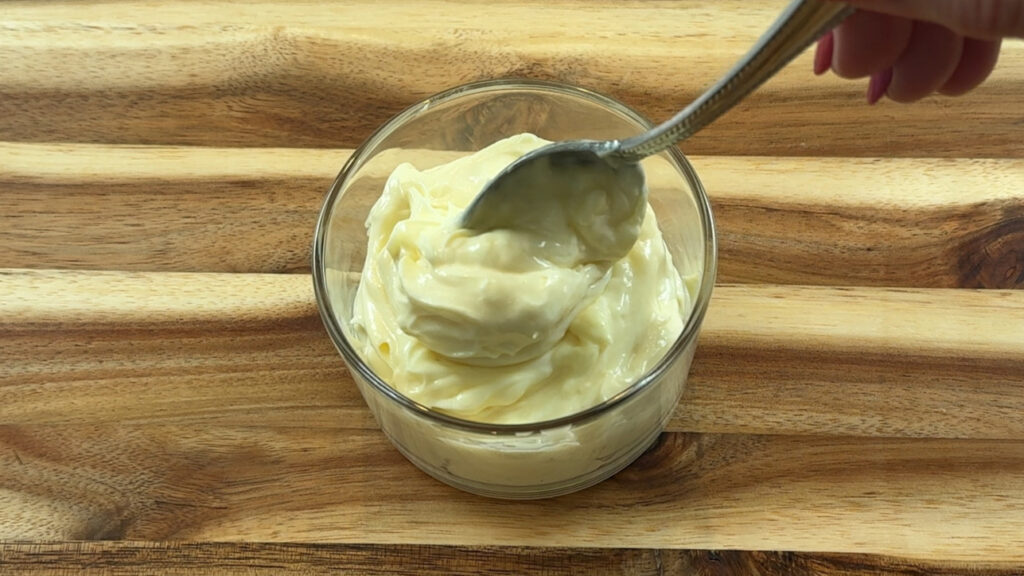
- Season with salt to taste and enjoy on your favorite sandwich, as part of another recipe like potato salad, or in a dessert like a mayonnaise cake.
Other Ways to Make It
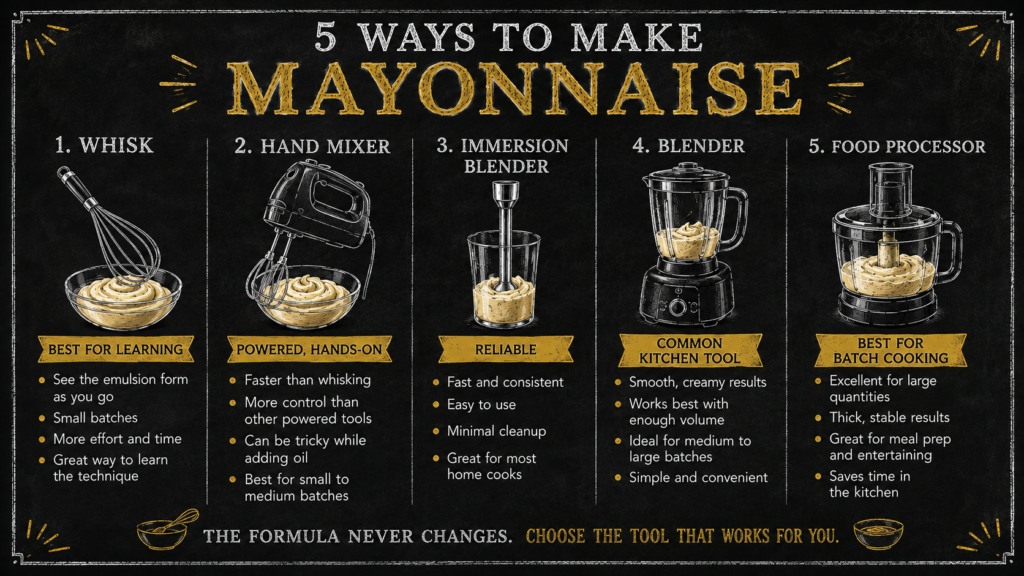
The ratio above works with any of the following, adjusted for the tool’s volume needs:
- Whisk — same single-yolk ratio, oil added drop by drop and then in a thin stream once the emulsion thickens. Best for learning to recognize the emulsion forming, or small batches.
- Hand mixer — scale up to 2 yolks / 1½ cups oil (needs more volume for the whisk attachment to fully engage). Powered, but still hands-on since you’re coordinating the mixer and the oil pour separately.
- Food processor — scale up to 3 yolks / 2¼ cups oil, added through the feed tube. Best for batch cooking or feeding a crowd.
- Standard blender — same scaled-up ratio as the hand mixer (2 yolks / 1½ cups oil), oil poured through the lid opening while running. The most common kitchen tool of the five, so a good option if you don’t own anything more specialized.
If Your Mayonnaise Breaks
If the emulsion breaks (thin, separated, doesn’t hold its shape), don’t start over from scratch. Crack one fresh yolk into a clean bowl, and slowly drizzle the broken mixture into it while whisking, the same way you’d add oil in the first place. The fresh yolk still has emulsifying power your broken batch has already used up.
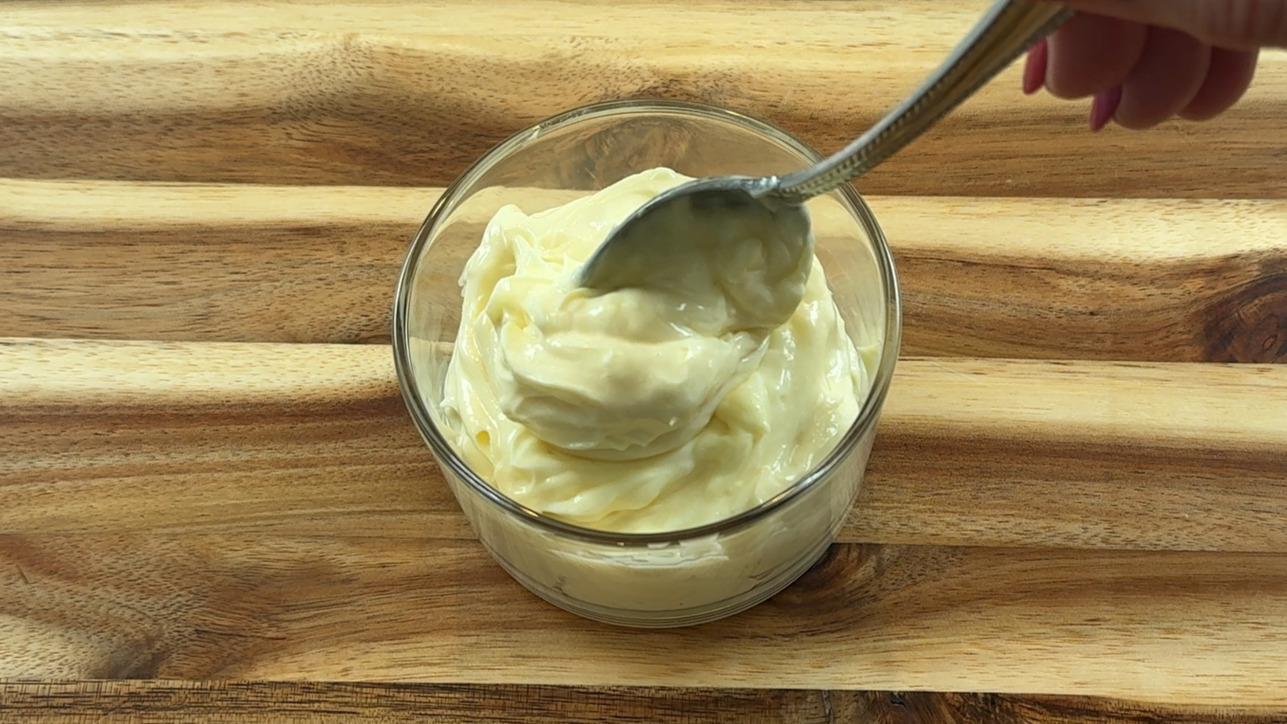
[PHOTO 10: Finished rescued batch, glossy again]
The Mayonnaise Formula
Ingredients
Method
- Add the egg yolk, Dijon mustard, and lemon juice or vinegar to a tall, narrow container.
- Pour in all the oil at once — don't stream it in for this method.
- Insert the immersion blender all the way to the bottom of the container. Turn it on and hold it still for several seconds, until the emulsion begins to form at the blade.
- Once the emulsion is established at the bottom, slowly draw the blender upward, pulling the emulsion up through the rest of the oil. This should take about 10-15 seconds total.
- Season with salt to taste.
Notes
FAQ
- Is homemade mayonnaise safe to eat with raw egg yolk? Yes, with a few precautions. If you’re concerned about raw egg, use pasteurized eggs — they emulsify exactly the same way and remove the risk. Either way, keep your mayonnaise refrigerated and don’t leave it at room temperature for more than a couple of hours.
- How long does homemade mayonnaise last in the fridge? About one week, stored in an airtight container. Because it’s made with raw (or pasteurized) egg rather than the shelf-stable eggs used in store-bought mayo, it won’t keep nearly as long — so it’s worth making in batches you’ll actually use.
- Can I use a whole egg instead of just the yolk? You can, but it changes the result. The emulsifier — lecithin — is concentrated in the yolk. Adding the white brings extra water into the mixture without adding any emulsifying power, which can leave you with a thinner, less stable mayonnaise. Stick to the yolk alone for the ratio in this recipe.
- What oil works best for mayonnaise? A neutral oil — avocado, canola, or a light (not extra virgin) olive oil — is the most forgiving choice. Extra virgin olive oil on its own can taste bitter once blended and is more prone to breaking; if you want that flavor, blend it with a neutral oil instead of using it alone.
- Why did my mayonnaise turn out thin or runny instead of thick? This usually means the emulsion never fully took hold, rather than fully breaking. The most common cause is adding oil too fast at the start, before the lecithin has had a chance to establish itself. If this happens, the same fresh-yolk fix used for broken mayonnaise works here too — just drizzle the thin mixture into a fresh yolk instead of starting over.
Series Navigation
This is Episode 1 of The Egg Emulsion Formula
- Episode 1: The Mayonnaise Formula (this post)
- Episode 2: How to Flavor Mayonnaise (coming soon)
- Episode 3: The Best Seafood Mayo Sauces (coming soon)
- Episode 4: Restaurant Burger Sauces Explained (coming soon)