
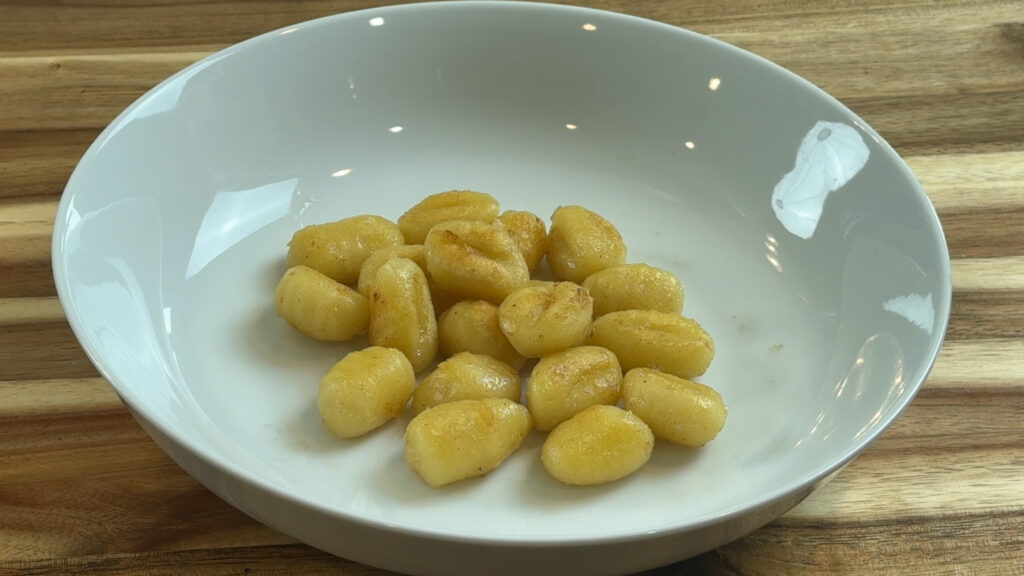
Good homemade potato gnocchi isn’t about a fancy technique — it’s about dry potatoes, gentle hands, and just enough flour to hold everything together. This is the from-scratch method I use whenever a sauce deserves real, pillowy gnocchi instead of the store-bought kind.
Why This Homemade Potato Gnocchi Works
The whole recipe comes down to one goal: dry, fluffy potatoes. Moisture is the enemy of light gnocchi — the wetter the potato, the more flour you need to bring the dough together, and more flour means heavier, denser gnocchi.
That’s why this method bakes the potatoes instead of boiling them (boiling adds water back in right when you’re trying to remove it), rices them while they’re still warm, and lets them rest uncovered so extra steam can escape before any flour goes in.
It’s also why we go easy on the dough itself. Gnocchi dough isn’t bread dough — we’re not building gluten, we’re just barely bringing things together. Overwork it and the gnocchi turn tough instead of tender.
Step-by-Step
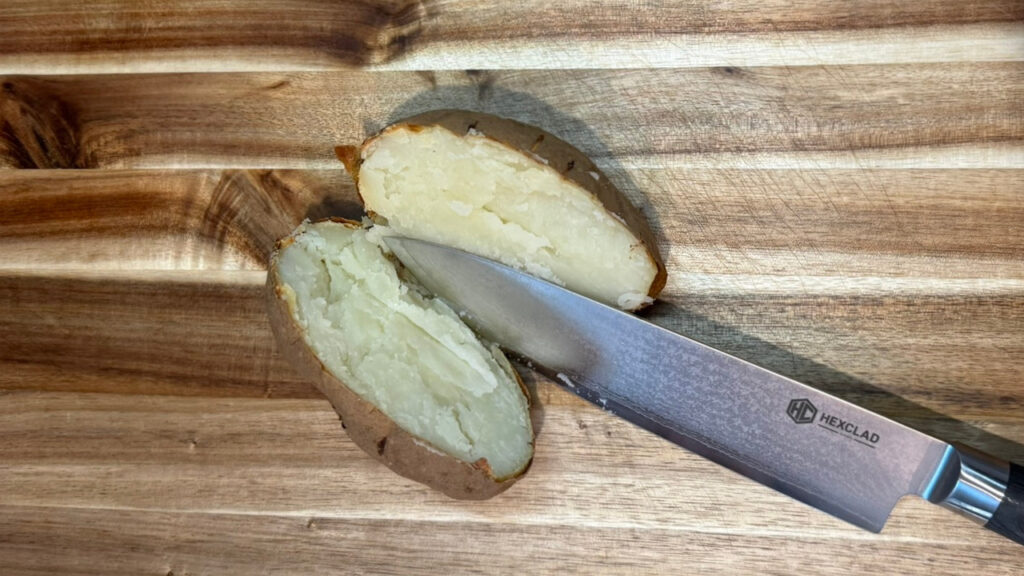
Bake the potatoes. Scrub 2 pounds (900g) russet potatoes, poke each a few times with a fork, and bake directly on the oven rack or a sheet pan at 400°F (205°C) for 50 to 70 minutes, until completely tender. The goal isn’t just cooked — it’s dry and fluffy.
Release the steam. As soon as they come out of the oven, cut the potatoes open lengthwise and let the steam escape for a few minutes. Skipping this traps moisture, and moisture means more flour later.
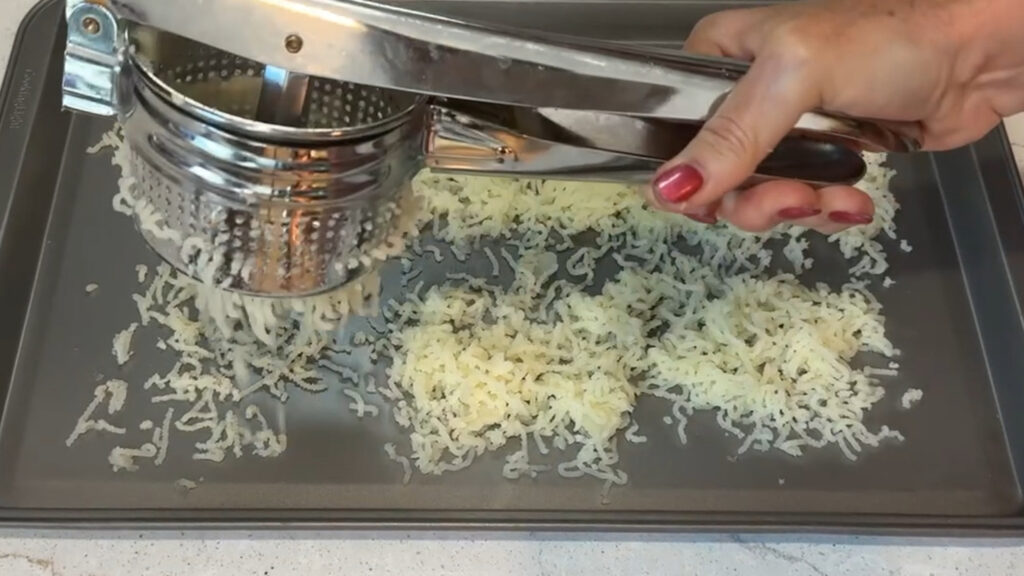
Rice the potatoes. While still warm, scoop the flesh and press it through a potato ricer onto a clean counter or sheet pan. Let it sit 5 to 10 minutes for more steam to escape. Skip the mixer or food processor here — they can turn potatoes gluey.
Add salt, egg, and flour. Sprinkle the riced potatoes with 1 teaspoon kosher salt, 1 large lightly beaten egg, and 1½ cups (190g) all-purpose flour. Start with less flour — you can always add more, but you can’t take it away.
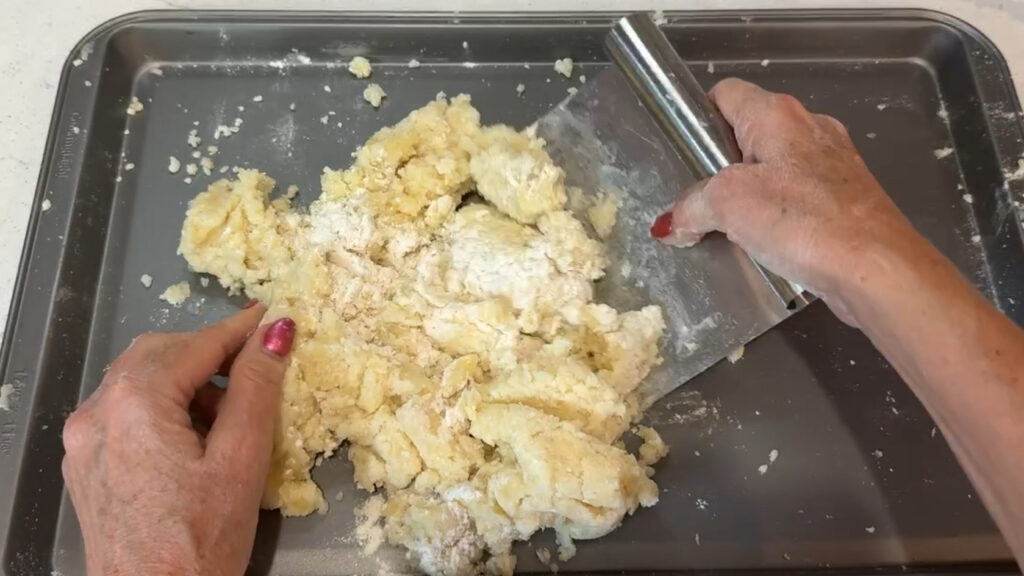
Bring the dough together. Use your hands or a bench scraper to gently fold everything together — don’t knead it like bread. The dough should feel soft, delicate, and just slightly tacky. If it’s very sticky, fold in a little more flour, one tablespoon at a time.
Test one gnocchi first. Pinch off a small piece and drop it into gently boiling salted water. If it holds together and floats, the dough is ready. If it falls apart, fold in a little more flour and try again. This one test saves the whole batch.
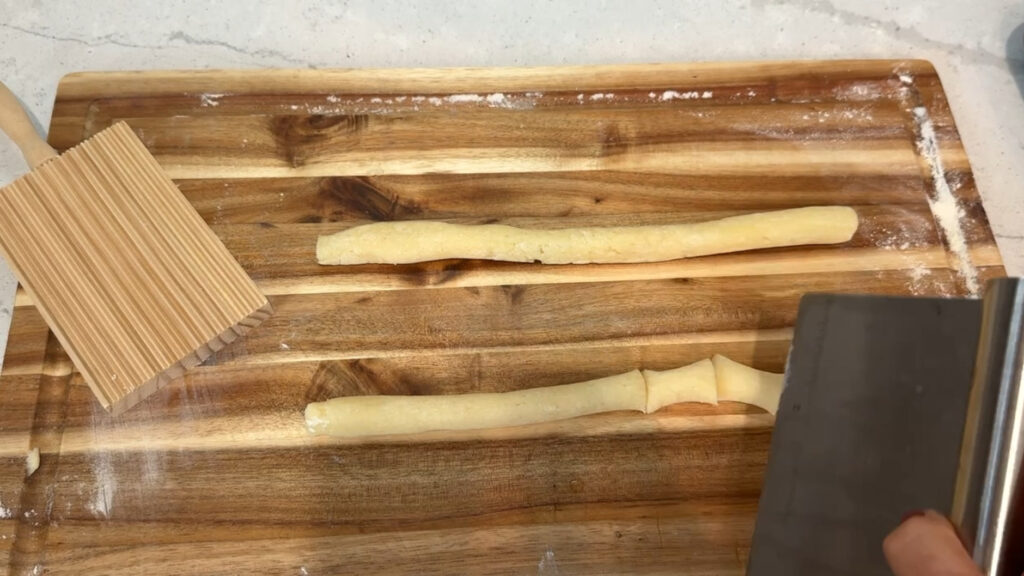
Roll and cut. Divide the dough into 6 to 8 pieces, roll each into a rope about ¾ inch (2cm) thick, and cut into pieces about 1 inch (2.5cm) long. Leave them as little pillows, or roll each gently over the back of a fork for ridges that help sauce cling.
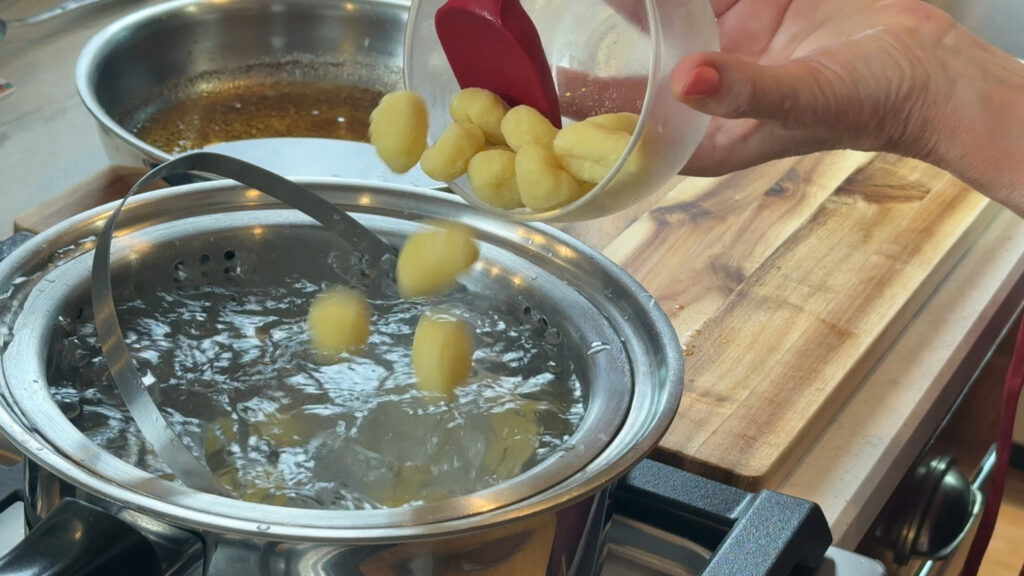
Cook the gnocchi. Bring a large pot of salted water to a gentle boil and add the gnocchi in batches so they don’t crowd the pot. They’ll sink at first — when they float, let them cook another 30 to 60 seconds, then lift them out with a slotted spoon.
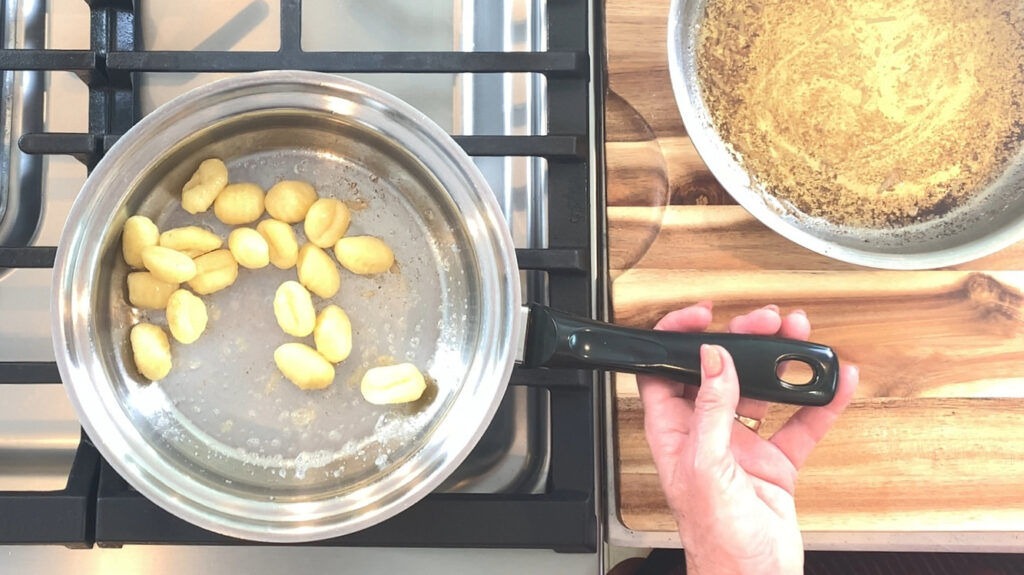
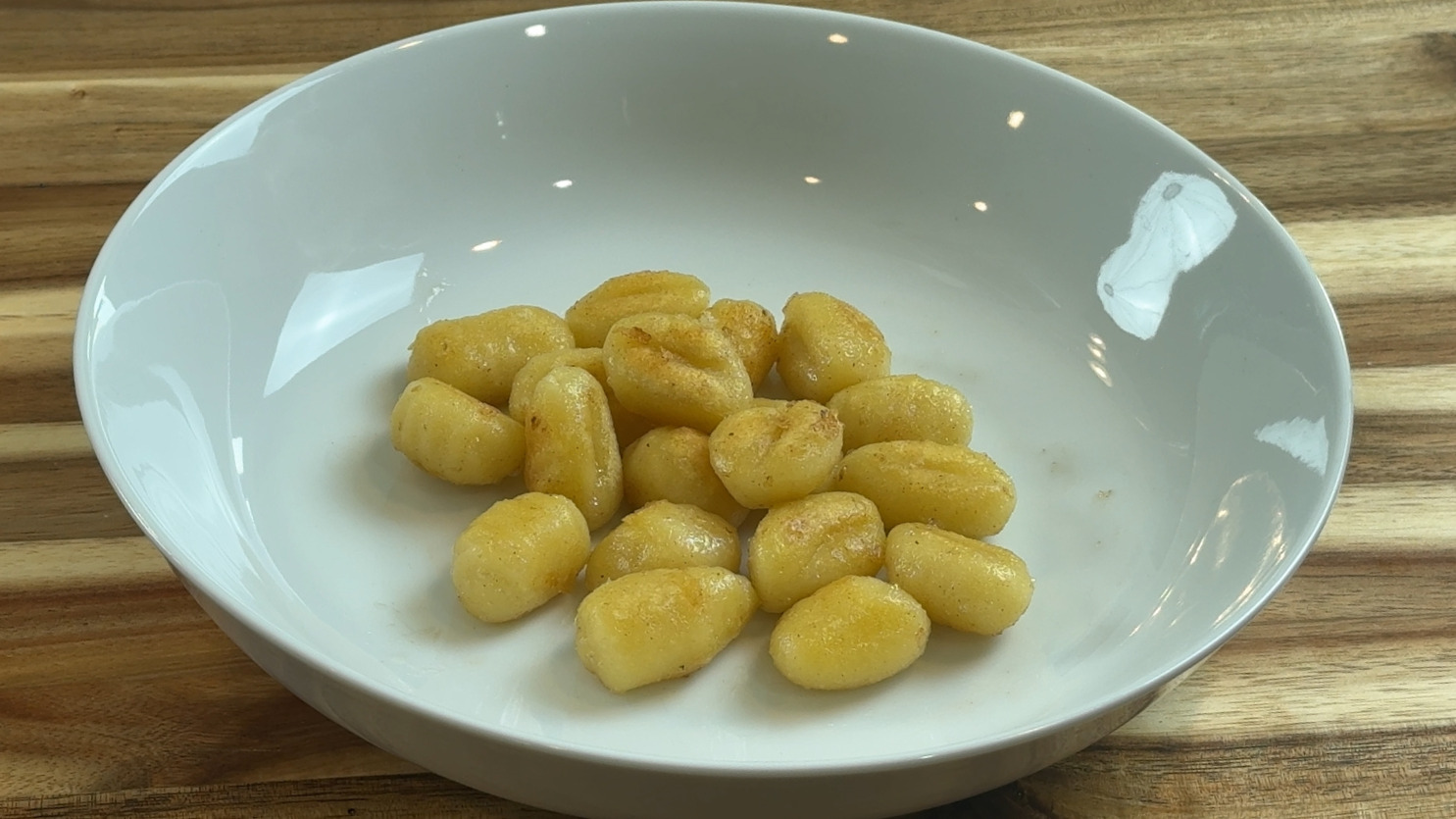
After removing your gnocchi from the boiling water, you can either add them right into the sauce or, if you prefer, you can brown them a little in a separate pan with a little additional butter.
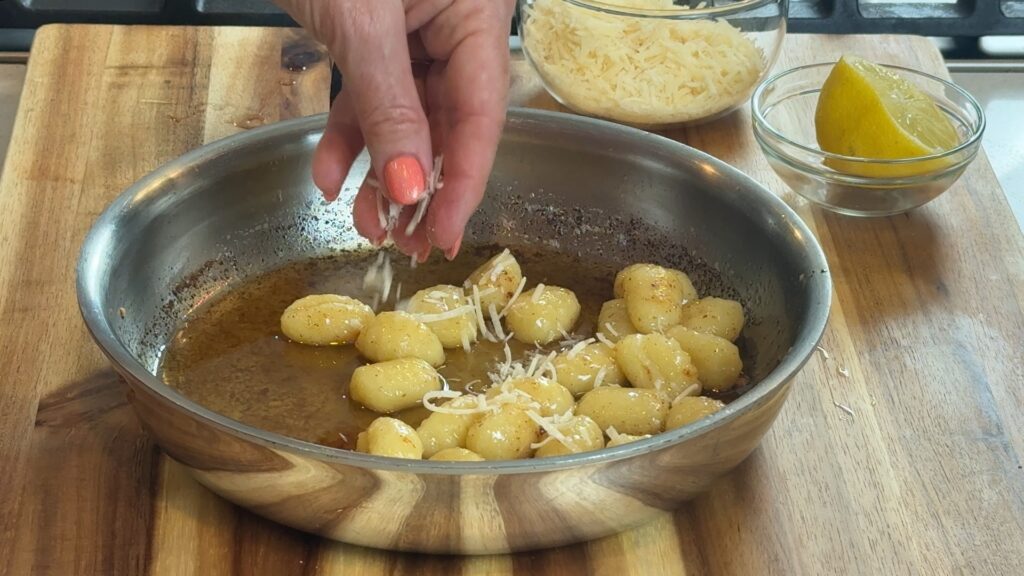
Finish in sauce. While not required, homemade potato gnocchi by itself is delicious; pairing it with a brown butter sauce, or your sauce of choice, truly complements it. I also like to top my gnocchi with a bright squeeze of lemon and a sprinkle of Parmesan.
Ingredients
Method
- Scrub the potatoes and bake at 400°F (205°C) for 50–70 minutes, until completely tender.
- Cut the potatoes open lengthwise and let the steam escape for a few minutes.
- While still warm, press the flesh through a potato ricer onto a clean counter or sheet pan. Let it sit 5–10 minutes.
- Sprinkle with salt, egg, and flour. Start with less flour — you can always add more.
- Gently fold together with your hands or a bench scraper until just combined. Don't knead.
- Pinch off one piece and test it in gently boiling water. If it holds together and floats, the dough is ready.
- Divide the dough, roll into ropes, and cut into 1-inch pieces. Roll over a fork for ridges if desired.
- Boil in batches. When they float, cook 30–60 seconds more, then remove with a slotted spoon.
- Finish in melted butter in a skillet, tossing until coated (browning lightly first if you prefer), then add your sauce of choice.
Notes
- Use a ricer or food mill, not a mixer or food processor — both can overwork the starch.
- Always test one piece before shaping the whole batch.
- Russets are recommended for their dry, starchy texture.
Related Recipes
Brown Butter Sage Sauce — the pairing this recipe was built for
FAQ
Why are my gnocchi heavy or dense instead of light and pillowy? Almost always excess moisture or too much flour. Make sure the potatoes are baked (not boiled), give them time to release steam before ricing, and add flour gradually rather than all at once.
Can I use a different potato besides russet? Russets are recommended because they’re starchy and dry, which is exactly what light gnocchi need. Waxier potatoes (like red or Yukon gold) hold more moisture and will need more flour to compensate, resulting in denser gnocchi.
Do I need a potato ricer to make gnocchi? A ricer gives the most even texture, but a food mill works too. Avoid a mixer or food processor — both can overwork the starch and make the dough gluey.
How do I know when the dough has enough flour? Test one piece in gently boiling water before shaping the whole batch. If it holds together and floats, you’re ready. If it falls apart, fold in a little more flour and test again.
Can I make the dough ahead and cook the gnocchi later? Yes — shape and cut the gnocchi, then freeze them in a single layer on a sheet pan before transferring to a bag. Cook straight from frozen, adding a minute or so to the boiling time.