
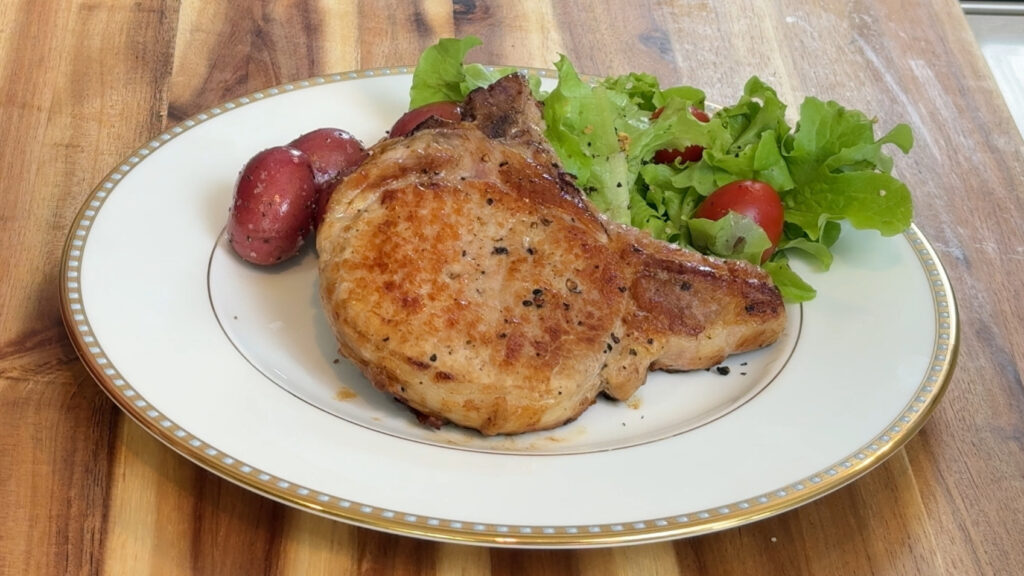
A great pork chop comes down to two things: a deep, browned crust on the outside, and a juicy center that isn’t cooked to chalk. Most dry, gray chops fail on both counts for the same reasons — too much surface moisture, a pan that wasn’t hot enough, and a few degrees too long in the heat.
This is the searing method I use before building a pan sauce, and it’s the same method behind the pan seared pork chops in the Mustard Cream Pan Sauce episode. Get the sear right, and you get two payoffs at once: a beautiful chop, and a pan full of fond to turn into sauce.
WHY THESE PAN-SEARED PORK CHOPS WORK
Three things do the heavy lifting, and all of them are about controlling moisture and temperature.
First, a dry surface. Water is the enemy of browning — any moisture on the chop has to boil off before the surface can brown, and while that’s happening, you’re steaming, not searing. Patting the chops bone-dry and letting them sit out before they hit the pan is what makes a real crust possible.
Second, a hot pan and patience. Browning is a chemical reaction that needs both heat and time, and it only happens where the meat is in solid, still contact with the pan. Lay the chop down and leave it alone. Moving it, poking it, or peeking under it too early all interrupt the crust before it forms.
Third, pulling at the right temperature. Pork is safe and still juicy at 145°F, but the chop keeps cooking after it leaves the pan. Pull it a few degrees early and let carryover finish the job — that’s the difference between juicy and dry.
HOW TO MAKE IT
1. Choose and season the chops
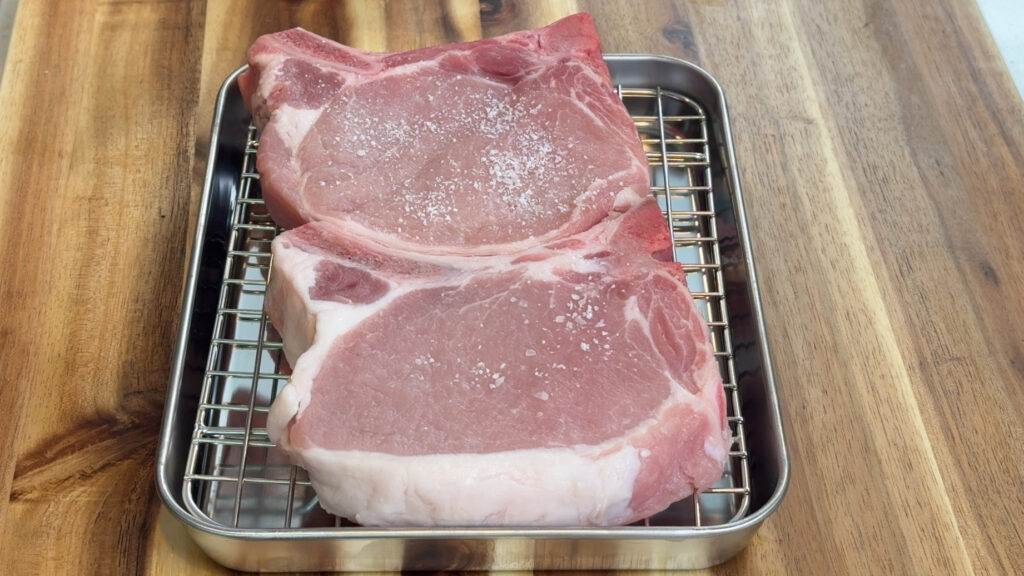
Use bone-in chops, ¾ to 1 inch thick. Thinner than that and they overcook before you get a crust; much thicker and the center lags behind the surface. Pat them completely dry, season generously with salt and pepper on both sides, and let them sit at room temperature for 20–30 minutes. Cold meat straight from the fridge drops the pan temperature and gives you steam instead of sear.
2. Heat the pan
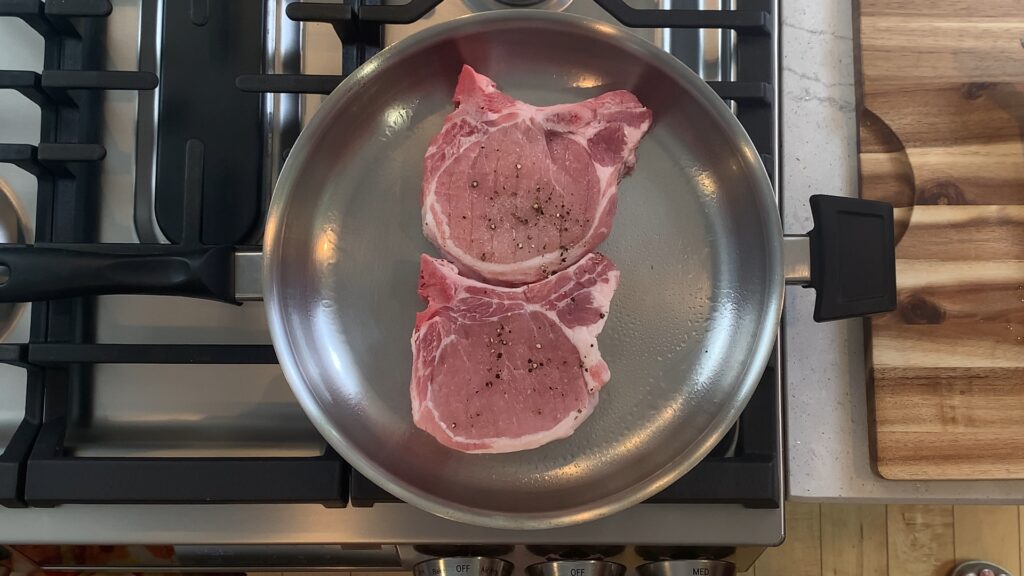
Heat a stainless or cast iron skillet over medium-high until it’s properly hot — a drop of water should skitter across the surface and evaporate almost instantly. Add a neutral oil with a high smoke point, like avocado or grapeseed.
3. Lay them down and leave them
Lay the chops away from you so you don’t splash, then don’t move them. This is where the crust is built. Do not crowd the pan. You may need to cook in batches or use two pans to make four chops.
4. Sear, flip once
For ¾–1 inch chops, give them 3–4 minutes per side. You’ll know they’re ready to flip when they release cleanly from the pan — if they stick, they’re not ready, so give them another moment.
5. Sear the fat cap
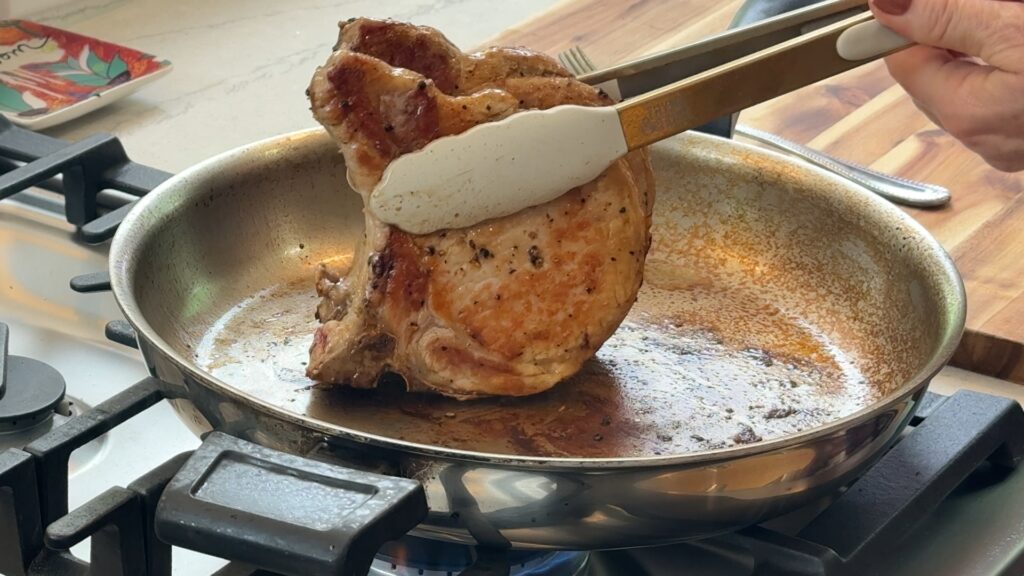
Hold the chops on their side with tongs and render the fat cap for about 30–60 seconds. That strip of fat carries a lot of flavor and is worth browning instead of leaving pale.
6. Check the temperature and pull early
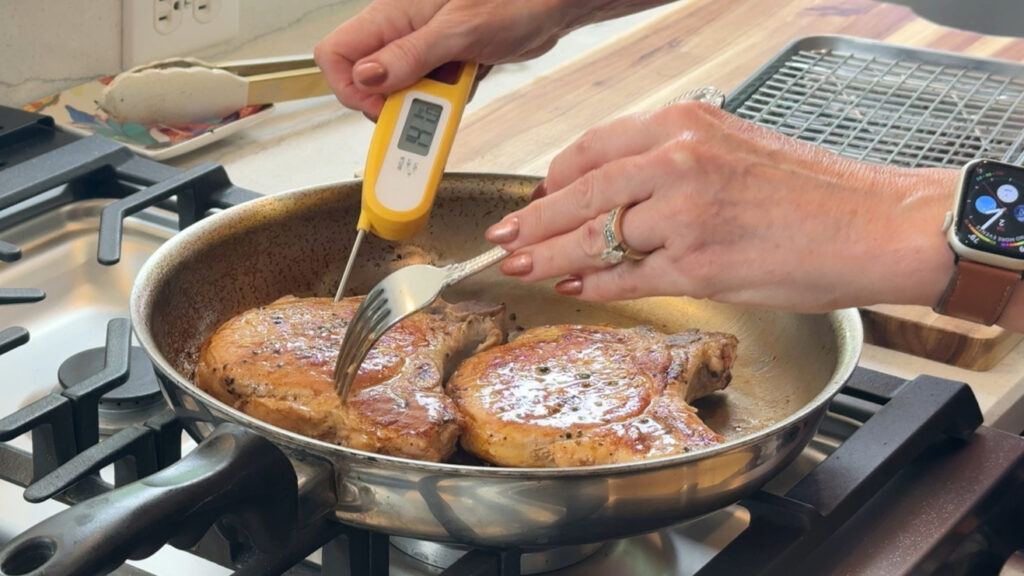
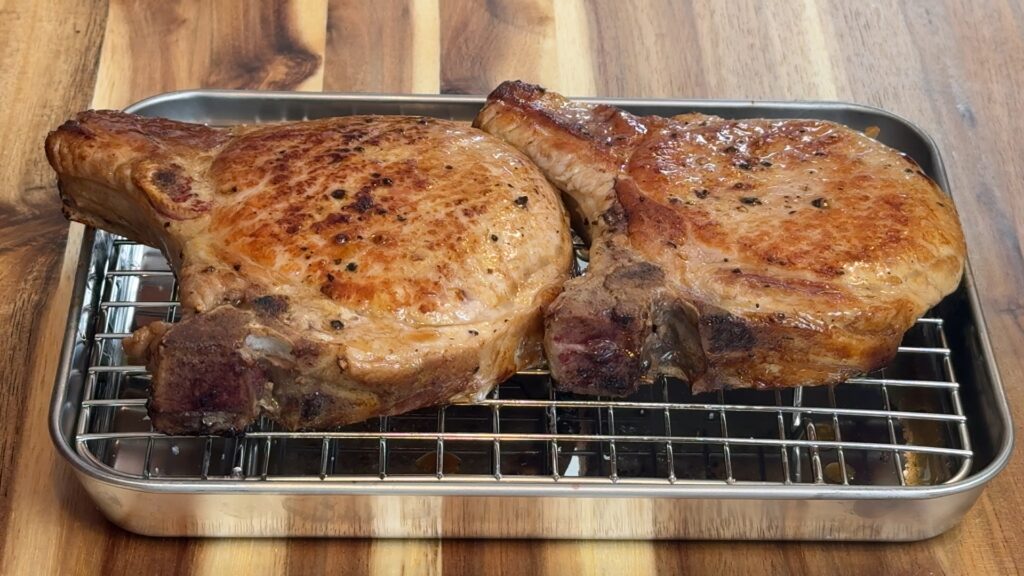
Check the thickest part, away from the bone. Pull at about 140°F. It will climb to a safe 145°F as it rests — in my own chops it went from 141 in the pan to 146 on the rack, all from carryover, with the heat already off. Pulling early is how you keep the center juicy.
7. Rest
Rest the chops for 5 minutes, tented loosely with foil, before cutting. This lets the juices redistribute so they stay in the meat instead of running out onto the board.
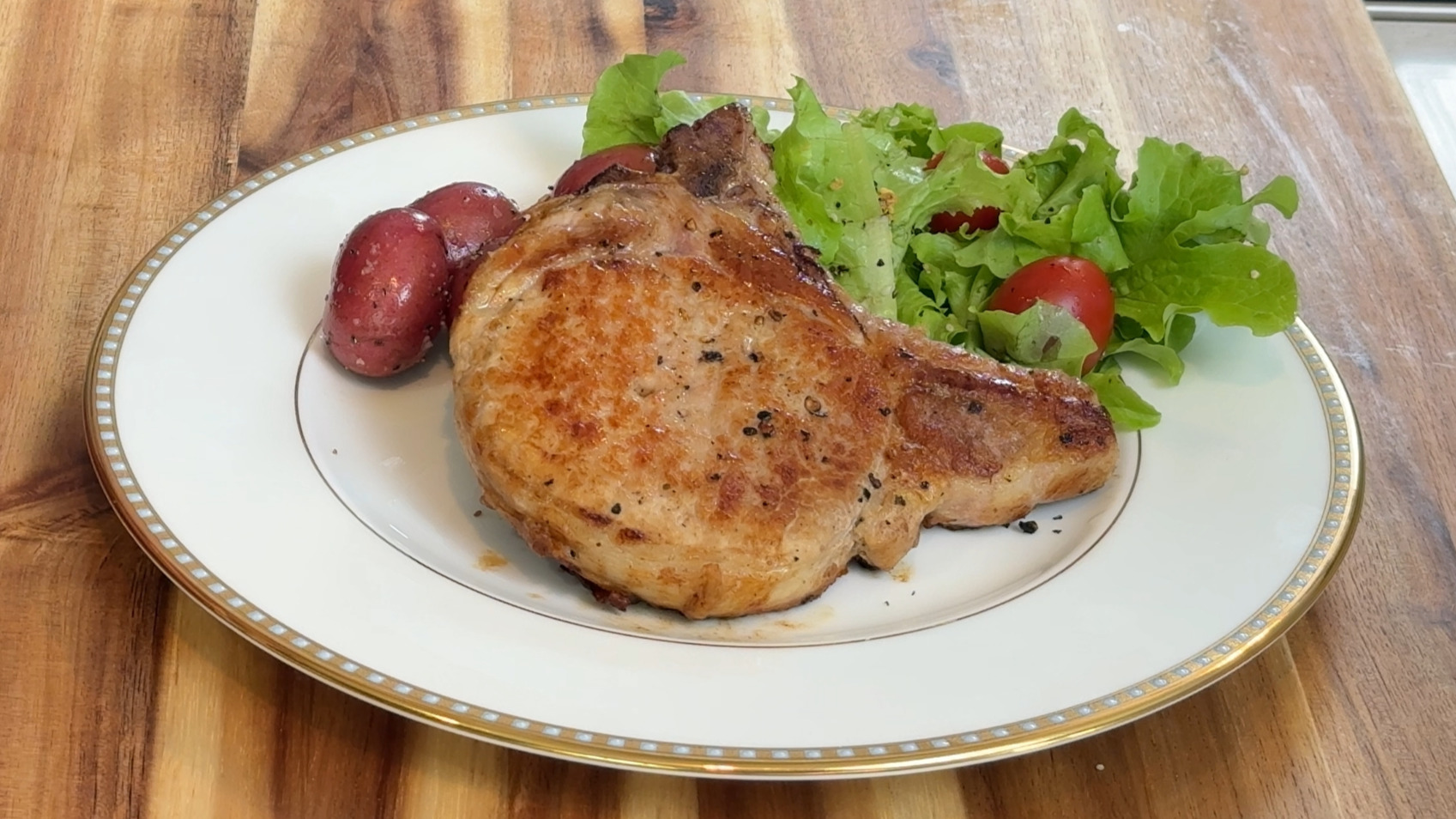
8. Serve — and save the pan
Ingredients
Method
- Pat the pork chops completely dry. Season generously with salt and pepper on both sides and let sit at room temperature for 20–30 minutes.
- Heat a stainless or cast iron skillet over medium-high heat until very hot. Add a thin layer of neutral oil.
- Lay the chops down away from you and do not move them. Sear 3–4 minutes per side, until deeply browned and they release cleanly from the pan.
- Hold the chops on their side with tongs and render the fat cap for 30–60 seconds.
- Pull the chops at an internal temperature of about 140°F, measured at the thickest part away from the bone.
- Rest 5 minutes, tented loosely with foil. Carryover will bring them to a safe 145°F.
- Do not clean the pan — use the fond to build a pan sauce.
Notes
RELATED RECIPES
Mustard Cream Pan Sauce (the sauce that pairs with these chops)
The Pan Sauce Formula (how to create a pan sauce from the fond)
Perfect Steak Sear (the steak method, same family)
FAQ
What thickness of pork chop is best for pan-searing? Bone-in chops about ¾ to 1 inch thick are ideal. Thinner chops overcook before a crust forms, and much thicker ones leave the center underdone by the time the outside is browned.
Why do my pork chops turn out dry? Almost always from overcooking. Pull the chops at about 140°F and let carryover bring them to 145°F as they rest. Resting for 5 minutes before cutting also keeps the juices in the meat instead of on the board.
Bone-in or boneless? Bone-in chops cook a little more gently and tend to stay juicier and more flavorful. Boneless will work with the same method — they sear a touch faster, so watch the temperature.
What temperature should pork chops be cooked to? 145°F is the safe internal temperature for pork. Pull them around 140°F and let them rest; carryover finishes them at 145°F while keeping them juicy.
Why won’t my pork chops get a good crust? Four usual culprits: a wet surface, a pan that isn’t hot enough, cold meat straight from the fridge, or crowding the pan. Pat them dry, heat the pan properly, rest them to room temperature, and give each chop room.