
Pan-seared scallops have a reputation for being intimidating — expensive, easy to overcook, and seemingly impossible to get that deep golden crust you see in restaurants. The truth is simpler than the reputation: scallops need almost nothing done to them. What they need is to be bone dry before they ever touch the pan.
This is the pairing dish for my Beurre Blanc episode, and while the video keeps the scallop technique tight, I wanted to give it the full write-up here — including a real problem I ran into while filming, and exactly how I solved it.
Why This Works
A wet scallop steams. A dry scallop sears. That’s the entire principle behind everything below. Scallops are mostly water, and if there’s surface moisture when they hit the pan, that moisture turns to steam before the surface can brown. Steam keeps the pan temperature down at the scallop’s surface, and a cool surface can’t caramelize. No amount of high heat compensates for a wet scallop — you have to remove the water first.
This matters more than usual right now because almost all scallops sold at the counter — even ones labeled “fresh” — have been previously frozen. I called several stores within an hour of me while planning this episode, hoping to find true never-frozen scallops, and every single one had been frozen and thawed before landing in the case. That’s not a red flag on quality; it’s just standard for how scallops make it to market. But previously-frozen scallops hold noticeably more surface moisture than truly fresh ones, which means the drying step isn’t optional — it’s the whole game.
So instead of skipping past this step the way most recipes do, I want to walk you through exactly what I did to dry mine, because it’s the difference between the crust you see in the final photo and a gray, steamed scallop that never browns.
The Drying Process
Step one: slow thaw, wrapped. If your scallops are frozen, move them to the fridge the night before, wrapped in paper towels inside a covered dish. The paper towels pull moisture as they thaw slowly and evenly overnight.
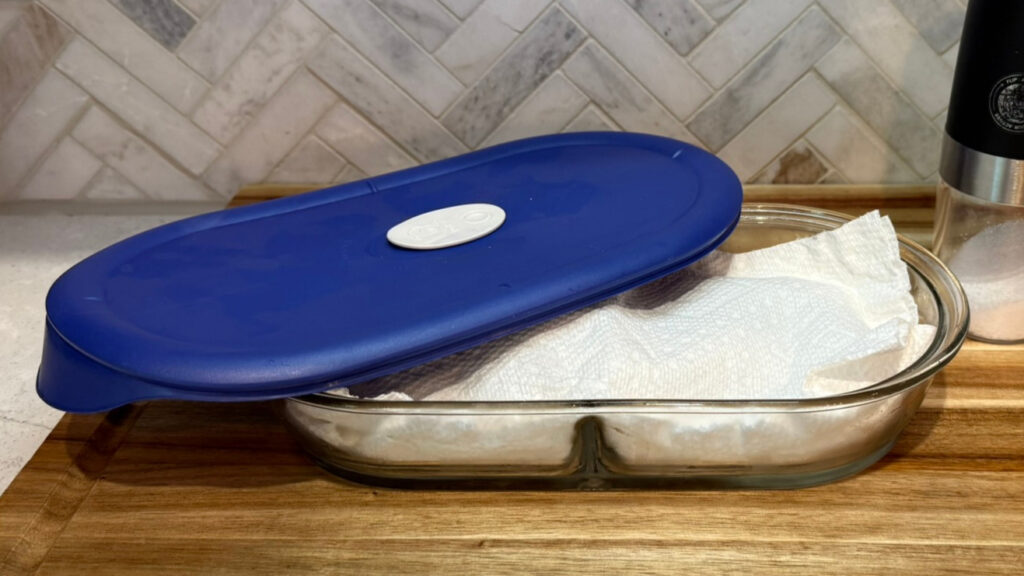
Step two: fresh towels in the morning. The next morning, swap in fresh, dry paper towels. The overnight towels will have pulled a surprising amount of moisture already — don’t reuse them.
Step three: dry again, then air-dry uncovered. About an hour before you plan to cook, pat the scallops dry with fresh paper towels one more time, then spread them out on a plate uncovered, no paper towels touching them, and let them sit in the fridge for another hour. The open air does the final work that towels alone can’t.
It sounds like a lot of steps for something so small. It is. But it’s also the reason the crust below happened at all.
Searing
Get the pan properly hot. You want a hot stainless or light-colored pan (so you can actually see the color you’re building) with a thin film of oil, heated until it’s shimmering — not smoking, but close.
Season right before they go in, not earlier — salting too early pulls moisture back out right when you don’t want it.
Place them like a clock. Lay each scallop down working around the pan in a circle, so you know which one went in first. This matters more than it sounds like it should, because it’s how you’ll time your flip evenly across all of them.
[Image: placing-scallops-in-pan.jpg] Suggested alt text: “Raw scallops being placed in a hot pan in a circular pattern”
Then leave them alone. This is the hardest part of the whole process. Don’t shake the pan, don’t peek underneath, don’t nudge them “just to check.” One and a half to two minutes, undisturbed, is what builds a real crust. Moving them early tears away the browning that’s still forming and you don’t get it back.
Flip once. Thirty seconds on the second side. You’re not trying to cook them through in the pan — they should still be barely translucent in the very center. They’ll finish carryover-cooking on the plate, resting on the warm sauce.
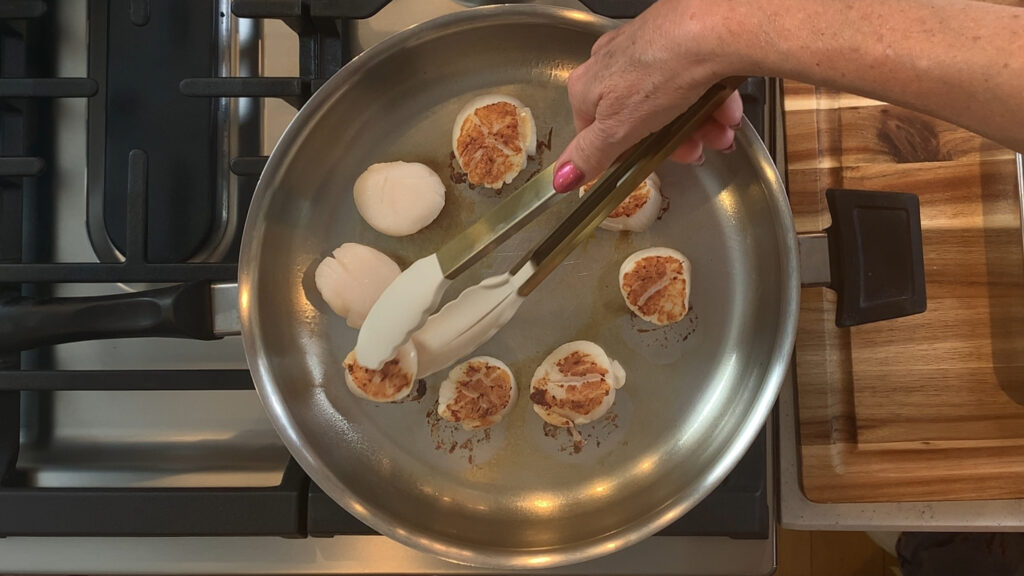
Rest them crust-up. When you plate, set the scallops down with the seared side facing up, not down into the sauce. That crust is what you worked for — let it be seen, not soaked.
Tasting
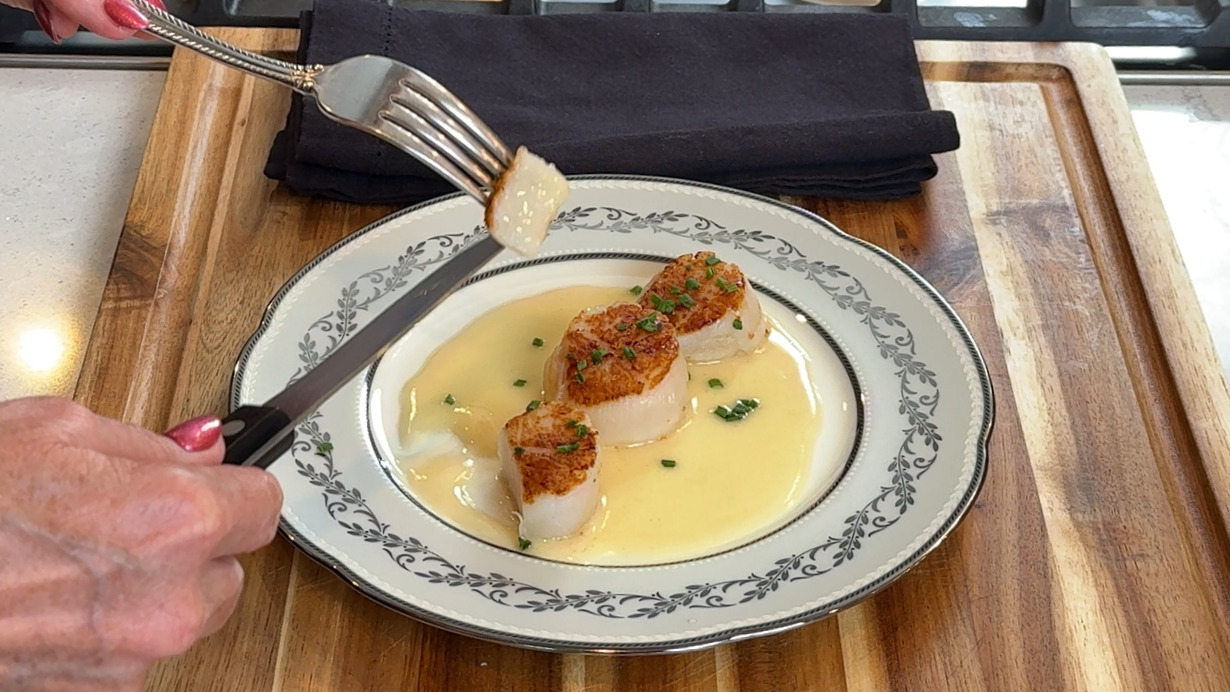
The center should still be barely set, sweet, and tender — not opaque and firm all the way through, which means it’s overcooked. The crust gives you the contrast: a little bite and caramelized flavor against something almost delicate underneath.
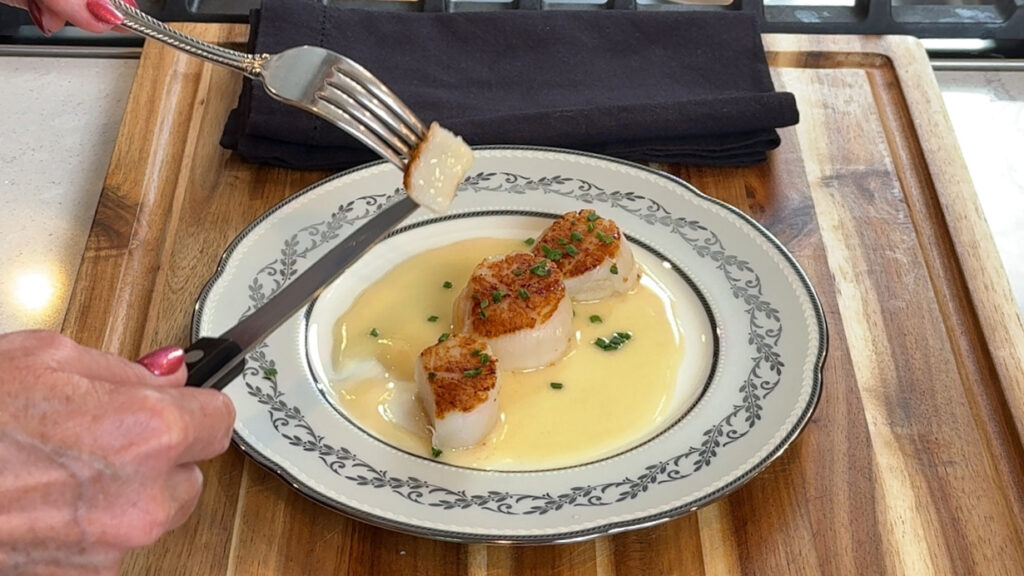
Paired with the beurre blanc, the acid in the sauce is doing real work here — it cuts through the richness of the butter so the whole bite stays balanced instead of heavy.
Ingredients
Method
- Pat scallops completely dry with paper towels. (See blog post for the full drying method if using previously-frozen scallops.)
- Heat a light-colored or stainless pan over high heat until shimmering. Add oil.
- Season scallops with salt just before placing in the pan.
- Place scallops in the pan in a circular pattern, working clockwise so you know which went in first.
- Sear undisturbed for 1.5–2 minutes, until deeply golden.
- Flip once. Cook 30 seconds on the second side, until barely translucent in the center.
- Remove from pan and rest crust-up.
Notes
Why we use a light-colored pan. It makes the crust color much easier to judge by sight instead of guessing.
If your scallops release liquid and won’t brown: remove them, pat the pan and scallops dry again, let the pan reheat fully, and try again. Rushing a wet scallop back into a cool, wet pan just repeats the problem.
Related Recipes
- Beurre Blanc Sauce
- Lemon Caper Pan Sauce
- Mustard Cream Pan Sauce
FAQ
Why won’t my scallops get a golden crust? The most common cause is surface moisture. Scallops need to be completely dry before they touch the pan — even a little residual moisture will cause steaming instead of browning.
Are the scallops at my grocery store fresh or frozen? Most scallops sold at the counter, even those labeled “fresh,” have been previously frozen and thawed before sale. This is standard practice, not a quality issue, but it does mean extra drying is worth the effort.
How do I know when scallops are done? They should still be barely translucent in the very center when you take them off the heat. They’ll continue cooking slightly from residual heat once plated.
Can I use frozen scallops for this recipe? Yes. Thaw them slowly in the refrigerator overnight, wrapped in paper towels, then follow the additional drying steps above before searing.
Why do you sear scallops in a light-colored pan? A light or stainless pan makes it much easier to see the color you’re building as the crust develops, which helps you judge doneness by sight rather than guessing.
Butter Sauces Series
This pairing dish accompanies Episode 8 of the Butter Sauces series: Beurre Blanc Sauce. Coming up: Brown Butter Sage Sauce, Lemon Butter Sauce, Restaurant Finishing Secrets, and Sandefjordsmør.