
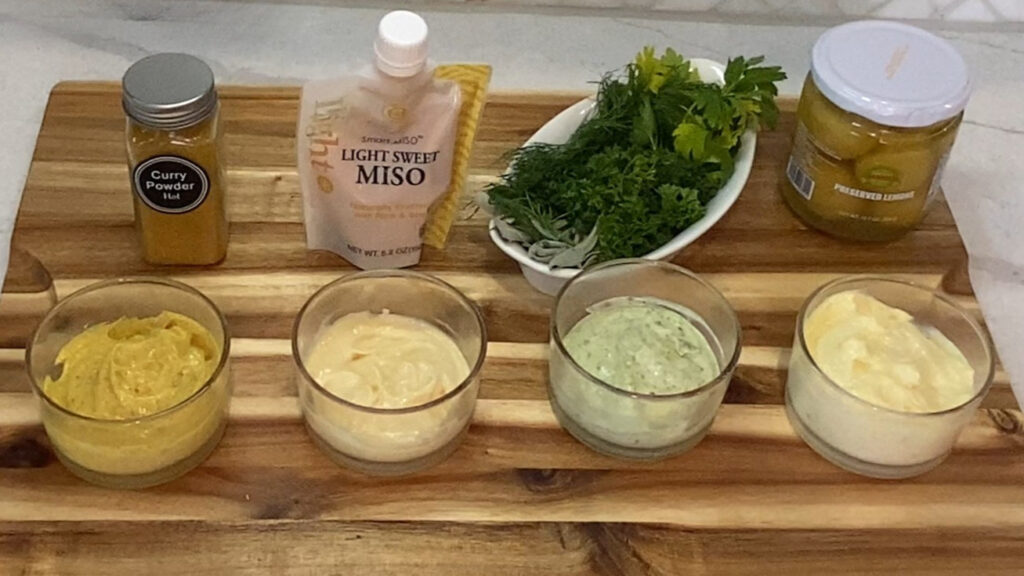
Same mayo. Four completely different flavors — once you know the moves, you will know how to flavor mayonnaise and never need a recipe again.
Once you know The Mayonnaise Formula, you don’t need a separate recipe every time you want a different mayonnaise. Today we’re not adding a new technique — we’re taking that exact base and asking one question four different ways: what am I actually doing when I flavor mayonnaise?
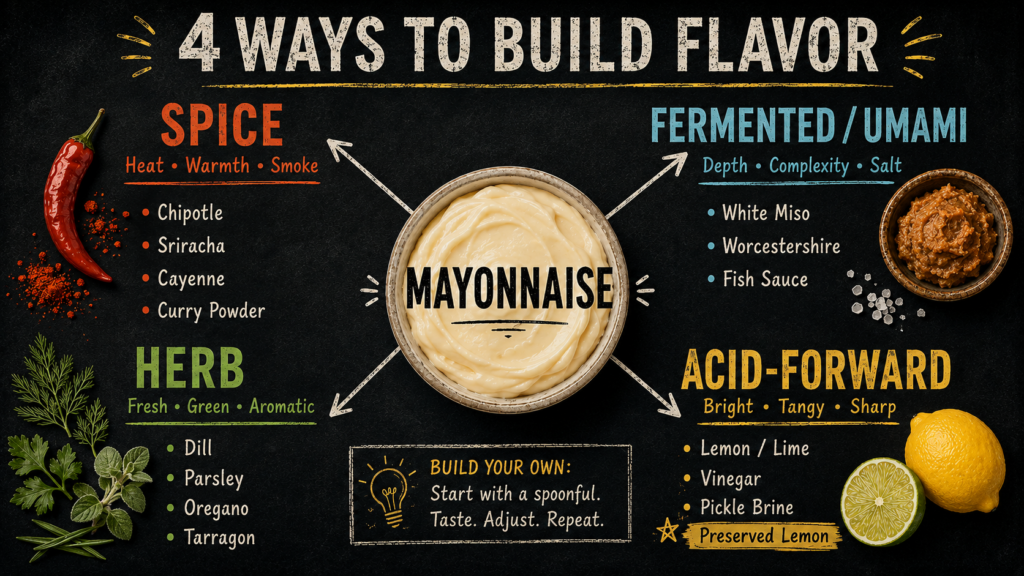
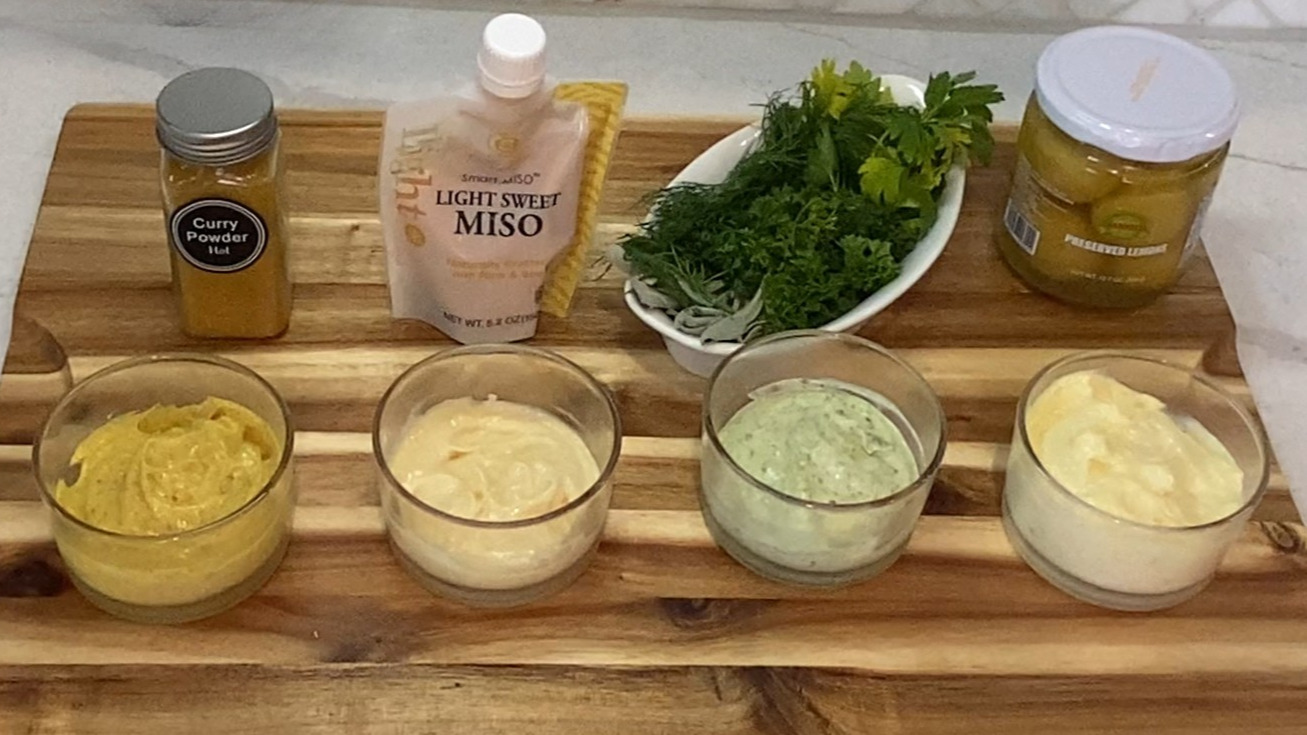
It turns out almost every flavored mayo you’ve ever had falls into one of four moves: infusing dry spices, folding in something fermented for umami and savory depth, blending in fresh herbs, or swapping the acid for something sharper. Learn these four moves and you’re not following recipes anymore — you’re building your own.
How to Flavor Mayonnaise: Why This Works
That’s really the whole point of learning how to flavor mayonnaise instead of hunting down a new recipe every time you want a different jar in the fridge. Flavoring mayonnaise isn’t about memorizing combinations — it’s about understanding which role an ingredient plays once it’s folded into an already-emulsified base. Every flavor addition here does one of four jobs:
- Infuse — a dry spice blend stirred into the finished mayo, carried by the fat with no cooking or blooming needed
- Fold in — a fermented, umami-rich ingredient worked in for depth
- Puree — fresh herbs chopped and briefly held in acid before folding in, for brightness and color
- Swap — replacing the formula’s own acid with a different version of itself, from a simple vinegar swap to a more concentrated brine
One flavor is deliberately left out: sweet. On its own, sweet doesn’t work as a base flavor for mayonnaise — it needs something to lean against, like heat, smoke, or umami. Think of it as a modifier for later episodes, not a fifth move.
The Base (Quick Refresher)
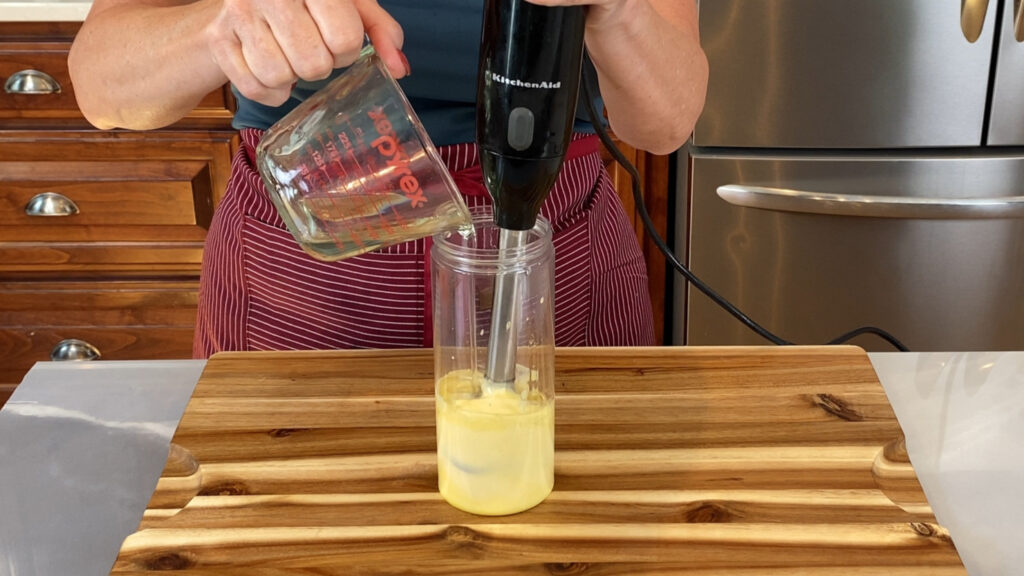
Every method below for how to flavor mayonnaise starts from the same base: egg yolk, a splash of acid, a little Dijon, and oil, emulsified with an immersion blender — the fastest of the five methods from The Mayonnaise Formula. If you haven’t made a batch yet, start there; this post picks up right where it leaves off.
Move 1: Dry Spice Infusion
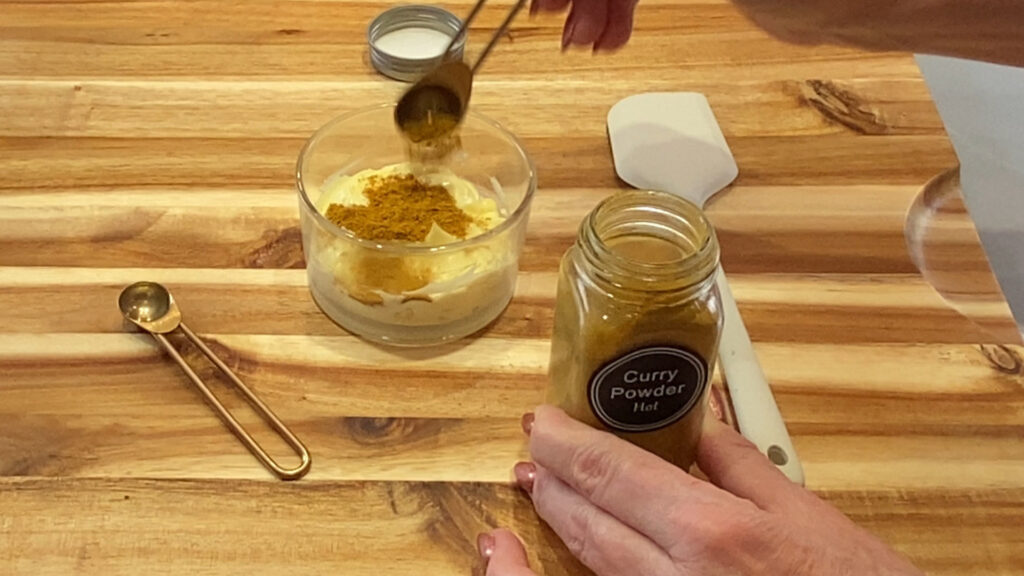
Curry powder isn’t one spice — it’s turmeric, cumin, and coriander all in one blend. Because it’s a dry blend, there’s no cooking or blooming step. The fat in the mayo carries the flavor on its own.
- Make a fresh base batch of mayonnaise.
- Stir curry powder directly into the finished mayo.
- Let it rest 10 minutes before tasting or adjusting — dry spices need a little time to fully wake up in a cold base.
Sriracha and cayenne can take you in this same direction if you want something more straightforwardly hot — the move is the same, just a different starting spice.
Move 2: Umami Fold-In
This is where a lot of restaurant sauces get their depth without anyone quite knowing why. White miso is fermented, but milder and slightly sweeter than darker miso — the goal isn’t a mayo that screams “miso,” it’s one that makes you wonder why it suddenly tastes so much more interesting.
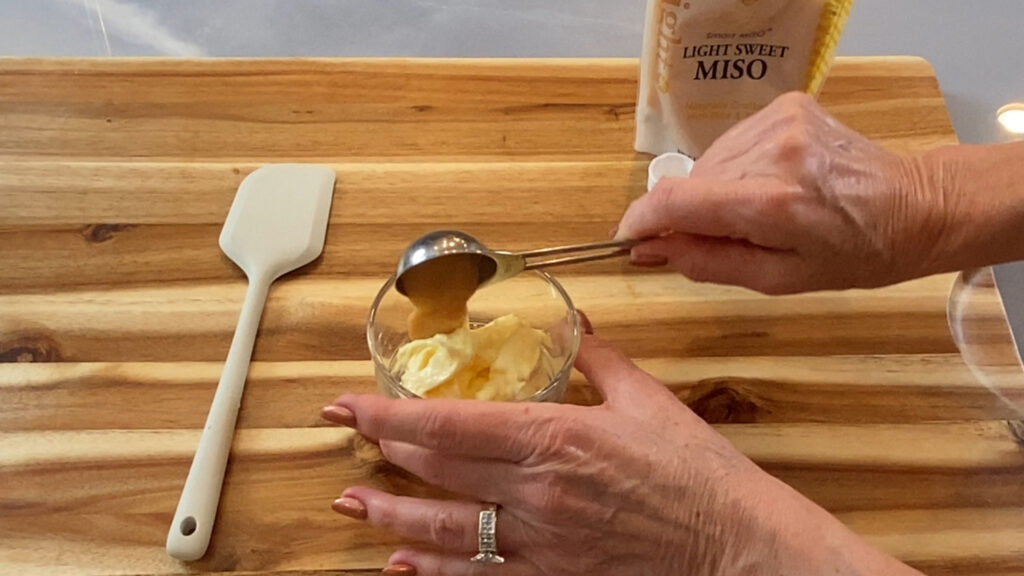
- Make a fresh base batch of mayonnaise.
- Work white miso paste in against the side of the bowl until it’s fully dissolved — no clumps of paste left behind.
- Taste before adding any extra salt. Miso already brings salt, and this is the flavor move people are most likely to over-salt.
- Let it sit a few minutes before tasting.
Worcestershire sauce and fish sauce work the same job if you want to try a different fermented note.
Move 3: Fresh Herb Puree
If you caught the Chimichurri-Inspired Herb & Garlic Butter episode, this move will feel like a callback — same herb logic, just carried by mayo instead of oil.
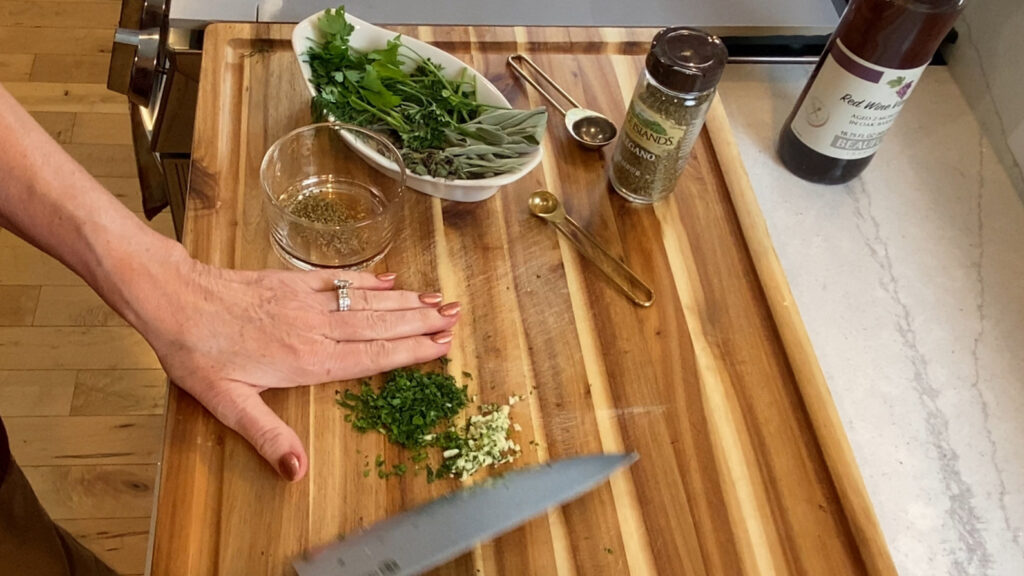
- Make a fresh base batch of mayonnaise.
- Finely chop the herbs and garlic.
- Let the chopped herbs and garlic sit in vinegar for about 30 seconds — that direct contact with the acid helps keep the color vivid.
- Fold the herb-vinegar mixture into the mayo.
Move 4: Acid / Condiment Swap
This move doesn’t add something new — it changes what’s already there. Instead of folding in an ingredient, you’re replacing the formula’s own acid with a different version of itself, and it has a whole range from subtle to extreme.
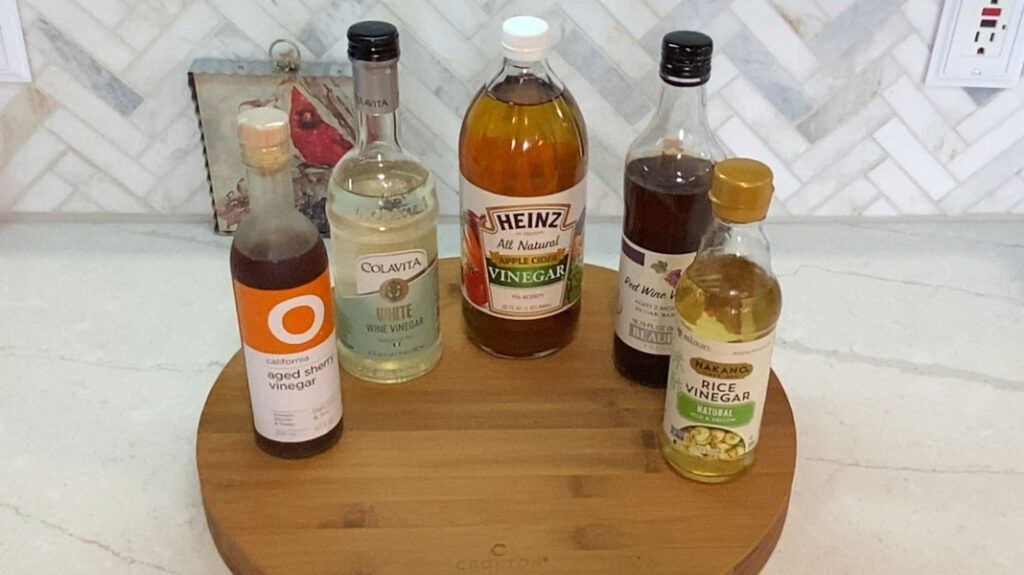
Subtle version — vinegar variety. Apple cider, sherry, and rice vinegar all do the same job in the formula, in the same amount, but each brings a completely different personality: apple cider is mellow and rounded with a faint fruity note (and probably already in your pantry), sherry brings a nutty, aged depth, and rice vinegar goes soft and slightly sweet. There’s no wrong answer — just a different mood depending on what you’re serving it with.
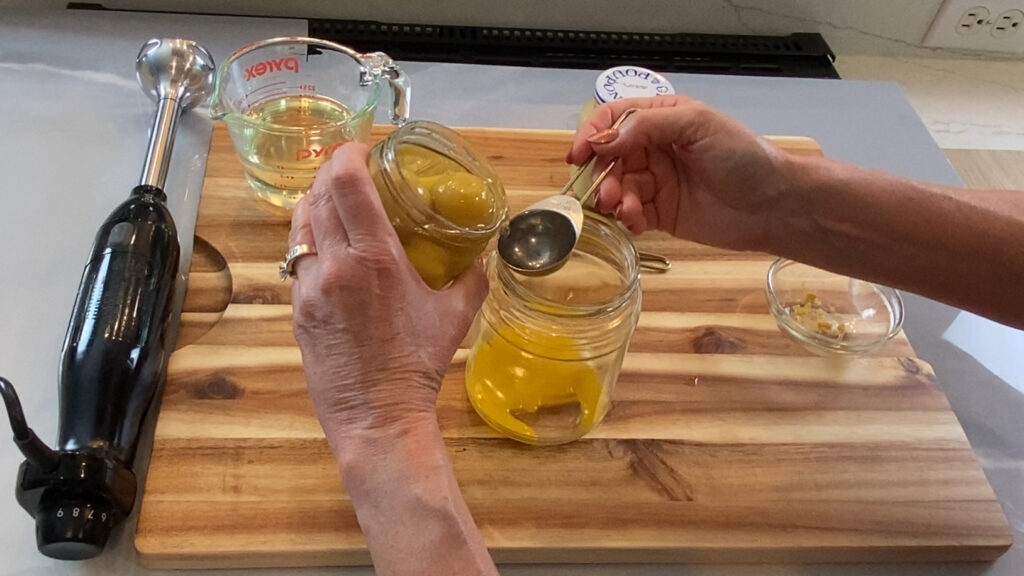
Extreme version — preserved lemon. Here, the brine from the jar replaces the acid in the formula entirely, built into the base right from the start, the same way vinegar or lemon juice would be. Once the base is emulsified, a little of the minced rind is folded in afterward for texture and even more concentrated flavor.
- Make a fresh base batch of mayonnaise, using preserved lemon brine in place of the standard acid, built in from the start.
- Once emulsified, fold in a little finely minced preserved lemon rind.
- Start with less than you think you need, taste, and build from there — this is the move people most often overdo. Preserved lemon is cured in salt, so the peel is soft and intensely flavorful; a little goes a long way.
Choosing a Move
Every flavored mayo you’ll ever make comes back to one of these four categories. So how do you choose? Ask what the food needs — heat, freshness, tang, smokiness, umami — and pick the move that answers it. That’s really what learning how to flavor mayonnaise comes down to: matching the move to the food, not memorizing a recipe. In the next couple of episodes, we’ll start combining these moves for specific pairings: acid and herbs for seafood, spice and umami for meats, and eventually, sweet and savory too.
How to Flavor Mayonnaise: 4 Base Techniques
Ingredients
Method
- Add the egg yolk, Dijon, and acid (lemon juice, vinegar, or preserved lemon brine — see variation groups) to a tall narrow container.
- Add the oil, a little at a time, and emulsify with an immersion blender, starting at the bottom and slowly pulling up as the emulsion sets.
- Season with salt to taste.
- Stir the curry powder directly into a fresh batch of finished mayonnaise. No cooking or blooming needed.
- Let it rest 10 minutes before tasting or adjusting.
- Finely chop the parsley, oregano, and garlic.
- Let the chopped herbs and garlic sit in the vinegar for about 30 seconds.
- Fold the herb-vinegar mixture into a fresh batch of finished mayonnaise.
- Make the base mayonnaise, substituting your chosen vinegar (apple cider, sherry, or rice) for the standard acid in the same amount.
- Make the base mayonnaise, substituting preserved lemon brine for the standard acid, built in from the start.
- Once emulsified, fold in the minced preserved lemon rind.
- Start with less rind than you think you need, taste, and build from there.
Notes
FAQ
Do I need to make a new batch of mayonnaise for each flavor, or can I use one batch for all four? Make a fresh batch for each flavor. Splitting one batch four ways works in a pinch, but starting fresh keeps each flavor clean and true to its own base, and it’s what keeps the technique reliable no matter which move you’re trying.
Can I substitute a different spice blend for curry powder in the dry spice infusion? Yes — when you’re learning how to flavor mayonnaise, the technique is what matters, not the specific spice. Any dry spice blend stirred into finished mayo and rested for about 10 minutes will work the same way. Sriracha or cayenne can also take you in a similar direction if you’d rather build heat than warmth.
What can I use instead of white miso for the umami fold-in? Worcestershire sauce or fish sauce both work the same job. Just remember the same caution applies to all of them: taste before adding extra salt, since fermented ingredients like these already bring plenty on their own.
Why do the herbs sit in vinegar before being folded into the mayo? That brief contact with the acid helps keep the color vivid once the herbs are folded into the mayo. It’s the same logic used in the Chimichurri-Inspired Herb & Garlic Butter episode, just applied to a cold emulsion instead of melted butter.
How much preserved lemon rind should I start with? Less than you think you need. Preserved lemon is cured in salt, so the rind is intensely flavorful, and this is the move people most often overdo. Start with about half of what feels right, taste, and build from there.
More From the Egg Emulsion Formula Series
- The Mayonnaise Formula
- How to Flavor Mayonnaise (you’re here)
- The Best Seafood Mayo Sauces (coming soon)
- Restaurant Burger Sauces Explained (coming soon)