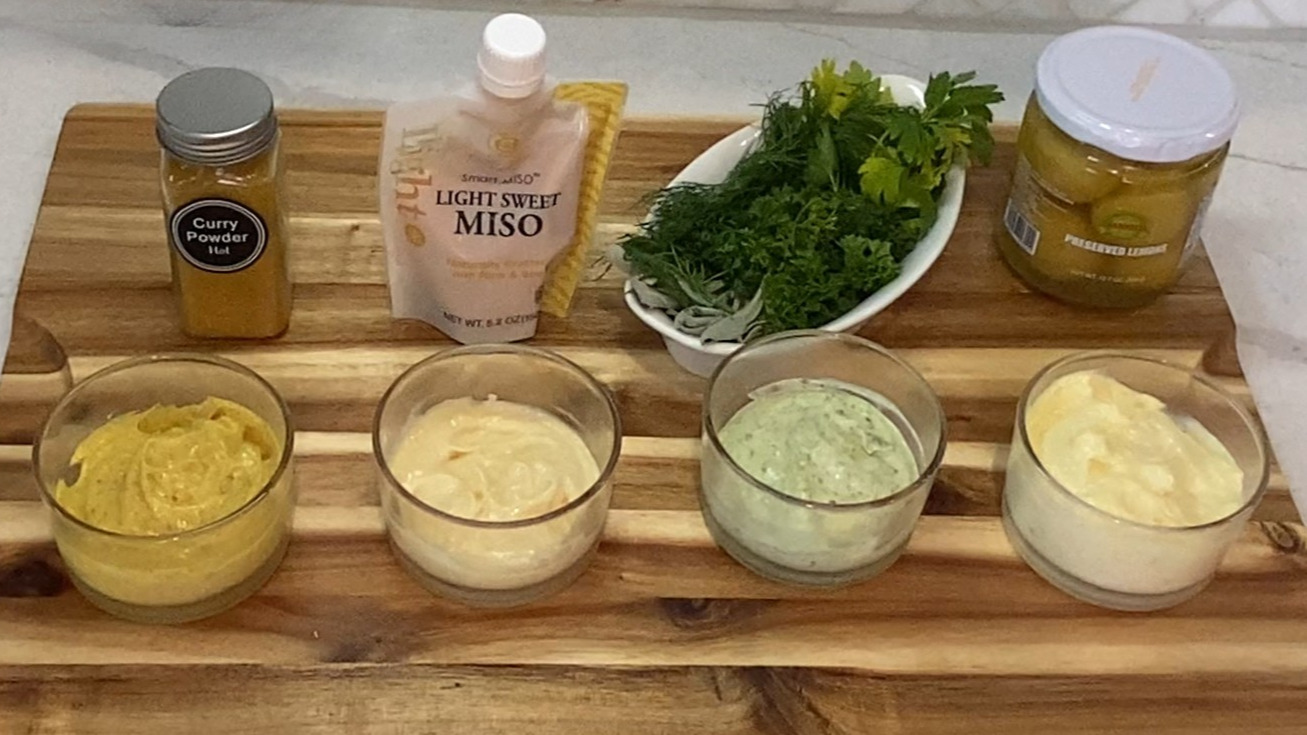
Ingredients
Method
Base Mayonnaise
- Add the egg yolk, Dijon, and acid (lemon juice, vinegar, or preserved lemon brine — see variation groups) to a tall narrow container.
- Add the oil, a little at a time, and emulsify with an immersion blender, starting at the bottom and slowly pulling up as the emulsion sets.
- Season with salt to taste.
Dry Spice Infusion
- Stir the curry powder directly into a fresh batch of finished mayonnaise. No cooking or blooming needed.
- Let it rest 10 minutes before tasting or adjusting.
Fresh Herb Flavoring
- Finely chop the parsley, oregano, and garlic.
- Let the chopped herbs and garlic sit in the vinegar for about 30 seconds.
- Fold the herb-vinegar mixture into a fresh batch of finished mayonnaise.
Acid Swap — Vinegar Variety
- Make the base mayonnaise, substituting your chosen vinegar (apple cider, sherry, or rice) for the standard acid in the same amount.
Acid Swap — Preserved Lemon
- Make the base mayonnaise, substituting preserved lemon brine for the standard acid, built in from the start.
- Once emulsified, fold in the minced preserved lemon rind.
- Start with less rind than you think you need, taste, and build from there.
Notes
Why a fresh batch for each flavor: Each variation starts from its own freshly emulsified base rather than a shared leftover batch, so the immersion blender's short emulsification time isn't a limiting factor and every flavor tastes as clean as it would on its own.
Why miso needs a taste-check first: Miso already carries salt on its own, so this is the flavor move most likely to end up over-salted if you season before tasting.
Why preserved lemon starts small: Preserved lemon rind is cured in salt, which concentrates both its saltiness and its flavor — a little goes much further than fresh lemon zest would.
If you want a milder version of any move: Sriracha or cayenne can stand in for curry powder, Worcestershire or fish sauce can stand in for miso, and any vinegar in the same amount can stand in for the base acid — same role in the formula, different personality in the bowl.