
Salmon and lemon-dill sauce might be the most classic pairing in seafood — and it’s not just tradition. There’s a real reason it works, and once you see it, you’ll know exactly what to reach for the next time you’re deciding what sauce belongs with what fish.
Table of Contents
Why This Salmon with Lemon-Dill Sauce Works
Salmon is rich and buttery all on its own — so the last thing it needs is a sauce piling on more richness. What it wants is contrast: something fresh, something bright. That’s exactly what herbs and acid bring to the table.
This sauce is built from two of the four flavor moves covered in How to Flavor Mayonnaise — herb and acid, working together rather than alone. Lemon juice does double duty here: it’s the acid the mayonnaise formula already calls for, and it’s the flavor salmon wants most, so one ingredient is answering two questions at once. If you want the full breakdown of the base mayonnaise technique or the four flavor moves this sauce draws from, The Mayonnaise Formula and How to Flavor Mayonnaise cover those in depth — this post picks up from there.
How to Make Salmon with Lemon-Dill Sauce
Build the sauce
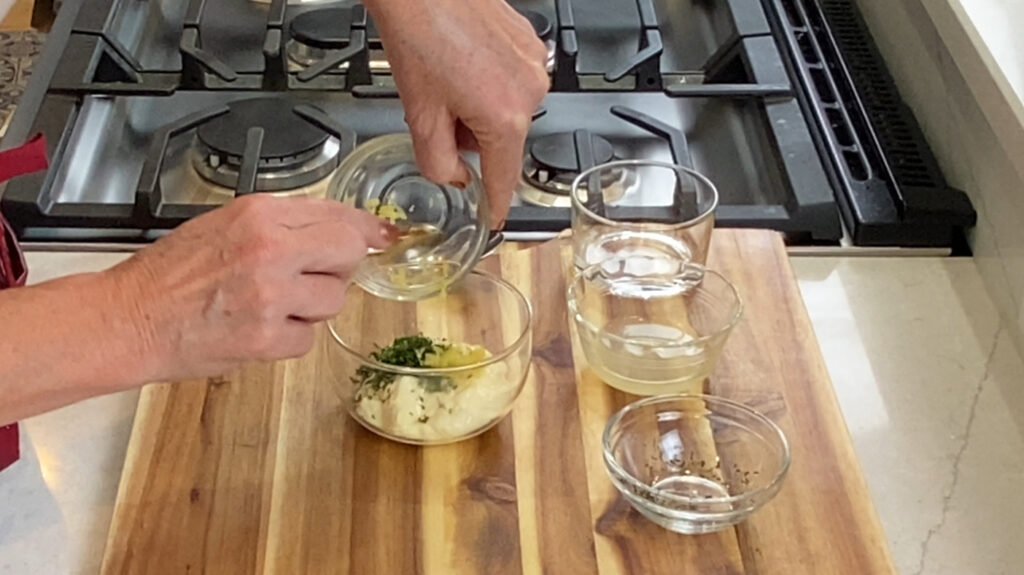
Start with your base mayonnaise, using fresh lemon juice as the acid instead of vinegar. Once the base comes together, fold in finely chopped fresh dill along with a little lemon zest and just enough extra lemon juice to brighten the sauce without thinning it out. Chop the dill fine — larger pieces don’t distribute evenly and can turn the mayo an uneven, clumpy green.
Sear the salmon
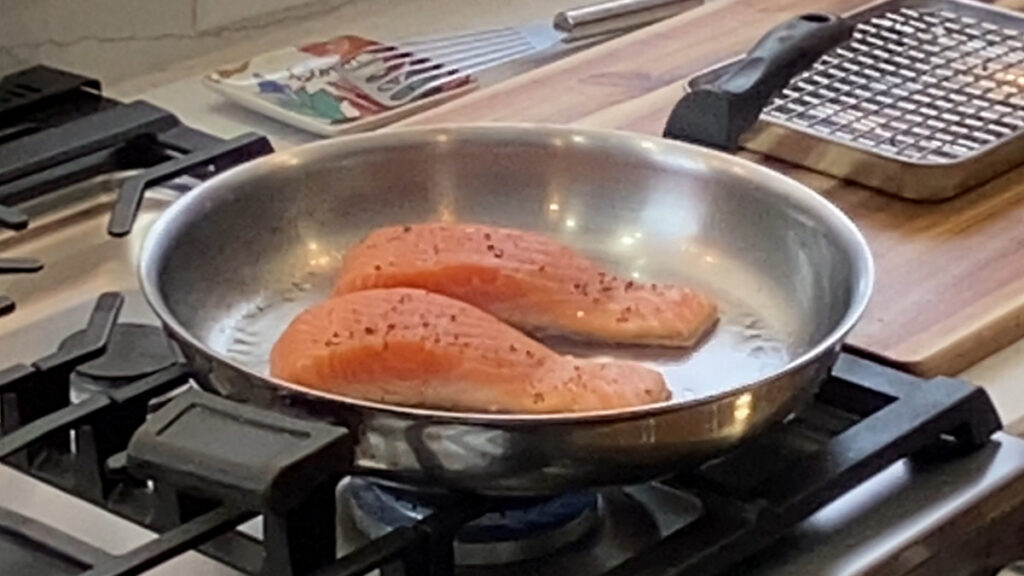
Pat the salmon fillet very dry, especially the skin — a dry surface is what gives you that crisp exterior. Season it just before it goes into a hot pan with a thin layer of oil.
Place it skin-side down and press gently for the first few seconds so the skin stays flat against the pan, then leave it alone and let the heat do the work.
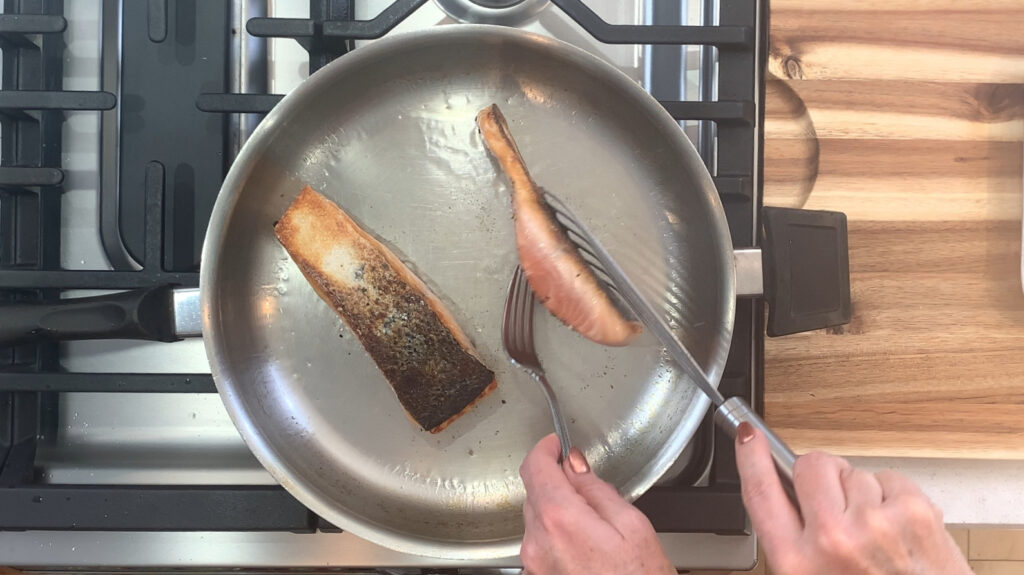
When the salmon has cooked most of the way up the sides and releases easily from the pan, flip it and finish briefly on the second side.
Serve
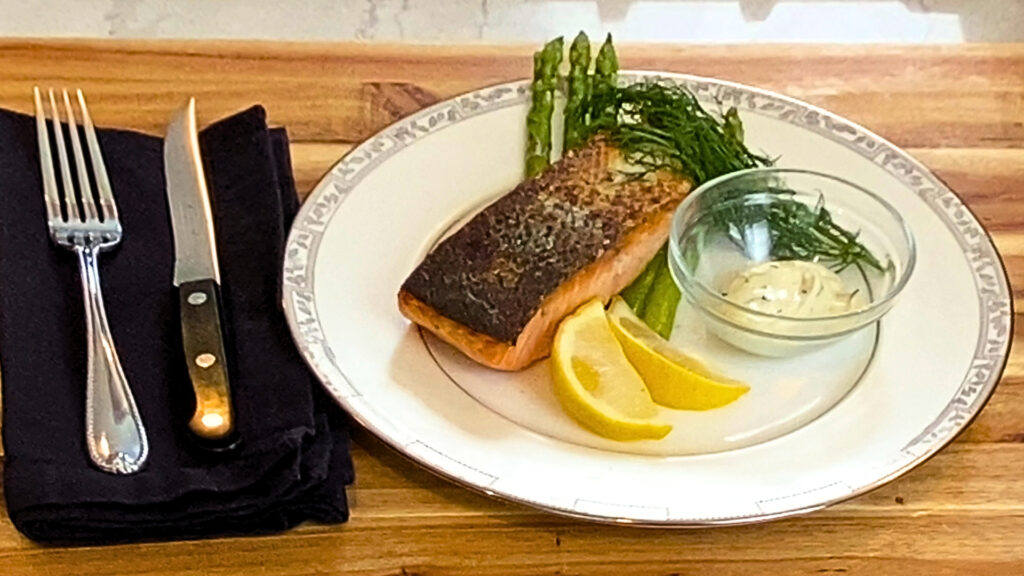
Plate the salmon and spoon the lemon-dill mayo generously over the top, or serve it alongside for dipping. The sauce should taste bright and clean, with the dill up front and nothing heavy about it — a contrast to the richness of the fish, not a cover-up for it.
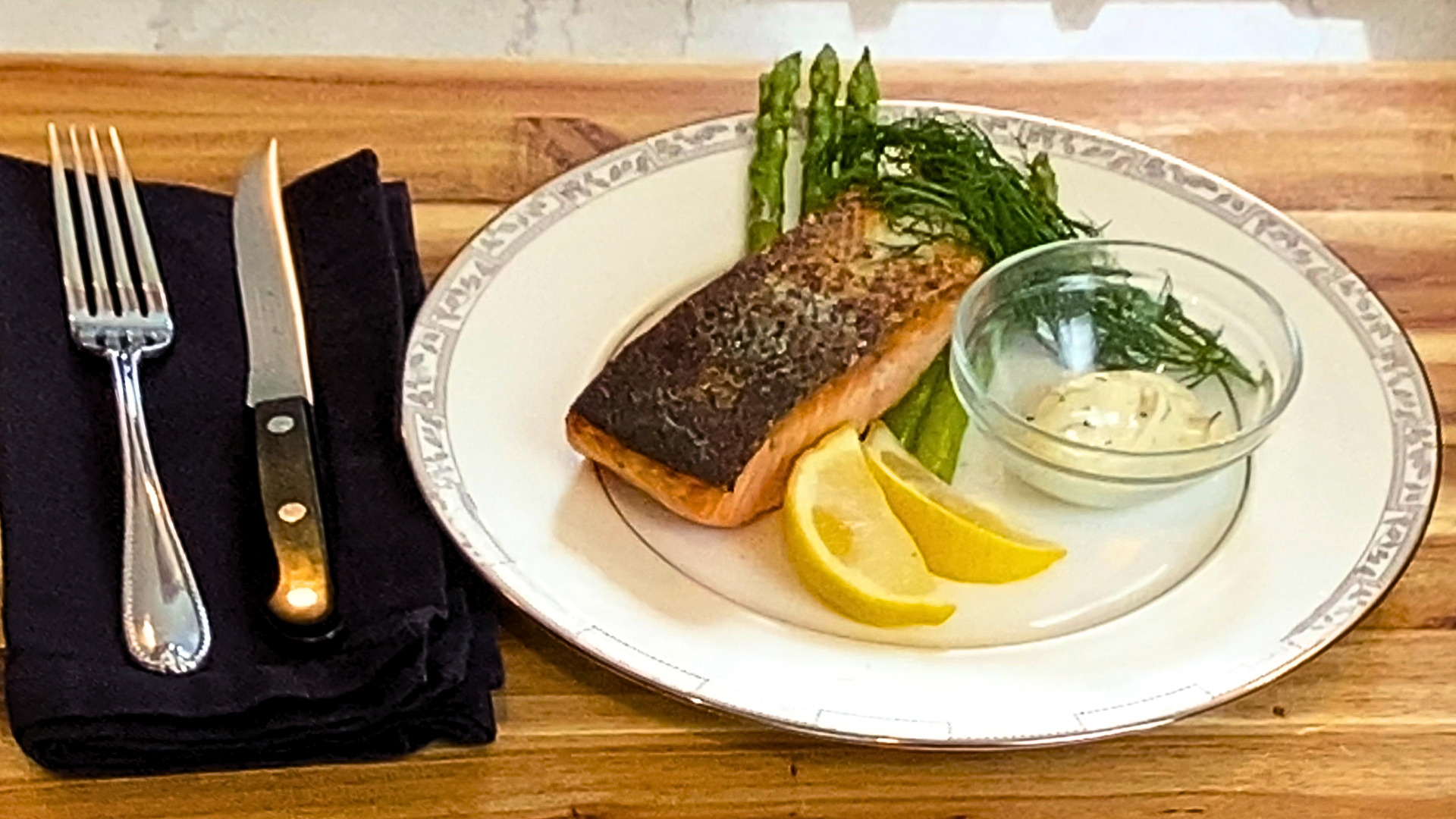
Salmon with Lemon-Dill Sauce
Ingredients
Method
- Combine the egg yolk, Dijon mustard, and lemon juice in a tall, narrow container.
- Add the oil slowly and emulsify with an immersion blender: insert it all the way to the bottom, hold still for several seconds until the emulsion forms, then slowly draw upward until thick and glossy.
- Fold in the lemon zest and chopped dill. Season with salt to taste.
- Pat the salmon fillets very dry, especially the skin — this is what gives you a crisp exterior.
- Season the salmon just before cooking.
- Heat a thin layer of oil in a pan over medium-high heat.
- Place the salmon skin-side down and press gently for the first few seconds so the skin stays flat against the pan. Leave it undisturbed and let the heat do the work.
- Once the salmon has cooked most of the way up the sides and releases easily from the pan, flip it and finish briefly on the second side.
- Plate the salmon and spoon the lemon-dill mayonnaise over the top, or serve alongside for dipping.
Notes
FAQ
- Can I use a different fish for this sauce? Yes — this sauce works best with rich, fatty fish that can stand up to a bright contrast. Trout or Arctic char are good substitutes with a similar richness to salmon.
- Do I need fresh dill, or will dried work? Fresh is worth it here. Dried dill has a muted, slightly hay-like flavor compared to fresh, and since dill is the lead flavor in this sauce, the difference is noticeable. If fresh isn’t available, use about a third of the amount in dried form and expect a less vibrant result.
- How do I keep the salmon skin from sticking to the pan? A very dry surface and a properly hot pan before the fish goes in are the two biggest factors. Resist moving the fillet for the first couple of minutes — the skin releases naturally once it’s properly seared, and forcing it early will tear the skin instead.
- Can I make the lemon-dill mayo ahead of time? Yes, it keeps refrigerated for about a week in an airtight container, same as any homemade mayonnaise. The flavor actually rounds out a bit after an hour or two, so making it slightly ahead isn’t a downside.
- What sides pair well with salmon with lemon-dill sauce? Something simple that won’t compete with the bright, herby flavor — roasted asparagus, a light cucumber salad, or plain rice all work well.
Related Recipes
- The Mayonnaise Formula — the base technique this sauce builds on
- How to Flavor Mayonnaise — the four flavor moves explained in full
- Beer-Battered Cod with Tartar Sauce (coming soon)
- Cajun Crab Cakes with Remoulade (coming soon)
Series Navigation
This recipe is one of three seafood pairings from Episode 3 of The Egg Emulsion Formula series, following The Butter Sauce Formula.
- Episode 1: The Mayonnaise Formula
- Episode 2: How to Flavor Mayonnaise
- Episode 3: The Best Seafood Mayo Sauces — Salmon with Lemon-Dill Sauce (this post), Beer-Battered Cod with Tartar Sauce, Crab Cakes with Cajun Remoulade
- Episode 4: Restaurant Burger Sauces Explained (coming soon)