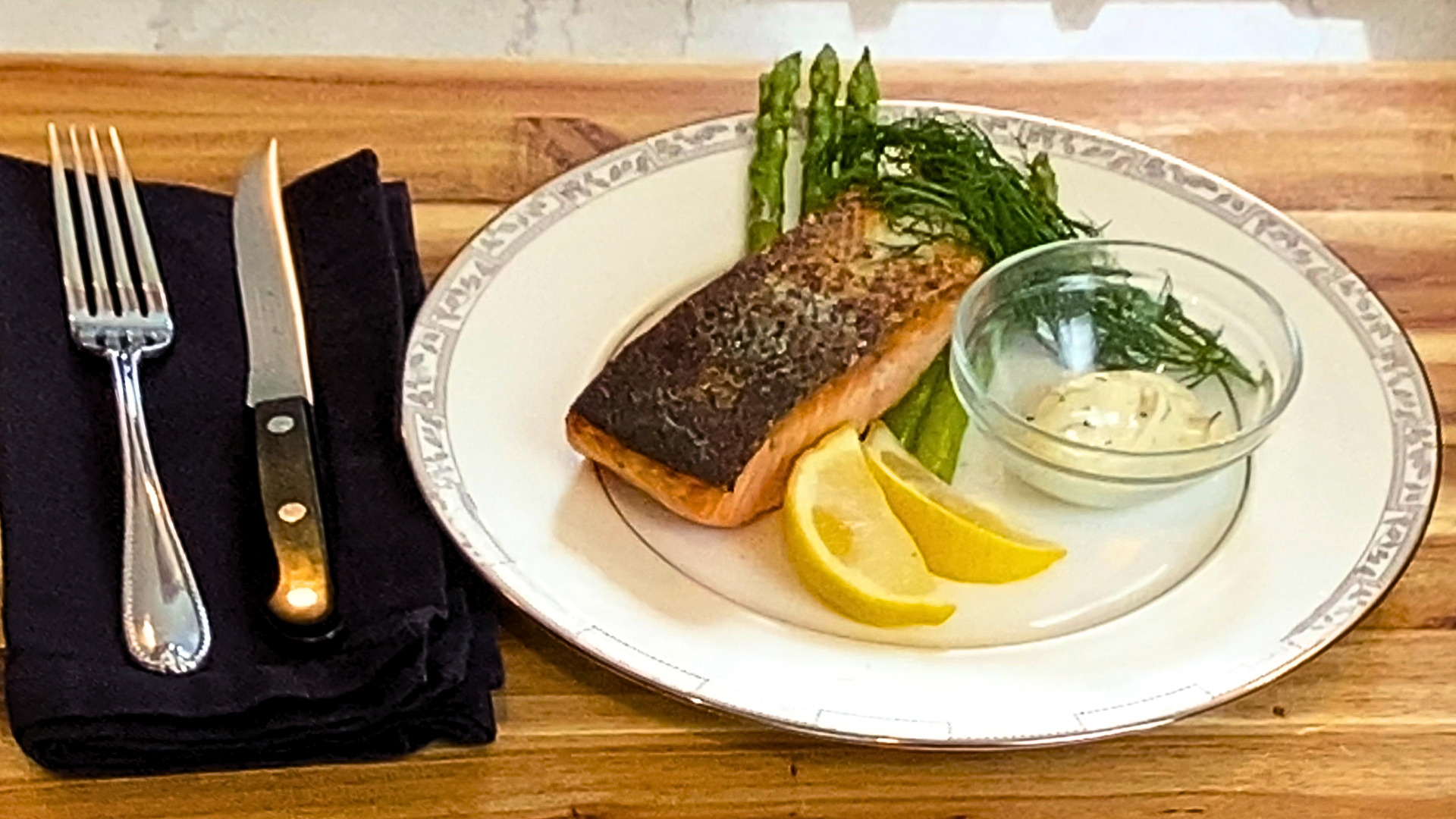
Ingredients
Method
- Combine the egg yolk, Dijon mustard, and lemon juice in a tall, narrow container.
- Add the oil slowly and emulsify with an immersion blender: insert it all the way to the bottom, hold still for several seconds until the emulsion forms, then slowly draw upward until thick and glossy.
- Fold in the lemon zest and chopped dill. Season with salt to taste.
- Pat the salmon fillets very dry, especially the skin — this is what gives you a crisp exterior.
- Season the salmon just before cooking.
- Heat a thin layer of oil in a pan over medium-high heat.
- Place the salmon skin-side down and press gently for the first few seconds so the skin stays flat against the pan. Leave it undisturbed and let the heat do the work.
- Once the salmon has cooked most of the way up the sides and releases easily from the pan, flip it and finish briefly on the second side.
- Plate the salmon and spoon the lemon-dill mayonnaise over the top, or serve alongside for dipping.
Notes
Why lemon juice as the acid: Lemon juice does double duty in this sauce — it's the acid the mayonnaise formula already calls for, and it's the flavor salmon wants most. One ingredient answers two questions at once, rather than needing a separate acid and a separate flavoring.
Why the salmon skin needs to be very dry: A dry surface is what allows the skin to crisp properly in the pan rather than steaming. Pat it dry right before seasoning, not earlier.
Storage: The lemon-dill mayonnaise keeps about a week refrigerated in an airtight container, same as any homemade mayonnaise.
Fish substitutes: This sauce works well with any rich, fatty fish — trout or arctic char are good substitutes for salmon.