
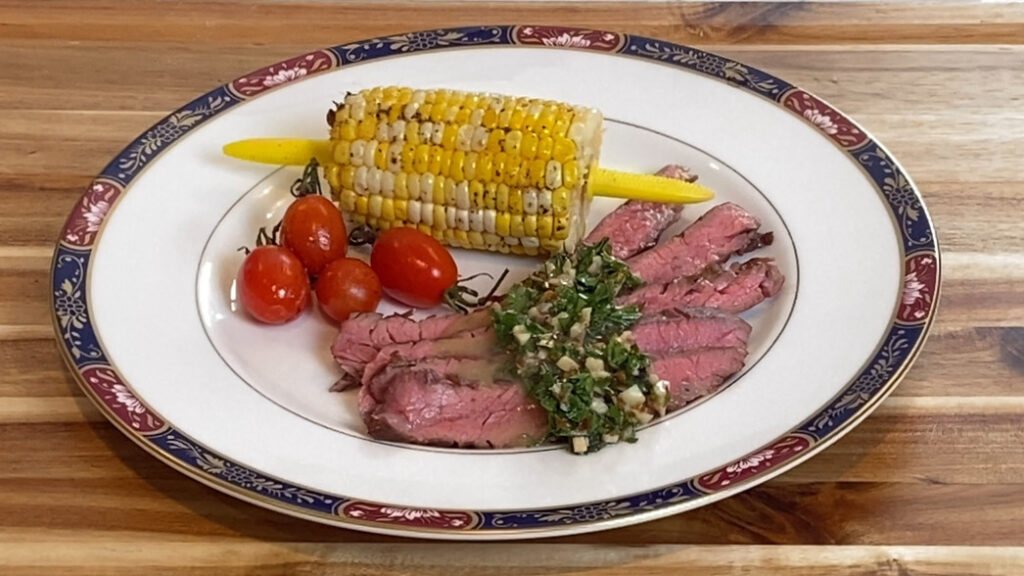
Hook
Traditional chimichurri is oil, vinegar, garlic, and herbs — rough-chopped, uncooked, and never fully combined. They just sit together in the bowl. This isn’t that. This is a chimichurri butter sauce — built with the same herby, bold flavor base, but finished completely differently.
It uses the same butter sauce formula from this series — cold butter mounted into a warm base until it emulsifies — carrying the bold, herby punch of chimichurri instead of its usual raw bite. Same French technique, borrowed flavors, paired here with a grilled flank steak that brings the smoky char chimichurri is built to stand up to.
Why This Works
Traditional chimichurri never really combines — it’s an oil-and-vinegar mixture that sits together rather than emulsifying, which is exactly why it pools and runs off whatever you spoon it over. Mounting cold butter into a warm liquid base, a little at a time, forces an emulsion: the fat disperses into tiny droplets suspended in the liquid instead of separating, which is what gives the sauce real body and the ability to cling.
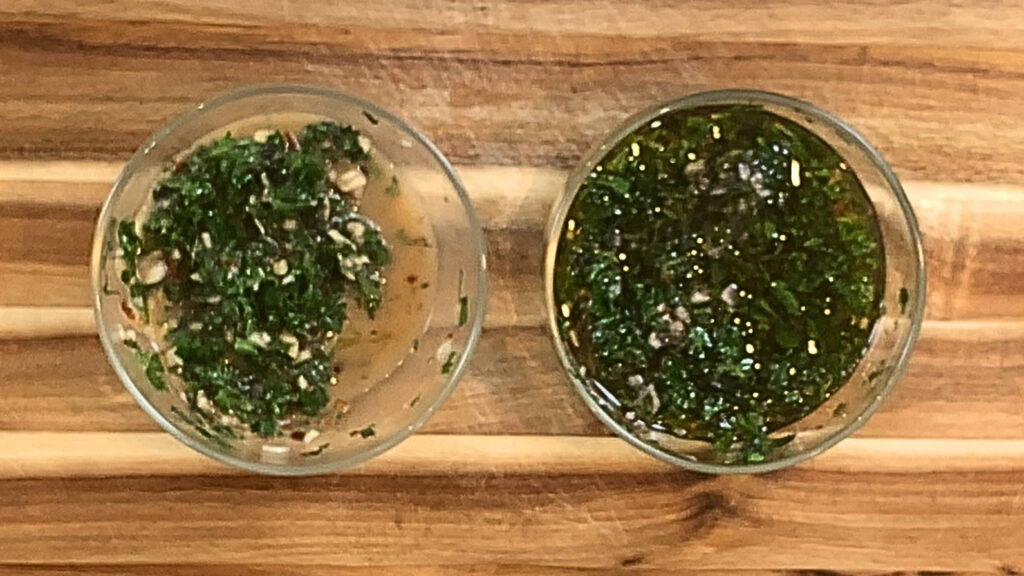
That’s the trade this chimichurri butter sauce makes.. You lose a little of chimichurri’s raw, sharp bite, and you gain a sauce with actual weight — one that coats a slice of steak instead of sliding off the cutting board. The bold, rough-chopped herbs stay exactly where they were in the traditional version; only the way the sauce holds together changes.
It’s the same mounting technique this series has used to build a beurre blanc and a brown butter sage sauce — proof the formula isn’t tied to French ingredients. It travels to whatever flavor tradition you point it at.
Comparing Traditional Chimichurri and Chimichurri Butter Sauce
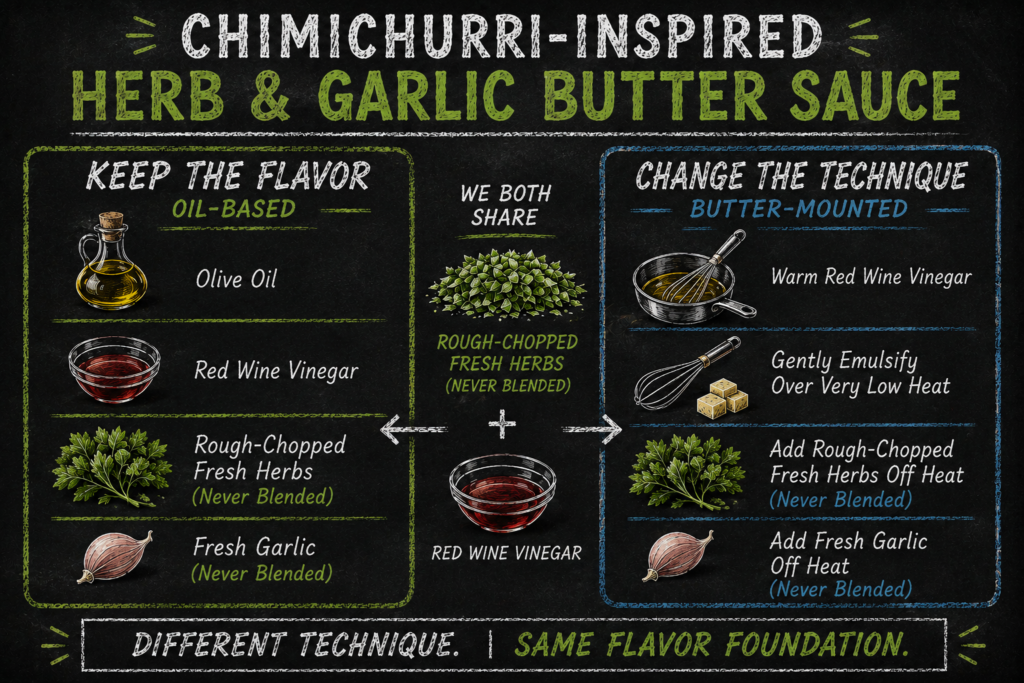
Walkthrough
Fire up the grill. Preheat to medium-high, 450–475°, lid down, for a full 10–15 minutes. The steak needs real heat waiting for it before it ever touches the grates.
Season and grill the steak. Salt and pepper, then lay the steak down and leave it alone. Four to five minutes per side, undisturbed, flipping once. Flank steak is thin and cooks fast — the whole cook is under 10 minutes.
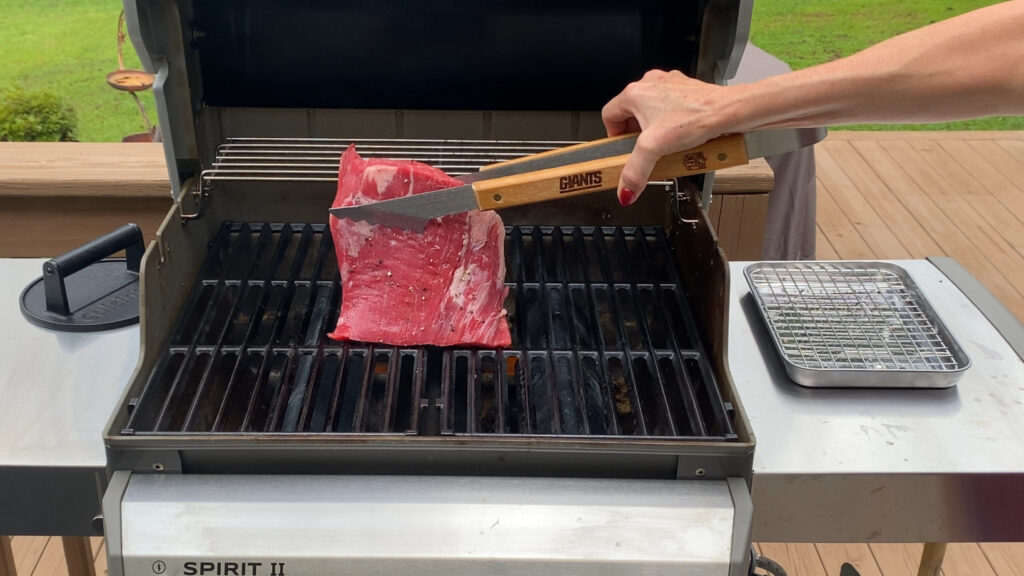
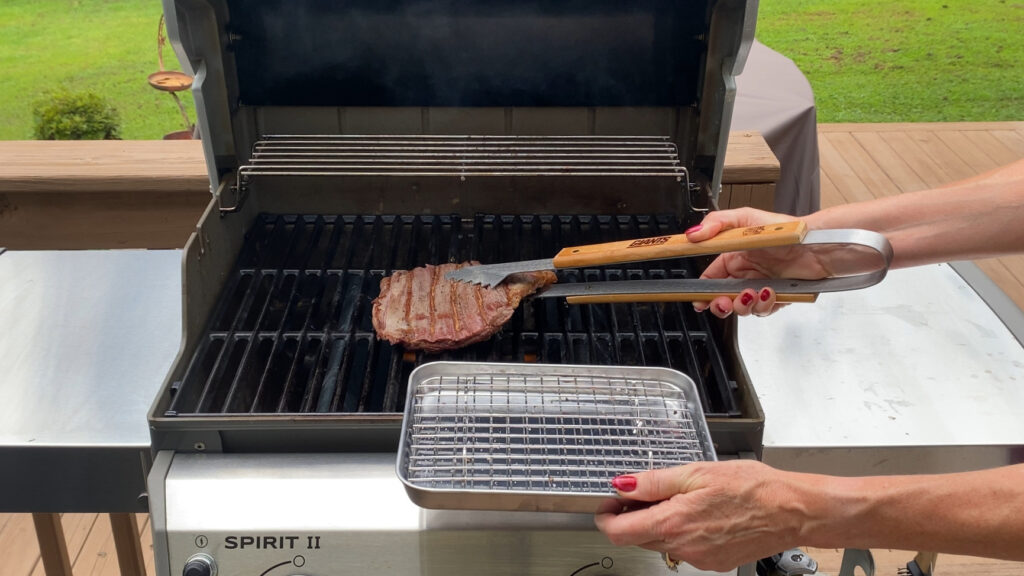
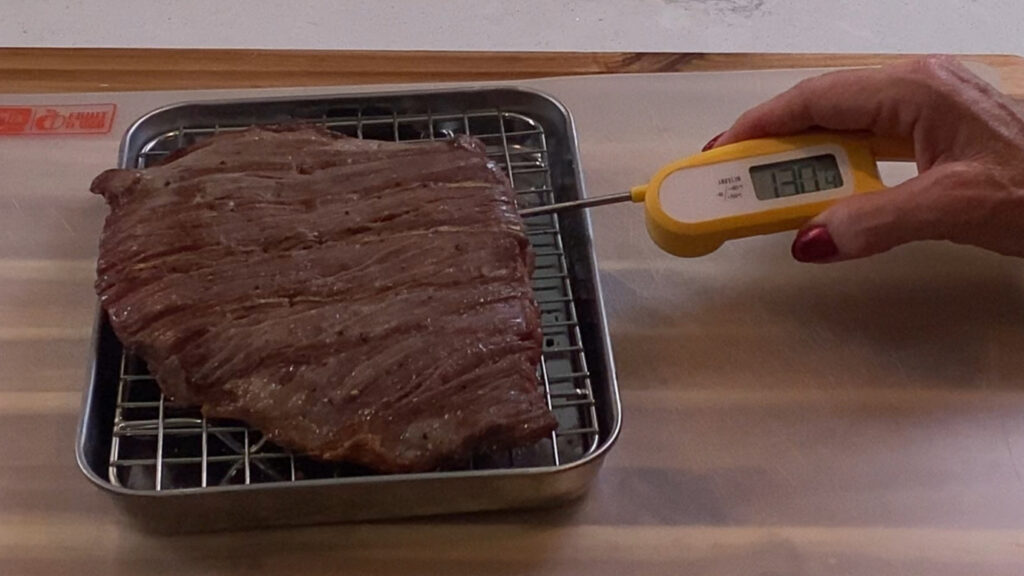
Pull and rest. Pull the steak once it reads 130–135° for medium-rare — it’ll climb a few more degrees as it rests. Then walk away. Resting is the hardest, most skippable step, and the one that matters most.
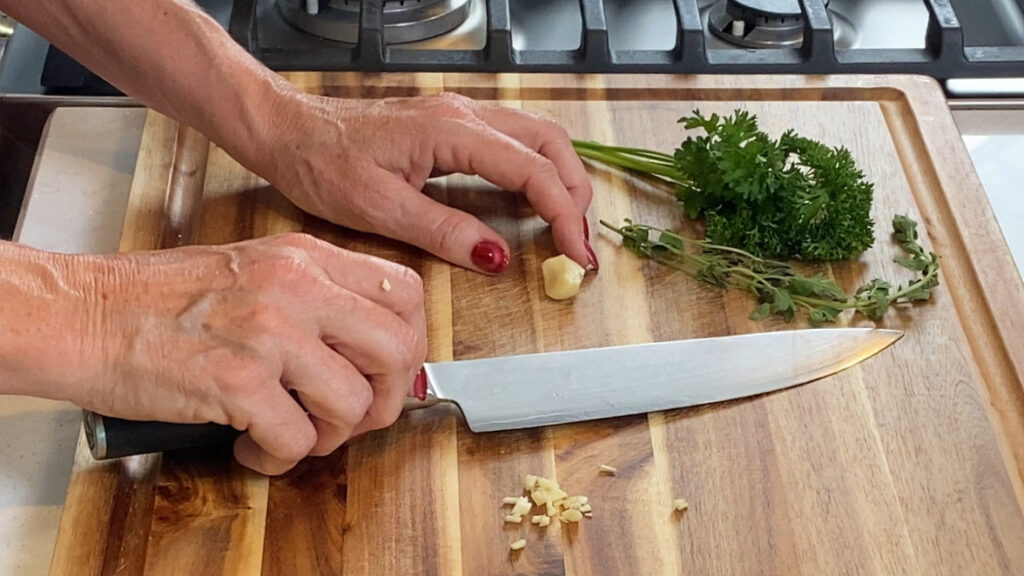
Rough-chop the chimichurri base. Garlic, parsley, and oregano — rough-chopped, not smooth. That texture is non-negotiable; it’s the one thing carried over unchanged from traditional chimichurri. No fresh oregano on hand? Use 1 teaspoon dried for every tablespoon fresh.
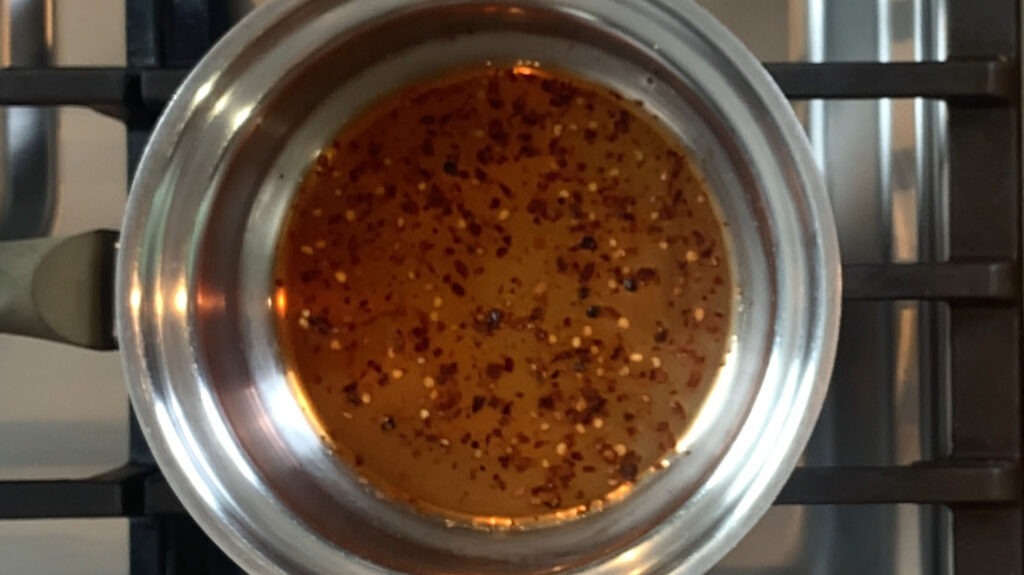
Warm the vinegar base. Red wine vinegar, red pepper flakes, salt, and pepper into the pan over low heat — just warmed through, not reduced.
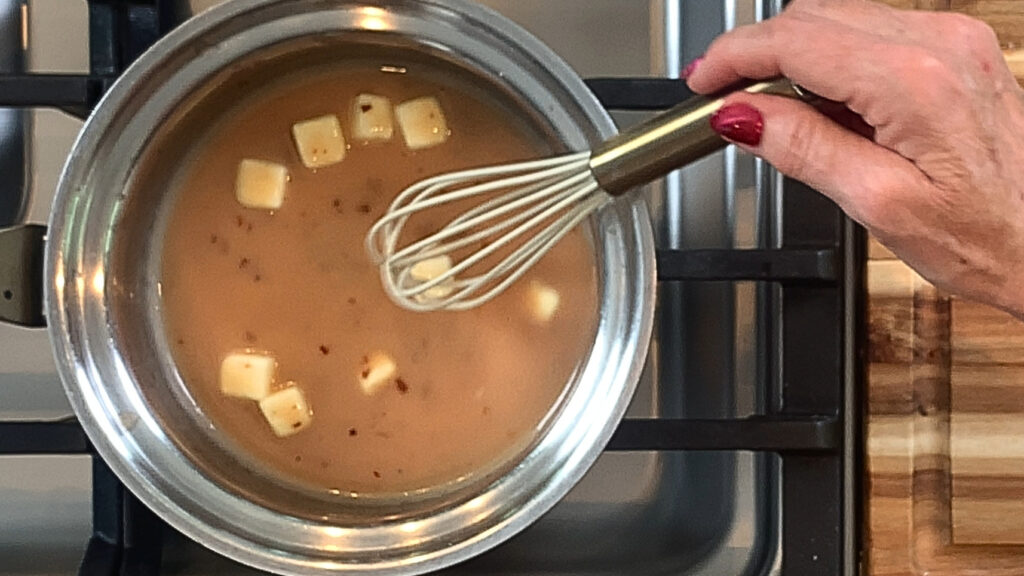
Mount the butter. This is the twist. Whisk in cold butter a little at a time, keeping the heat low and lifting the pan off the burner if things move too fast. You’re not melting the butter — you’re mounting it, whisking it into the liquid so it emulsifies slowly and builds body instead of just adding richness.
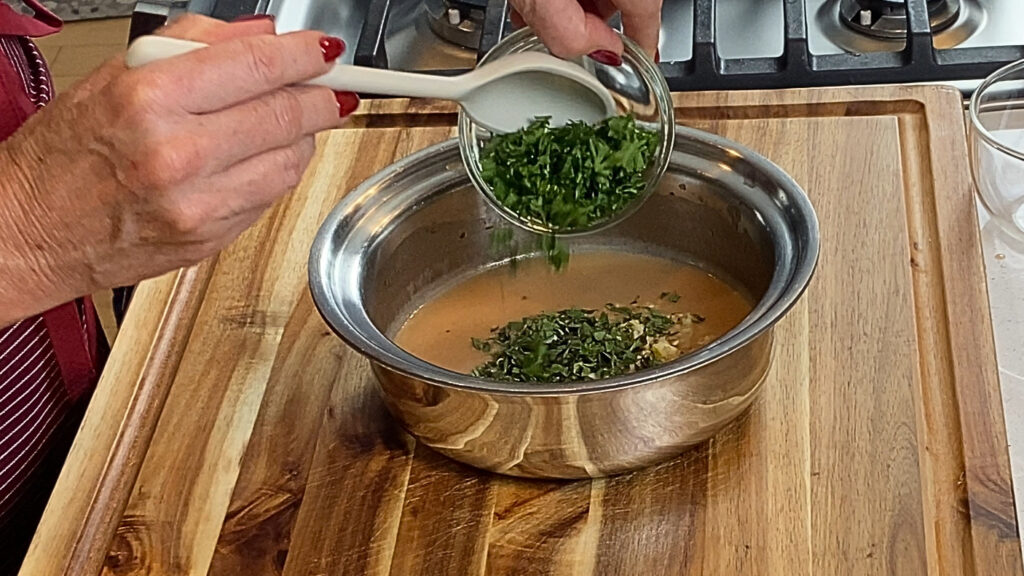
Fold in the herbs, off heat. Once the butter’s fully incorporated, pull the pan off the heat and let it sit about 20 seconds — that brief pause keeps residual heat from wilting the fresh herbs. Then fold in the garlic, parsley, and oregano raw, gently, keeping that rough texture intact.
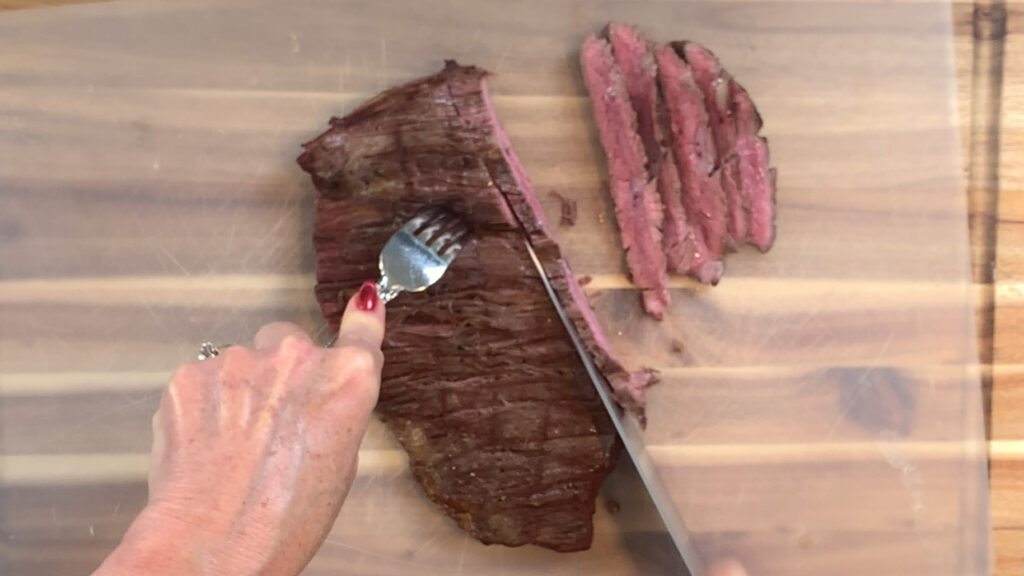
Slice against the grain. Find the direction of the muscle fibers and cut across them, not with them. This is the entire difference between a tender bite and a chewy one.
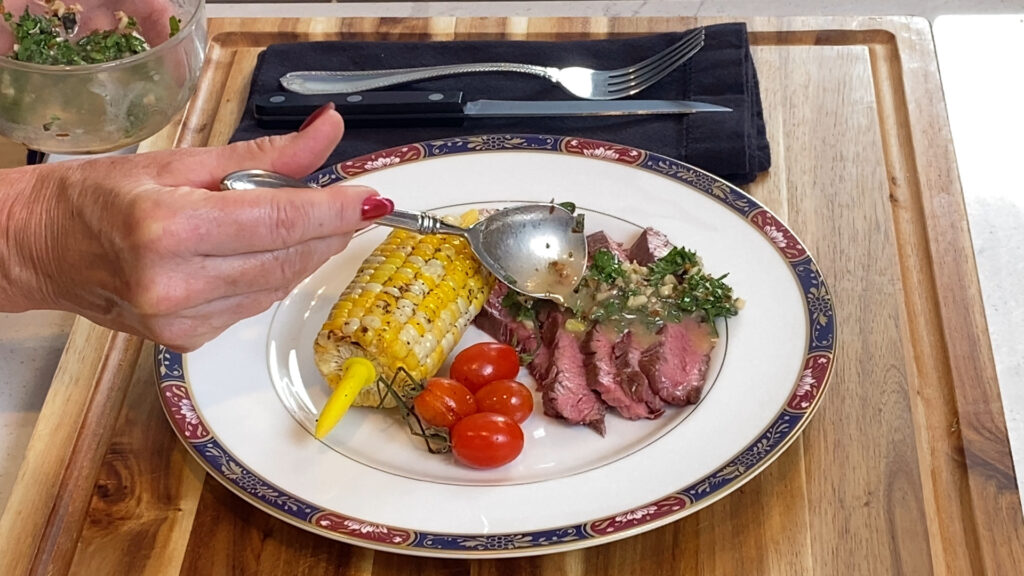
9. Plate and sauce generously. Fan the slices out and spoon the sauce generously over the top. This dish is meant to be a little messy.
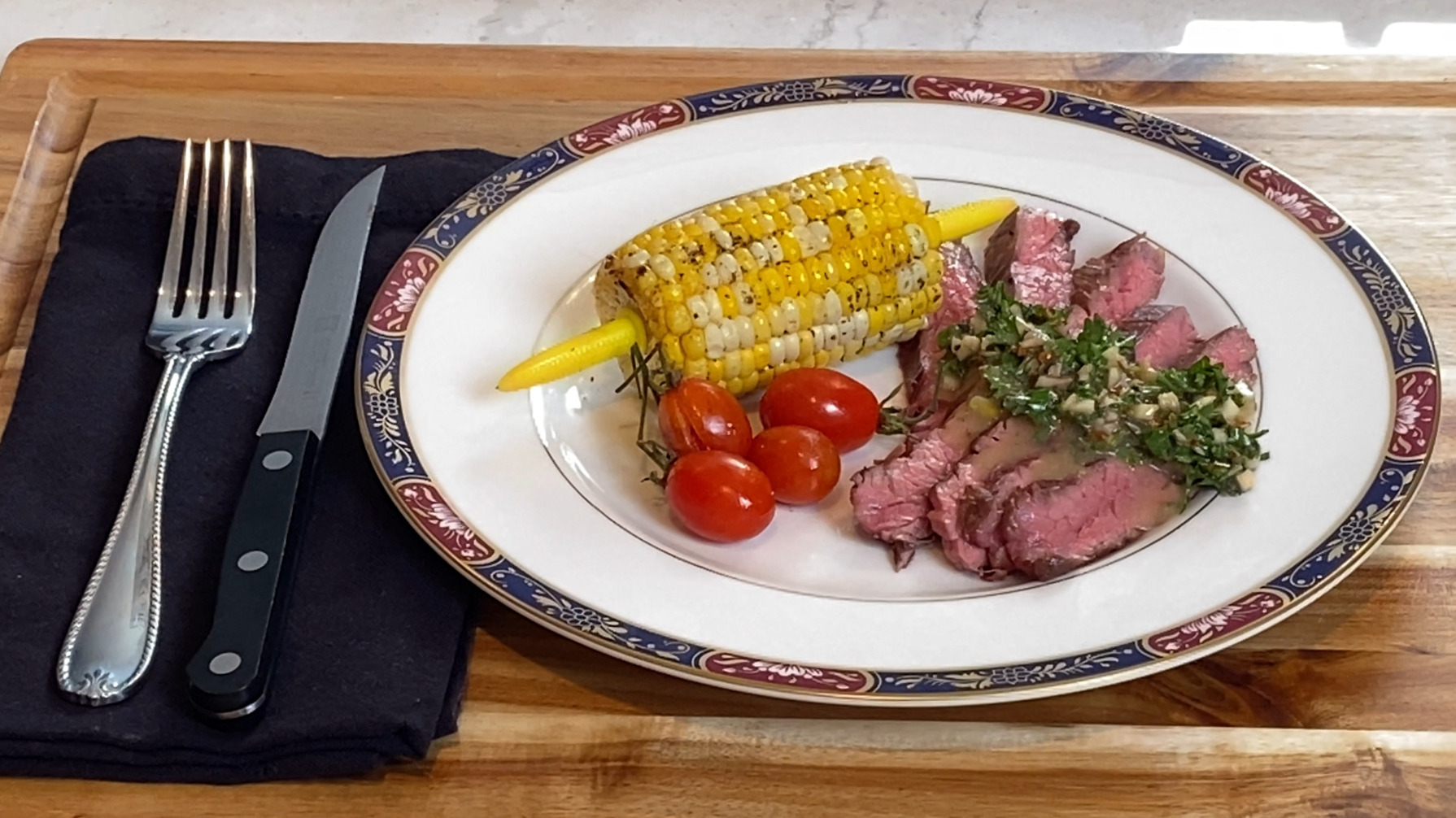
Chimichurri-Inspired Herb & Garlic Butter Sauce
Ingredients
Method
- Preheat the grill to medium-high, 450–475°F, lid down, for a full 10–15 minutes before the steak goes on.
- Season the flank steak generously with salt and pepper.
- Lay the steak on the grates and sear undisturbed for 4–5 minutes. Flip once and sear the second side for another 4–5 minutes. Total cook time is under 10 minutes.
- Pull the steak off the grill once it reads 130–135°F for medium-rare (it will climb a few degrees as it rests). Let it rest while you build the sauce.
- Rough chop the garlic, parsley, and oregano — keep the texture coarse, not smooth.
- In a small saucepan over low heat, warm the red wine vinegar, red pepper flakes, salt, and pepper. This is a gentle warm-through, not a reduction.
- Mount the cold butter into the vinegar base a few pieces at a time, whisking constantly over very low heat. Lift the pan off the burner if it starts moving too fast — the same heat-control move used throughout the series.
- Once the butter is fully incorporated, pull the pan off the heat and let it sit for 20 seconds to cool slightly before adding the herbs.
- Fold in the raw garlic, parsley, and oregano gently — no heat, texture stays intact.
- Slice the steak against the grain, cutting across the muscle fibers.
- Fan the sliced steak on a plate and spoon the sauce generously over the top.
Notes
FAQ
Is this the same as chimichurri?
No — and that’s intentional. Traditional chimichurri is raw: parsley, oregano, garlic, and red wine vinegar loosely combined with olive oil, no heat involved. This sauce borrows that same bold, rough-chopped flavor base, but swaps the oil for cold butter mounted in with gentle heat — the same French technique used for the beurre blanc and brown butter sauces earlier in this series. The result is smoother and clingier than traditional chimichurri, with a little less raw bite in exchange for real body. Think of it as chimichurri’s flavor profile, rebuilt with a different technique — not a copy of the original.
Can I use this on other proteins?
Yes. The sauce isn’t tied to flank steak specifically — it’s built to go wherever a bold, herby butter sauce fits. Chicken and grilled vegetables are both good matches, especially anything that could use a little smoky char to play off the sauce’s bright, acidic edge.
Can I substitute dried oregano for fresh?
Yes. Use 1 teaspoon of dried oregano for every 1 tablespoon of fresh called for in the recipe — dried herbs are more concentrated, so a smaller amount stands in for the fresh version without throwing off the balance.
How long does this sauce keep?
Store any leftover sauce in an airtight container in the refrigerator for up to 3 days. Because it’s a mounted butter sauce, it will firm up completely once chilled — that’s expected, not a sign anything went wrong. To bring it back, warm it gently over low heat, stirring constantly, until it loosens back into a sauce. Avoid the microwave or high heat, both of which can cause the butter to break rather than remelt smoothly.
Series Navigation
Butter Sauces series: Ep8 Beurre Blanc → Ep9 Brown Butter Sage Sauce → Ep10 Lemon Butter Sauce → Chimichurri-Inspired Butter Sauce (this recipe) → Sandefjordsmør, a Norwegian Butter Sauce (coming soon)