
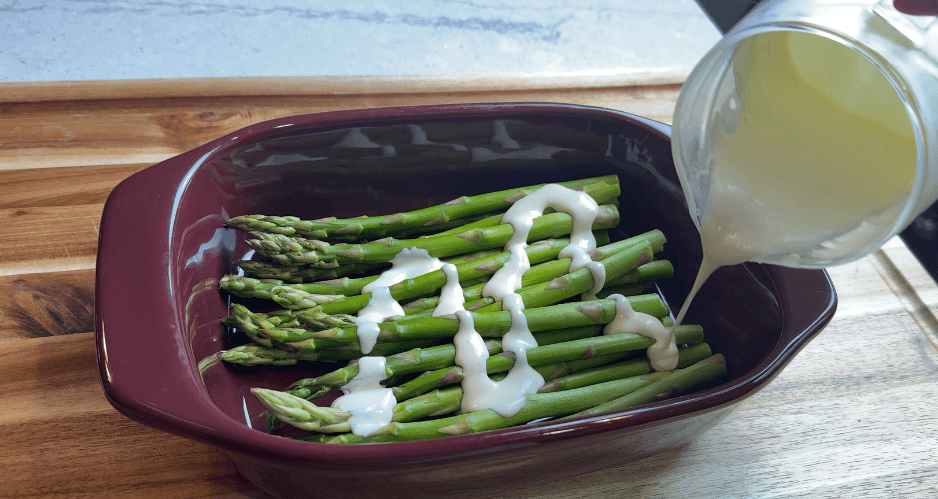
The three rules that turn a temperamental sauce into a reliable one — heat, fat, and timing.
Cream sauce has a reputation for being temperamental. One minute it’s smooth and luxurious, the next it’s oily, grainy, or split into a curdled mess. Most home cooks blame themselves, or blame the cream. Neither is the real problem.
The truth is that a cream sauce isn’t a recipe — it’s a formula. The cream sauce formula has three rules: heat, fat percentage, and timing.
This is the foundation post for the Cream and Cloves Science of Sauces series. Every cream-based sauce in this series — the garlic parmesan, the mushroom cream, and the ones still to come — builds on what’s here. Master this, and the rest gets easier.
Why cream sauces break (and why it’s not your fault)
To understand why cream sauces fail, you have to know what cream actually is. Heavy cream is an emulsion — tiny droplets of fat suspended in water, held in balance by milk proteins. That balance is what gives cream its silky body. When the balance breaks, the sauce breaks with it.
Two things break the balance, and both come back to heat.
The first is direct heat damage. When cream gets too hot, too fast, the milk proteins tighten and squeeze out the fat they were holding in suspension. The fat rises to the surface as a slick of oil, and the proteins clump into grainy bits. Once that happens, you can’t fully recover the sauce. This is what people mean when they say a sauce has “broken” or “curdled.”
The second is acid shock. Acid — lemon juice, wine, vinegar — destabilizes the emulsion on contact. In a cool sauce, the acid integrates fine. In a hot pan, it instantly curdles the cream the same way a splash of vinegar curdles milk. This is why so many cream sauces fail at the very last step, when the cook adds a squeeze of lemon to brighten the flavor — and watches the sauce break in front of them.
Both failure modes have the same root cause: the sauce was too hot when something happened to it. The whole formula is built around managing that.
The cream sauce formula: heat, fat, and timing
Three rules. Each one solves a specific failure mode. Together, they’re the entire technique.
Rule one: control the heat
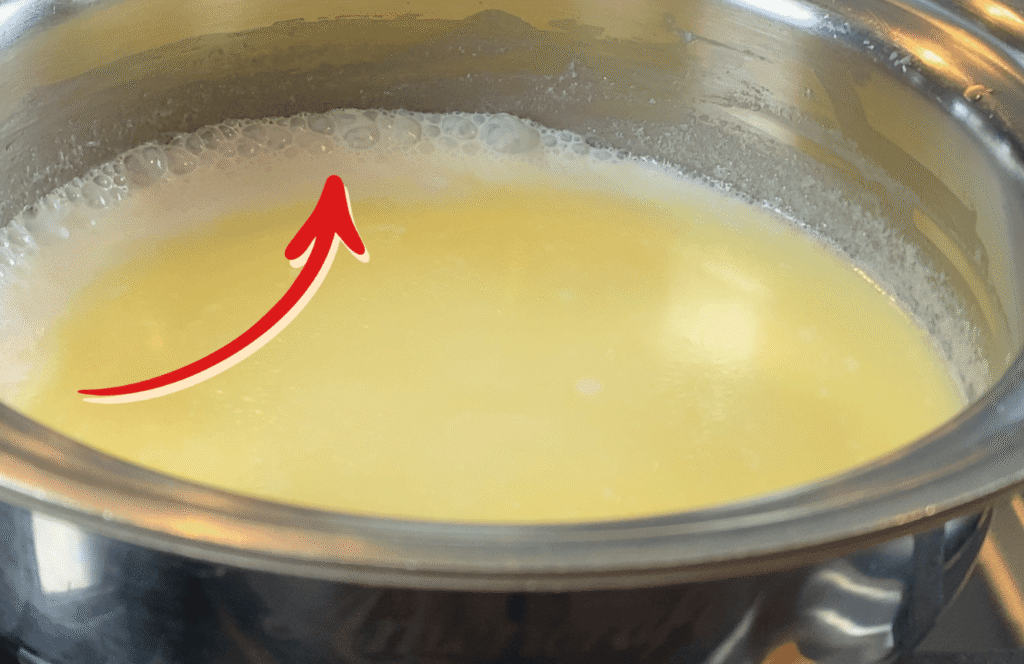
Cream doesn’t forgive high heat. The moment the surface of a cream sauce starts to roll at a boil, you’re past the point where the proteins are happy. Keep below a hard boil at all times — small bubbles around the edge of the pan, gentle movement on the surface, never a vigorous simmer.
This starts before the cream even goes in. Melt your butter on low heat, not medium. If the butter browns, you’ve already lost — the pan is too hot to receive the cream safely. Start over. It costs you two tablespoons of butter and saves the whole sauce.
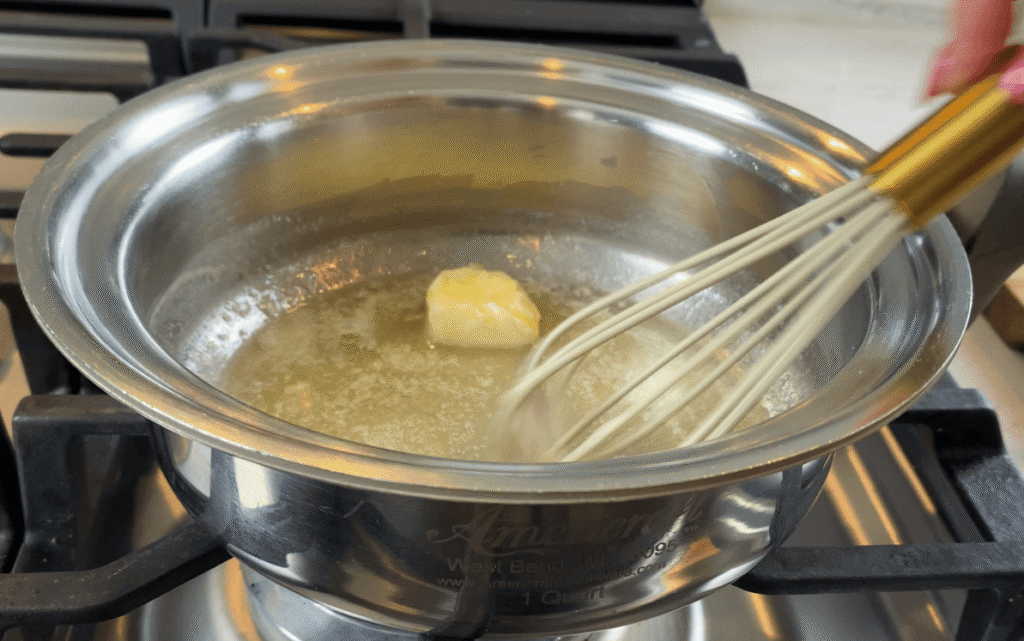
When the cream goes in, watch for those tiny bubbles forming around the edge of the pan. That’s the temperature you want, and that’s where you hold it. If it ever starts climbing toward a real boil, pull the pan off the heat for a few seconds, then return it. You control the heat. The heat doesn’t control you.
Rule two: use the right fat percentage
Cream needs enough fat to hold itself together under heat. Heavy cream at 36 to 40% fat is the standard, and it’s not negotiable for a reliable sauce. The fat is what stabilizes the emulsion through reduction — there has to be enough of it suspended in the liquid to coat the proteins and keep them from clumping.
Half-and-half (around 10–12% fat) and whole milk (around 3.5%) don’t carry enough fat for this. They might work in a thin pan sauce that you don’t reduce much, but the moment you try to reduce them or add anything that stresses the emulsion, they split. Save them for coffee. For a cream sauce, reach for the heavy cream.
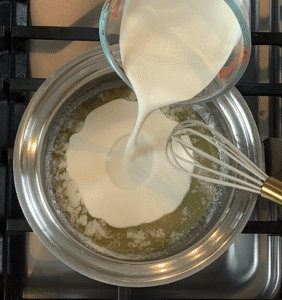
And add it cold. Cold cream into warm butter is the right move — pouring cold cream into a hot pan, or hot cream into cold fat, both create a temperature shock that can fracture the emulsion before reduction even starts.
Rule three: respect the timing
The cream sauce formula relies on a slow reduction — about a third before it’s ready. That takes time — usually 5 to 10 minutes at a gentle simmer, depending on your pan and burner. There’s no shortcut. Cranking the heat to speed it up is the single most common reason home cooks ruin a cream sauce that was on track.
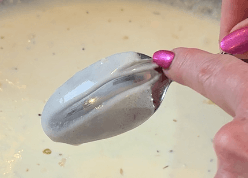
Watch for the coat-the-spoon test: dip a spoon in the sauce, lift it out, and drag your finger across the back. If the line your finger leaves stays clean — doesn’t immediately flood back together — the sauce is reduced enough. That’s the moment you can start adding aromatics, finishing flavors, or moving toward the acid step.
And when you get to the acid — the lemon at the end — pull the pan off the heat first. Always. This is where the sauce is most vulnerable, and a hot pan plus a squeeze of lemon is the fastest way to undo all the work you just did.
Ingredient notes
Heavy cream — 36 to 40% fat. This is the structural ingredient. Read the label. “Whipping cream” in the US is usually around 30%, which is borderline. “Heavy cream” or “heavy whipping cream” should be 36% or higher. If the carton doesn’t say, look at the fat grams: about 5g per tablespoon means roughly 36% fat.
Butter — unsalted. Unsalted gives you control over the final seasoning, which matters in a sauce this delicate. Two tablespoons is enough to coat the pan and gently soften the aromatics — you’re not building a roux, just creating a flavor base for the cream to land in.
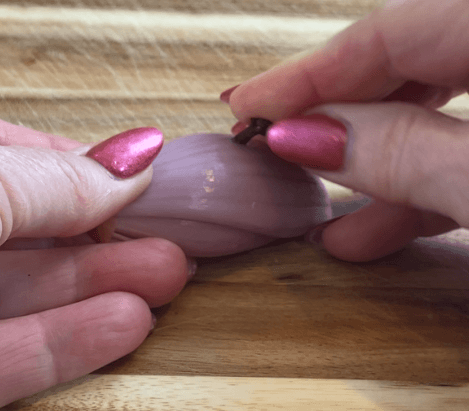
Shallot, studded with a clove. This is a traditional French technique called an oignon piqué — literally “pricked onion.” The whole clove infuses warmth and depth into the cream, and because it’s stuck into the shallot, it’s easy to remove later. The shallot itself adds a delicate, sweeter onion flavor than a yellow onion would. Both are optional in the sense that you can substitute, but together they give the sauce its classic character. If you don’t have a shallot, half a small yellow onion works. If you skip the clove, the sauce loses a quiet warmth you’d miss without being able to name.
Garlic — fresh, smashed. Smashing the clove releases the oils gently without turning the garlic harsh or grassy. The whole smashed clove infuses flavor into the sauce and then gets strained out at the end, so you get the aroma without any bite. If you only have garlic powder, use about a quarter teaspoon — dried spices are concentrated, and a full teaspoon will overpower the cream.
White pepper, not black. White pepper adds the same warmth as black pepper but doesn’t leave dark specks in a pale sauce. For a cream sauce where the visual is part of the appeal, it’s worth keeping a small jar on hand. A pinch is enough — you want warmth in the background, not a peppery sauce.
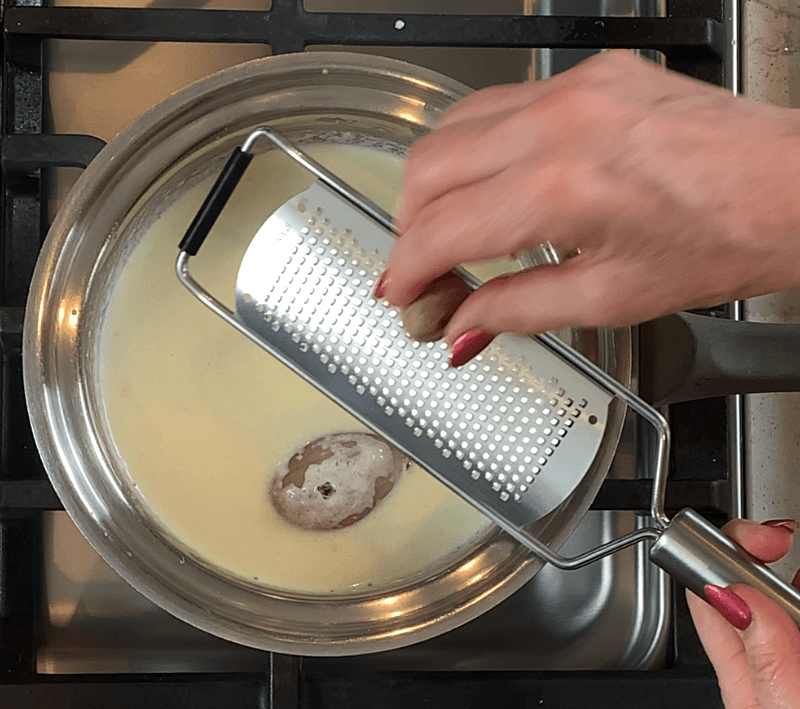
Fresh nutmeg, grated at the end. People assume nutmeg will make the sauce taste like Thanksgiving. It won’t. A pinch of fresh-grated nutmeg adds a quiet warmth you don’t consciously taste — but you’d notice immediately if it were missing. Pre-ground nutmeg loses its character fast; a whole nutmeg and a microplane will last you years and taste worlds better.
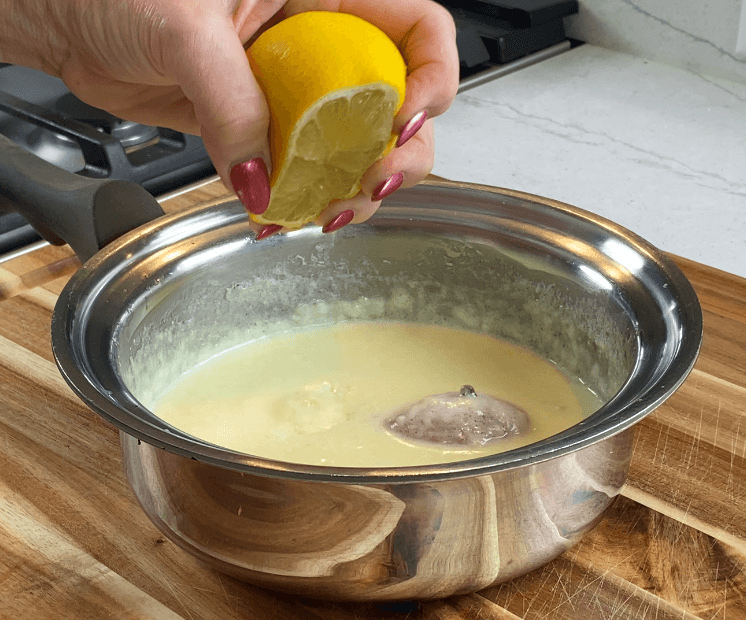
Lemon juice, off the heat. One teaspoon, or a quick squeeze, is all you need. The lemon doesn’t make the sauce taste lemony — it brightens everything else, the way salt does. Critical: add it after you’ve pulled the pan from the burner. Acid in a hot pan is the most common way a finished cream sauce breaks at the last second.
Salt, to taste at the end. Cream sauces need less salt than you’d think — the butter and the reduction concentrate flavor on their own. Taste before you season. A small pinch is usually enough.
Why we strain
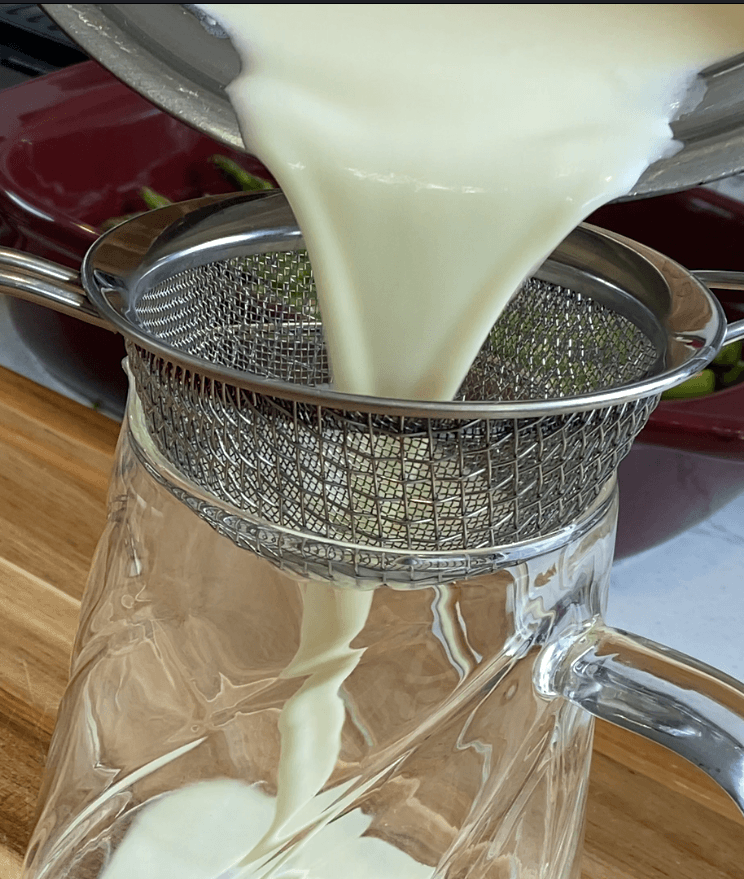
“The cream sauce formula calls for straining at the end, before it goes on the plate.” The shallot, the clove, the garlic — all of it gets pulled out through a fine-mesh strainer, leaving a perfectly smooth sauce that carries all of their flavor but none of their texture.
Straining is the move that separates a homemade-feeling sauce from a restaurant-feeling one. It’s also what makes the aromatics worth doing in whole-piece form rather than mincing them. Mincing forces you to live with the texture. Infusing and straining gives you the flavor without the bite.
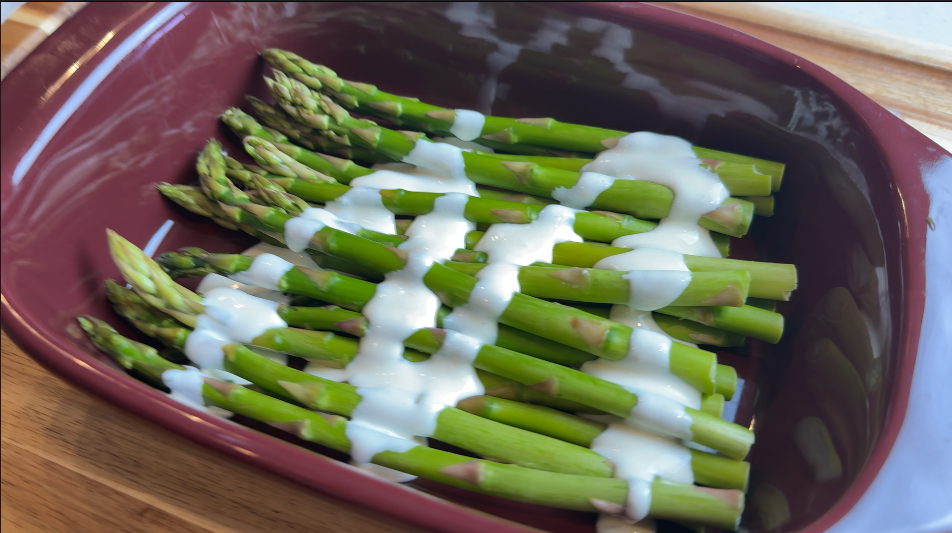
This is a light sauce — no roux, no flour, no thickener beyond what the cream gives up during reduction. That’s why it works so beautifully over vegetables: it adds richness without burying the freshness underneath. It’s equally at home over chicken, pork, or beef. The same sauce, the same formula — different vehicles.
The Cream Sauce Formula (Never Curdles, Never Splits)
Ingredients
Equipment
Method
- Heat a saucepan over medium-low heat. Add the butter and allow it to melt gently.
- Pour in the cream and bring to a gentle simmer. Do not boil.
- Add the shallot, studded with a clove, and cook gently to infuse flavor.
- Smash the garlic clove and add to the sauce. We will strain at the end, so it doesn't need to be chopped finely.
- Let the sauce reduce, stirring occasionally, until it thickens enough to coat the back of a spoon. Be patient. This will take approximately 10 minutes.
- Season to taste with salt, white pepper, and nutmeg.
- Remove from heat before adding a small splash or about 1 tsp. of lemon juice.
- Use a mesh strainer to remove shallot and garlic pieces.
- Pour over vegetables or proteins. Enjoy.
Video
Notes
Frequently asked questions
My sauce broke. Can I save it?
Sometimes. If you catch it the moment it starts to look oily or grainy, pull the pan off the heat immediately and whisk in a tablespoon or two of cold heavy cream. The cold cream can sometimes bring the emulsion back together. If the sauce has gone fully grainy with a visible oil slick, it’s usually beyond saving — start over. The good news: now you know exactly what went wrong, and you’ll see it coming next time.
Can I use half-and-half or whole milk instead?
Not for this recipe. Half-and-half (around 10–12% fat) and whole milk (around 3.5%) don’t have enough fat to stabilize through reduction. They split when you try to reduce them, and they break instantly when acid is added. If heavy cream isn’t available, the more reliable substitution is to skip the cream sauce idea entirely and make a butter-based pan sauce instead. There’s no good shortcut.
Why no roux? Isn’t that how cream sauces are usually thickened?
A roux (butter and flour cooked together) gives you a heavier sauce — closer to a béchamel or a velouté. That’s a different sauce for a different purpose. This formula reduces the cream itself to build body, which gives you a lighter, more elegant sauce that doesn’t bury delicate ingredients underneath. Both techniques are valid. They’re just different sauces. The cream sauce formula is built for elegance — light enough not to bury what it dresses.”
Can I make this ahead?
Cream sauces are best fresh. They can be made a little ahead of time and gently rewarmed on very low heat with a small splash of cream stirred in to loosen them if needed. If you must do this, I recommend putting the sauce in a thermos to keep it warm. They don’t reheat well from cold the next day — the emulsion has settled, and bringing it back to temperature stresses it. If you need a make-ahead option, this isn’t the right sauce.
What can I serve it on?
Almost anything. The sauce is light enough to go beautifully over vegetables — asparagus, broccoli, and cauliflower are all naturals — without burying the vegetables underneath. It’s also excellent over chicken, pork, or beef, and it works over pasta if you toss it gently rather than coating heavily. The sauce is a base. Once you know the cream sauce formula and can make it reliably, where it goes is up to you.
Do I really need to strain it?
Yes. If you skip the strain, you’ll end up biting into a garlic clove or parts of a half-cooked shallot, which isn’t the texture you’re going for. If you really don’t want to strain, mince the aromatics finely instead of using them whole — but you’ll lose some of the clean, restaurant-quality finish that straining gives you.
More from the science of sauces series
This is Episode 1 — the foundation. Every cream-based sauce in this series builds on the formula above. Once you understand heat, fat, and timing, the rest of the series becomes a study in what you can add to a cream sauce without breaking it.
Episode 2: It’s Not the Cheese. It’s the Heat. The garlic parmesan cream sauce that stays smooth. Why Parmesan goes grainy in a sauce, what’s actually happening to the proteins, and the three rules for adding hard cheese to cream without seizing it.
Episode 3: The Mushroom Cream Sauce Mistake Almost Everyone Makes. Why your mushrooms come out spongy instead of golden — and the cold-pan water technique that fixes both spongy mushrooms and bland sauce at once.
For new episodes, the moment they go live, subscribe to Cream and Cloves on YouTube — that’s where every recipe in this series starts as a video.
Most home cooking problems have a real explanation — usually rooted in a single principle you can apply across dozens of dishes. That’s what Cream and Cloves is built around. If this post helped you understand the cream sauce formula (and how to make sure yours doesn’t), subscribe on YouTube for new episodes and follow along here for the written companion recipes.