Ingredients
Equipment
Method
- Heat a saucepan over medium-low heat. Add the butter and allow it to melt gently.
- Pour in the cream and bring to a gentle simmer. Do not boil.
- Add the shallot, studded with a clove, and cook gently to infuse flavor.
- Smash the garlic clove and add to the sauce. We will strain at the end, so it doesn't need to be chopped finely.
- Let the sauce reduce, stirring occasionally, until it thickens enough to coat the back of a spoon. Be patient. This will take approximately 10 minutes.
- Season to taste with salt, white pepper, and nutmeg.
- Remove from heat before adding a small splash or about 1 tsp. of lemon juice.
- Use a mesh strainer to remove shallot and garlic pieces.
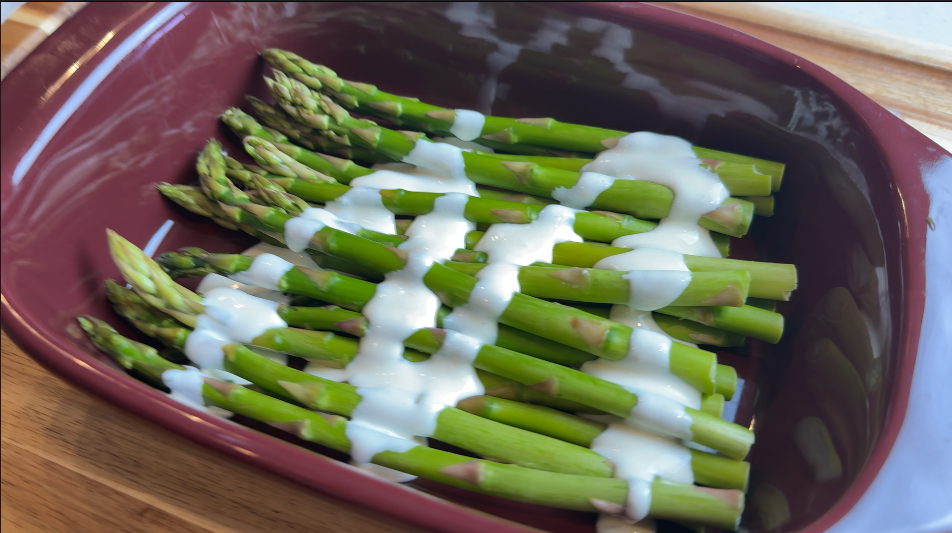
- Pour over vegetables or proteins. Enjoy.
Video
Notes
Why low heat matters: Cream is mostly water and fat held together by proteins. When cream gets too hot, the proteins tighten and squeeze the fat out — that's what splitting looks like in the pan. Medium-low heat and a gentle simmer (small bubbles, not a rolling boil) keep the proteins relaxed and the emulsion intact.
Why fat percentage matters: Heavy cream at 36-40% fat is the only dairy stable enough to reduce without breaking. Half-and-half (10-12% fat) and whole milk (3.5% fat) don't have enough fat to buffer the proteins from the heat — they'll curdle almost every time. If the carton doesn't say "heavy cream" or "heavy whipping cream," it won't work.
Why acid goes in last: Lemon juice is the finishing touch, added off the heat. Acid plus heat is what makes cream curdle, so pulling the pan off the burner before adding the lemon brightens the sauce without breaking it.
If your sauce starts to split: Pull it off the heat immediately and whisk in 1-2 tablespoons of cold heavy cream. This can sometimes pull a borderline sauce back together. Once it's gone fully grainy or oily, it can't be saved — start fresh.