Ingredients
Method
- 1. Sear the chicken. Season both sides of the completely dry cutlets with salt and pepper. Set a large skillet over medium-high heat and add the oil. Once it's shimmering, add the chicken and cook undisturbed for 3–4 minutes, until a golden crust forms. Because the cutlets are sliced thin, color matters more than time — flip and cook just 2–3 minutes more, until cooked through (165°F). Transfer to a warm plate and tent loosely with foil while you build the sauce.
- 2. Soften the aromatics. Turn the heat down to medium. Add the shallots to the leftover oil and chicken drippings and sauté 1–2 minutes, until translucent. Add the garlic and stir constantly for 30 seconds — soften it, but do not let it brown.
- 3. Deglaze and reduce the wine. Pour in the wine and scrape up all the browned bits with a wooden spoon. Let it boil and reduce by half, about 2–3 minutes. It's ready when the sharp alcohol smell is gone and the bubbles have slowed.
- 4. Add the stock and reduce. Pour in the chicken stock, bring to a simmer, and reduce the volume by about one-third. As it concentrates, the flavor deepens and the shallot mellows.
- 5. Add the capers. Stir in the rinsed capers and simmer 1 final minute to soften and mellow them. (The lemon comes later — see Step 7.)
- 6. Mount the butter (monter au beurre). Drop the heat to low, or pull the pan to a cool burner so it keeps gentle residual warmth — hot but not simmering. Add 2 cubes of cold butter and whisk or swirl constantly until they melt in. Keep adding butter 2 cubes at a time, whisking, until the sauce turns thick, glossy, and velvety. Never let it return to a boil — that breaks the emulsion.
- 7. Brighten off the heat. With the pan off the burner, stir in the lemon juice. Taste and adjust with a pinch of salt or a crack of pepper. Finish with a little lemon zest for extra zing.
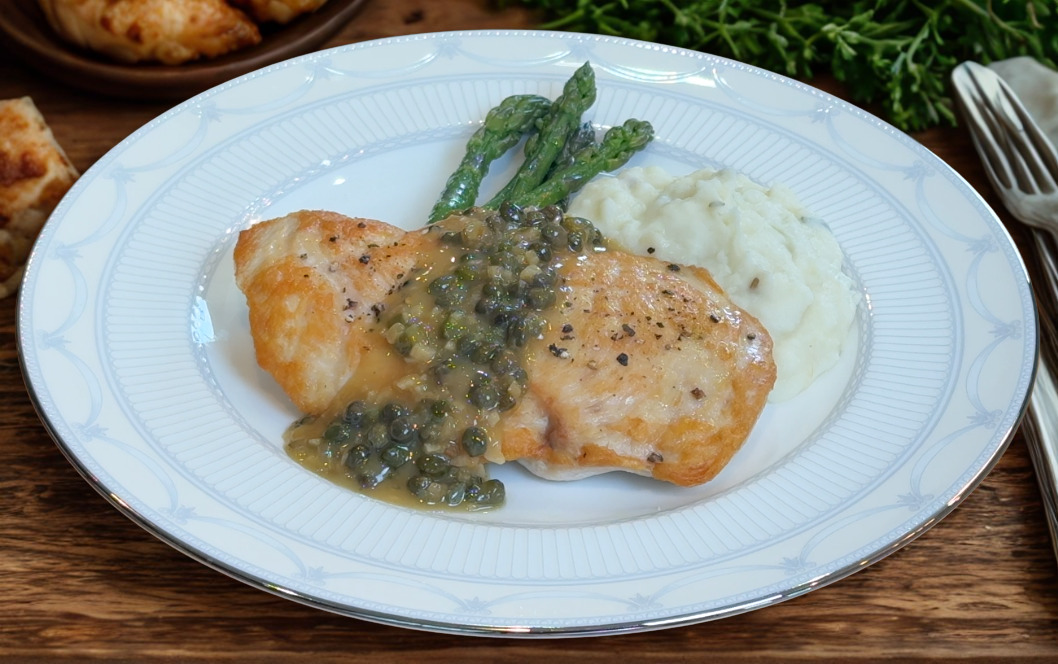
- 8. Serve. Plate each chicken cutlet (or set it over pasta, rice, or mashed potatoes) and spoon the extra sauce generously over the top.
Video
Notes
Why the lemon goes in last, off the heat: Lemon juice is mostly water carrying volatile, fresh-smelling aromatic compounds. Heat drives those aromatics off and dulls the bright top note you're after, leaving behind only flat, cooked acidity. Adding the juice after the pan is off the burner preserves that just-squeezed liveliness — it's the single move that separates a bright sauce from a sour one.
Why the butter must be cold, and the heat must be low: A pan sauce is an emulsion — butterfat suspended evenly throughout the liquid. Cold butter melts gradually, giving the fat time to disperse into tiny stable droplets instead of pooling into a greasy layer. But the pan still needs gentle warmth to do this; if it goes stone cold, the butter won't blend smoothly, and if it returns to a boil the emulsion shears apart. Low heat with constant whisking is the sweet spot.
Why you reduce the wine before adding stock: Raw wine carries a harsh alcohol edge and thin, sharp acidity. Boiling it down by half cooks off the alcohol and concentrates the wine's natural sugars and fruit, turning a thin splash into rounded depth. The stock added afterward buffers the remaining acid, so the three acid sources — wine, capers, and lemon — read as bright and balanced rather than aggressive.
If your sauce turns greasy or splits: The emulsion broke, almost always from too much heat or adding butter too fast. Pull the pan off the burner, add a tablespoon of cold stock or water, and whisk vigorously — the cold liquid and motion can pull it back together. Going forward, keep the heat low and add the butter only two cubes at a time, letting each batch fully melt in before adding the next.