Ingredients
Method
- Pat the pork chops dry and season with salt and pepper. Heat a little neutral oil in a stainless skillet over medium-high until hot. Sear the chops undisturbed until browned and they release cleanly, then finish to an internal temperature of 145°F. Move to a rack to rest. Do not clean the pan.
- Lower the heat and add the shallots. Cook until softened, then add the garlic and cook briefly until fragrant.Add the white wine and scrape up the fond. Add the chicken stock.
- Reduce by about half, 5 to 6 minutes, until slightly darker and moving slowly across the pan.
- Whisk in the Dijon and spicy brown mustard.
- Add the heavy cream and bring to a gentle simmer. Add the thyme and simmer 2 to 3 minutes, until the sauce coats the back of a spoon.
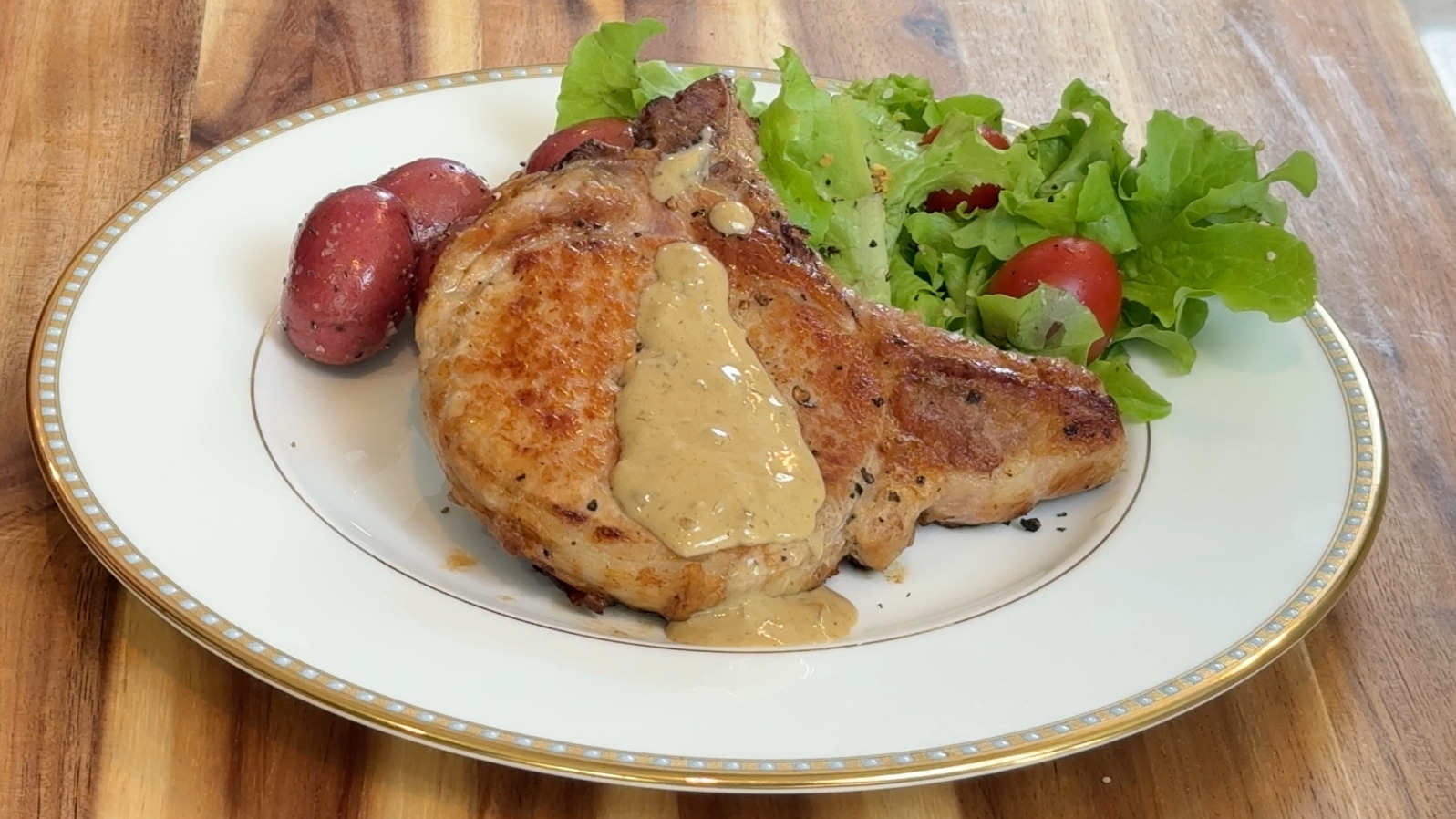
- Off the heat, swirl in the cold butter until glossy. Taste and adjust salt. Spoon over the rested chops.
Video
Notes
Why reduce before the cream: Reducing the wine and stock first concentrates the flavor while the water cooks off. By the time the cream goes in, it only has to enrich — it never boils hard, which is what keeps it silky instead of thick or broken.
Why mustard does two jobs: Beyond the tang and balance, mustard carries natural emulsifiers that help the fat and liquid stay together, so it's part of the structure of the sauce, not just the flavor.
Why a gentle simmer for the cream: Cream breaks when it's pushed too hard. Once it's in, keep the surface at a bare ripple and let the butter finish do the rest.
Why cold butter at the end: Swirling in cold butter off the heat emulsifies slowly and evenly, adding shine and body without the fat separating out.
If your sauce looks thin or greasy: It usually means the cream went in before the reduction was finished, or the heat was too high after the cream. Let it simmer gently a little longer to tighten, and finish with the cold butter off the heat to pull it back together.