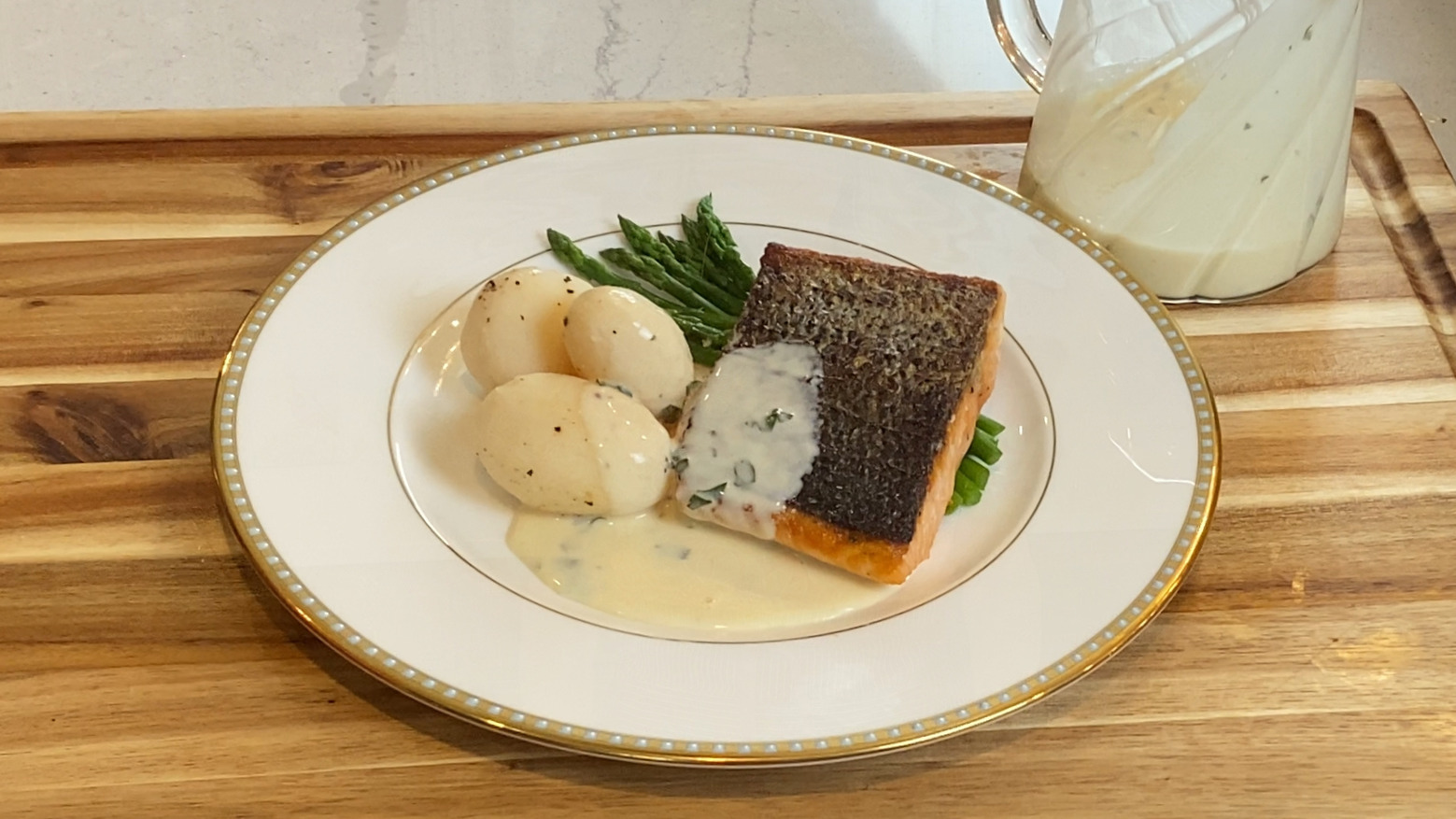
Ingredients
Method
Sandefjordsmør Sauce
- Place lemon juice in a saucepan over medium heat. Simmer until reduced to less than a tablespoon, 4–5 minutes, watching closely so it doesn't scorch.
- Add the cream immediately and whisk to combine. Cook until reduced and concentrated, 5–6 minutes.
- Reduce heat to very low.
- Whisk in cold butter, 2–3 cubes at a time, letting each addition melt fully before adding more, 8–10 minutes total.
- Whisk in salt and white pepper to taste, then fold in the parsley. Keep warm until ready to serve.
Crispy Seared Salmon
- Preheat oven to 400°F
- Pat salmon very dry and season with salt and pepper.
- Heat oil in an oven-safe skillet over medium-high heat until shimmering.
- Place fillets skin-side down and sear undisturbed, 3–4 minutes, until the cookline reaches about a third of the way up the fillet.
- Transfer the skillet to a preheated 400°F oven, skin-side down, and finish 5–7 minutes depending on thickness.
- Rest briefly before plating skin-side up.
Notes
- Why pat the salmon so dry? Moisture is the enemy of crispy skin — it has to evaporate before the skin can actually crisp, which wastes your sear time and can leave you with steamed, rubbery skin instead. Patting dry (and even air-drying uncovered in the fridge, if you have time) gets you a genuinely crisp result.
- Why cold butter, added gradually? Cold butter melts slowly, which keeps the fat evenly suspended in the sauce instead of splitting into a greasy layer on top. Adding it a few pieces at a time — rather than all at once — gives the sauce time to stay emulsified as it comes together.
- Why cream in a beurre blanc-style sauce? Classic beurre blanc relies on an emulsion held together mostly by careful technique. Adding cream gives the sauce a built-in stabilizer, which is part of why Sandefjordsmør is more forgiving than a traditional beurre blanc — a helpful entry point if you're newer to butter sauces.
- Why white pepper instead of black or cayenne? White pepper adds warmth without visible flecks or the more assertive heat of cayenne, keeping the sauce's pale color clean. It's the traditional choice, though cayenne is a common modern swap if you'd like a bit more heat.
- If your sauce breaks: Take it off the heat immediately and whisk in a tablespoon of cold cream or an ice cube — the sudden drop in temperature can help re-emulsify it. If it doesn't come back together, don't panic; strain and start the butter-mounting step again with a fresh spoonful of warm cream as your new base.