Ingredients
Method
- Lower the heat to medium after removing the steak from the pan. Leave any fond (the browned bits) in the pan — that's your flavor base.
- Add the minced shallots and cook, stirring occasionally, until softened and translucent, about 2 to 3 minutes. Do not let them brown.
- Stir in the garlic and cook for 30 seconds until fragrant.
- Pour in the red wine and scrape up all the fond from the bottom of the pan. Let the wine reduce by about half, approximately 3 to 4 minutes. The sharp alcohol smell will fade as it reduces.
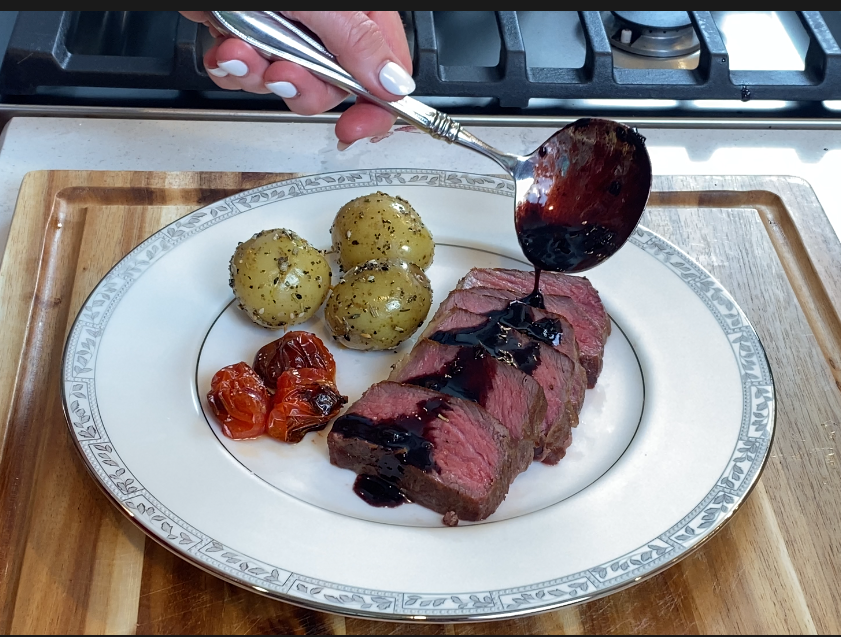
- Add the beef stock and thyme sprig. Bring to a simmer and reduce until the sauce is glossy and lightly coats the back of a spoon, about 8 to 12 minutes. Do not rush this step — the reduction is where the flavor concentrates.
- Remove the thyme sprig. Lower the heat to low.
- Swirl in the cold butter using gentle circular pan movements. Do not stir aggressively — gentle movement keeps the butter emulsified and the sauce glossy rather than greasy.
- Taste before adjusting. If you want more depth, add 1 tsp balsamic vinegar or Worcestershire sauce. Stir once to combine.
- Spoon immediately over steak and serve.
Video
Notes
Why reduce the wine before adding stock: Adding stock too early dilutes the wine before its alcohol has cooked off, which leaves the sauce tasting sharp or acidic rather than rich and fruity. A brief wine reduction first concentrates the flavor and protects the body of the finished sauce.
Why cold butter matters: Warm or melted butter will break the emulsion and turn the sauce greasy. Cold butter, added off or over very low heat with a gentle swirl, melts gradually and binds with the reduced liquid to create that glossy, velvety finish you see in restaurant sauces. This technique is called monter au beurre in French cooking.
Why the fond is the foundation: Steak creates some of the deepest, darkest fond of any protein. Those browned bits dissolved by the wine carry concentrated Maillard reaction flavor that no amount of seasoning can replicate — which is why a pan sauce made from steak fond tastes so different from one made with store-bought stock alone.
If your sauce tastes too sharp or acidic: The wine likely needed more time to reduce before you added the stock. Continue simmering until the sharpness mellows. A small pinch of sugar or a teaspoon of balsamic can also help balance residual acidity without masking the wine flavor.
Why cold butter matters: Warm or melted butter will break the emulsion and turn the sauce greasy. Cold butter, added off or over very low heat with a gentle swirl, melts gradually and binds with the reduced liquid to create that glossy, velvety finish you see in restaurant sauces. This technique is called monter au beurre in French cooking.
Why the fond is the foundation: Steak creates some of the deepest, darkest fond of any protein. Those browned bits dissolved by the wine carry concentrated Maillard reaction flavor that no amount of seasoning can replicate — which is why a pan sauce made from steak fond tastes so different from one made with store-bought stock alone.
If your sauce tastes too sharp or acidic: The wine likely needed more time to reduce before you added the stock. Continue simmering until the sharpness mellows. A small pinch of sugar or a teaspoon of balsamic can also help balance residual acidity without masking the wine flavor.