Ingredients
Method
- Step 1: Start with good fond. After searing your protein until deeply golden, remove it from the pan. The dark browned bits left behind are the foundation of your sauce — don't wash them away.
- Step 2: Lower the heat, then add the minced shallot. Cook gently until softened, about 1 minute. Add the garlic and stir for 30 seconds — do not let it brown, or it will turn bitter.
- Step 3: Deglaze: pour in the stock and wine. As it bubbles, scrape the bottom of the pan so the fond dissolves and lifts into the liquid. Add the thyme sprig.
- Step 4: Reduce. Let the sauce simmer until it thickens slightly — just enough to lightly coat the back of a spoon, about 3–5 minutes. Be patient; this is where the flavor concentrates.
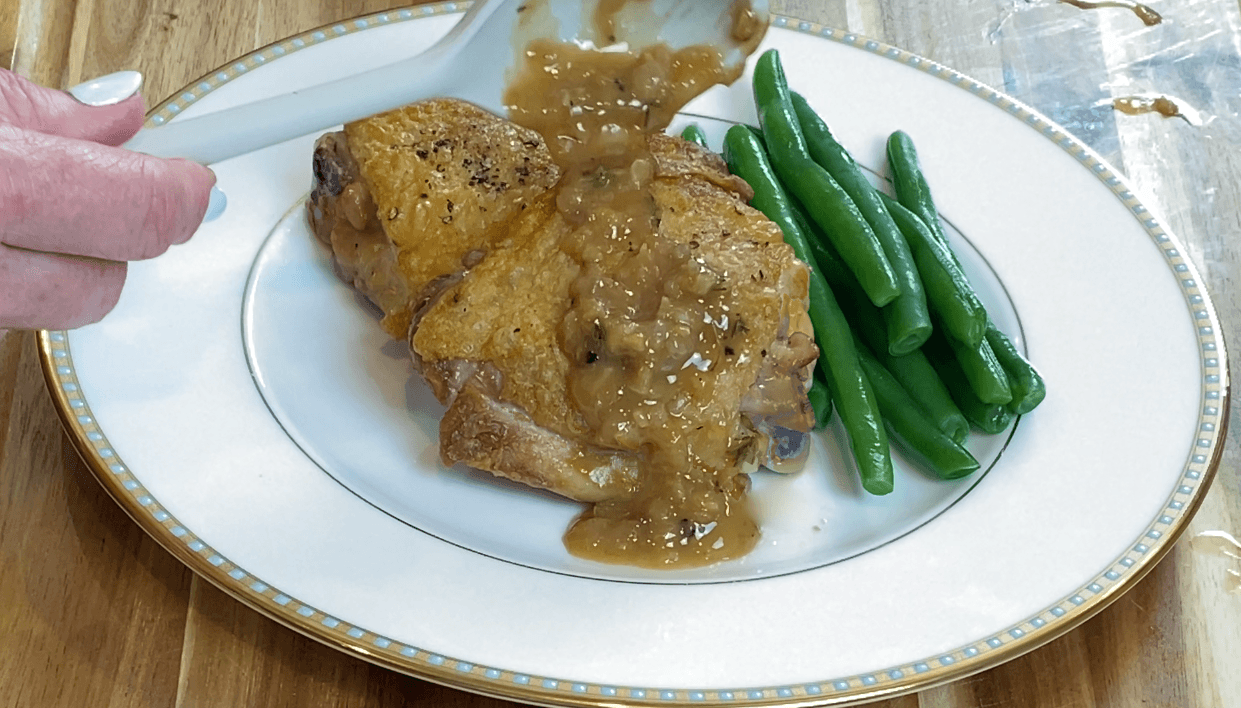
- Step 5: Finish off the heat (or very low): swirl in the cold butter until the sauce turns glossy and smooth. Add a small squeeze of lemon, taste, and adjust. Discard the thyme sprig, garnish with parsley if using, and spoon over your protein.
Video
Notes
Why you dry the protein and chase the fond. Browning is where pan-sauce flavor comes from, and browning only happens on a dry surface in a hot pan — moisture makes the protein steam instead of sear. The dark residue left behind, called fond, is concentrated caramelized flavor. Deglazing dissolves it back into the liquid, so nothing you worked for goes to waste.
Why you reduce instead of thickening with flour. Reduction concentrates flavor through simple evaporation: as water leaves the pan, what remains tastes more intensely of itself and gains enough body to coat food. A flour or cornstarch thickener would add body without adding any flavor — reduction does both at once. Aim for a sauce that lightly coats a spoon, not the heavy texture of a cream sauce.
Why the butter goes in cold, off the heat. Swirling in cold butter lets the fat emulsify — disperse into tiny, stable droplets — which is what makes the sauce glossy and smooth. Butter added when it's too warm, or over heat that's too high, separates and turns the sauce greasy instead of silky. Gentle motion is what brings it together.
Why a squeeze of lemon at the end. A small amount of acid doesn't make the sauce taste lemony — it makes it taste balanced, lifting and sharpening every other flavor already in the pan. It's often the difference between a sauce that's good and one that tastes finished and complete.
If your sauce turns greasy instead of glossy: the butter broke rather than emulsified, usually from too much heat. Pull the pan off the burner, add a splash of stock or a tiny bit more cold butter, and swirl steadily until it comes back together. Keeping the heat low when you finish is the best prevention.