
Brown Butter Sage Sauce (And Why It’s the One Sauce We Don’t Protect)
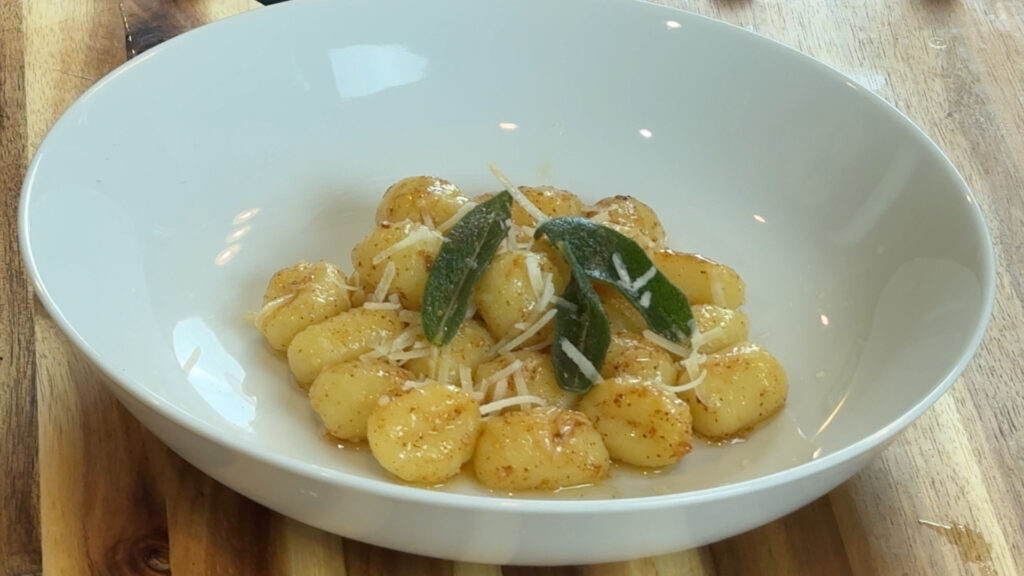
This is brown butter sage sauce — nutty, golden, the kind of sauce that makes a simple bowl of gnocchi taste like it came out of a restaurant kitchen. It takes about five minutes to make. It also lives or dies based on about ten seconds of attention. Go a little too far and there’s no saving it — burnt, bitter, done!
Here’s a confession: brown butter happens when you push it well past the safe melting point – right up to the edge, and then you stop.”
That’s it. That’s the whole secret. A stick of butter, a hot pan, and about five minutes of your attention — and somewhere in there, it turns into one of the richest, nuttiest things you can put on a plate. Toss it with pillowy gnocchi, crisp a few sage leaves in it along the way, and you’ve got a dish that tastes like it came out of a restaurant kitchen, not your Tuesday-night stove.
But there’s a catch, and it’s the reason this sauce intimidates people who’ve never made it: the window between perfect and ruined is about ten seconds wide. Wait a beat too long and what was golden and toasty turns bitter and black, and there’s no walking that back. No amount of butter or patience saves burnt butter. You start over.
Stick with me, though, because once you know exactly what you’re watching for, that ten-second window stops feeling like a trap and starts feeling like a party trick. Let’s get into it.
What Makes Brown Butter Sage Sauce Unique
Let’s talk about what butter actually is, because the answer explains everything that’s about to happen in your pan.
Butter isn’t just fat. It’s fat, a little water, and — this is the part that matters here — milk solids: tiny flecks of milk protein and sugar, suspended all through it. Under normal circumstances, you’d never notice them. They just ride along.
But heat butter past its melting point and keep going, and something interesting starts to happen. The water cooks off first. Then those milk solids, no longer hidden in liquid fat, start to toast — the exact same way a slice of bread toasts in your toaster. They go from pale, to golden, to amber, and as they do, the smell in your kitchen shifts from “melted butter” to “toasted hazelnuts.” That smell isn’t a side effect. That is the flavor. It’s one of the most complex tastes you can pull out of a single ingredient, and it costs you nothing but a few minutes of watching a pan.
If you’ve made the Beurre Blanc episode in this series, here’s the twist worth sitting with: that sauce and this one are doing the exact opposite thing with the exact same ingredient. In beurre blanc, our whole job was protecting the butter — keeping it gentle, keeping the emulsion from breaking, never letting it get hot enough to separate. Here, we’re doing the opposite on purpose. We want the butter to change. The toasting isn’t a risk to manage around. It’s the entire point of the recipe.
Which brings us to the catch: brown butter goes from “exactly right” to “start over” in the time it takes to answer a text message. And unlike an emulsion, there’s no rescuing it once it’s gone. The good news? Catching that moment is genuinely easy, once you know exactly what to watch and smell for — and that’s what the rest of this post is about.
The Four Stages
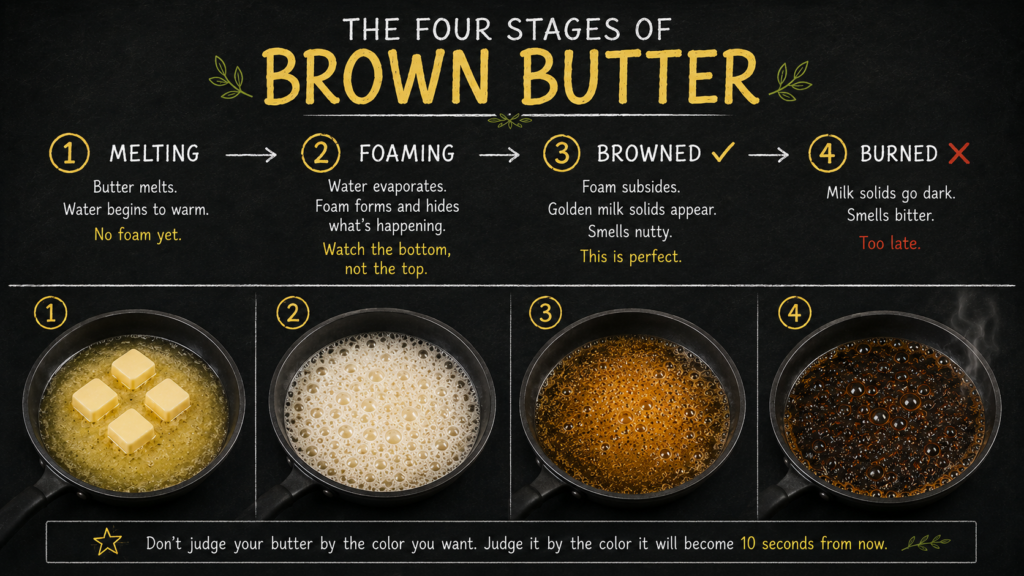
- Melting — the butter melts, the water in it begins to warm. Nothing exciting to look at yet. No foam. This stage is deceptively quiet.
- Foaming — the water evaporates, and the pan gets loud and bubbly. This is the stage that trips up almost everyone: it’s tempting to watch the foam on top, but the real story is happening underneath it, at the bottom of the pan, hidden from view.
- Browned — the foam settles, and there they are: tiny gold specks at the bottom of the pan, the milk solids finally toasting. The color moves from golden to amber, and the smell turns unmistakably nutty. This is the moment. This is what you’re after.
- Burned — the milk solids go from amber to dark, almost black, and the smell turns from nutty to bitter and acrid. If you’ve hit this stage, there’s no saving it. Pour it out and start again.
How It Comes Together
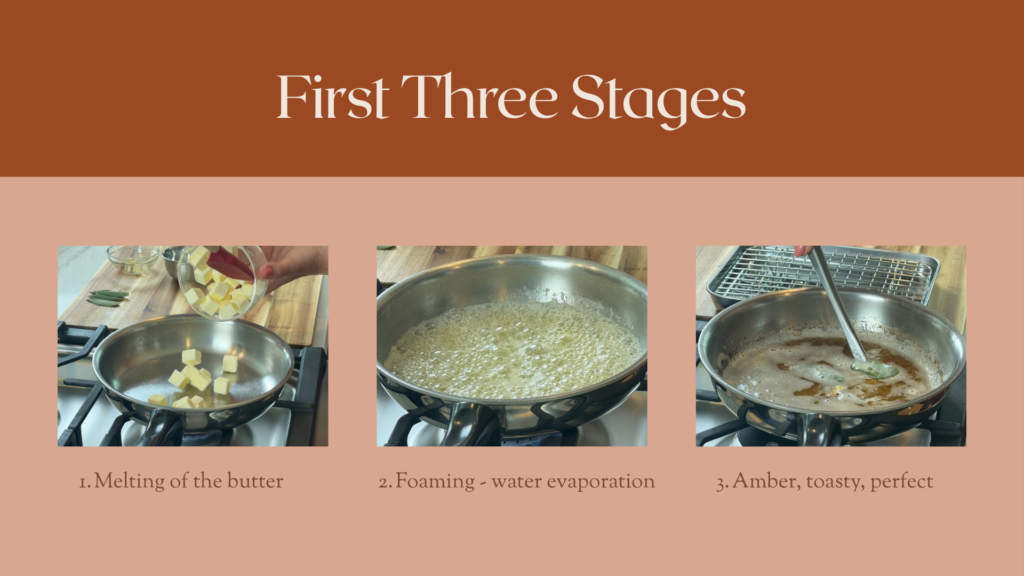
Everything about this sauce is a game of watching, not timing. Skip the timer entirely — your eyes and nose are the only clock you need. That’s also why the pan you reach for matters more than you’d think: a dark or nonstick pan hides the gold-to-amber shift until it’s too late to catch it, so pull out something light-colored or stainless. You need to actually see the color change happening in real time.
Get your pan going over medium heat and drop the butter in. It’ll melt, then foam up loud and fast — that racket is just steam escaping as the water cooks off, nothing to worry about. As the foam quiets down and you start to catch a hint of color building at the bottom of the pan, that’s your cue: in go the sage leaves, along with a smashed clove of garlic. Two things happen at once — the sage crisps into these gorgeous, savory little chips, while it perfumes the whole pan as the butter browns around it. The garlic hangs back, adding a quiet savory note you won’t necessarily place, but you’d miss it if it were gone. Listen for the sizzle picking up — that’s your sign the butter’s hot enough to be doing real work.
From here, it’s all about your senses. Watch the color shift from pale gold toward amber. Trust your nose the moment it starts to smell like toasted nuts instead of melted butter. The instant both of those things happen, pull the pan off the heat — a touch earlier than feels natural. The pan itself holds a surprising amount of heat, so your brown butter keeps cooking for several seconds even after it’s off the burner. Don’t judge your butter by the color you want. Judge it by the color it’s about to become — ten seconds from now. Lift the crisp sage out onto a paper towel so it stays crunchy for the finish.
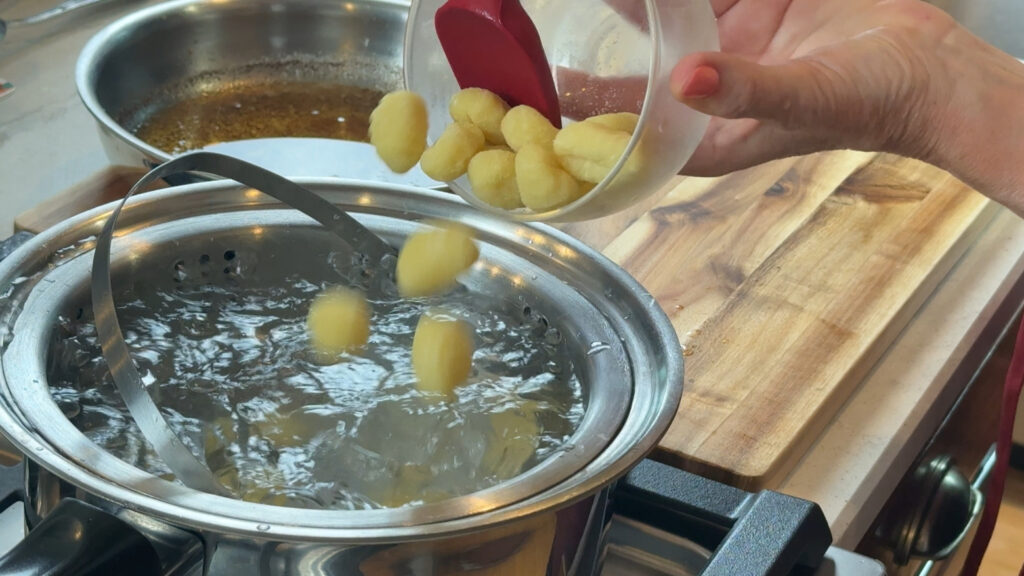
While your butter browns, get a pot of salted water at a gentle boil for the gnocchi — homemade if you made a batch from scratch, good store-bought if you didn’t (genuinely, zero shame in that route; the sauce is the star of today’s lesson). Drop the gnocchi in and watch for them to float — that’s your cue that they’re nearly done, and it happens fast, so don’t wander off. If you want a little extra insurance, taste one about 30 seconds after it floats; some batches need just a beat longer, and overcooked gnocchi turn mushy in a hurry.
Now for the fun part. Scoop the gnocchi straight out of the pot and into your brown butter pan, which has been resting off the heat this whole time. A little of that starchy cooking water is going to cling along for the ride — let it. That starch is exactly what helps the sauce cling right back to every piece.
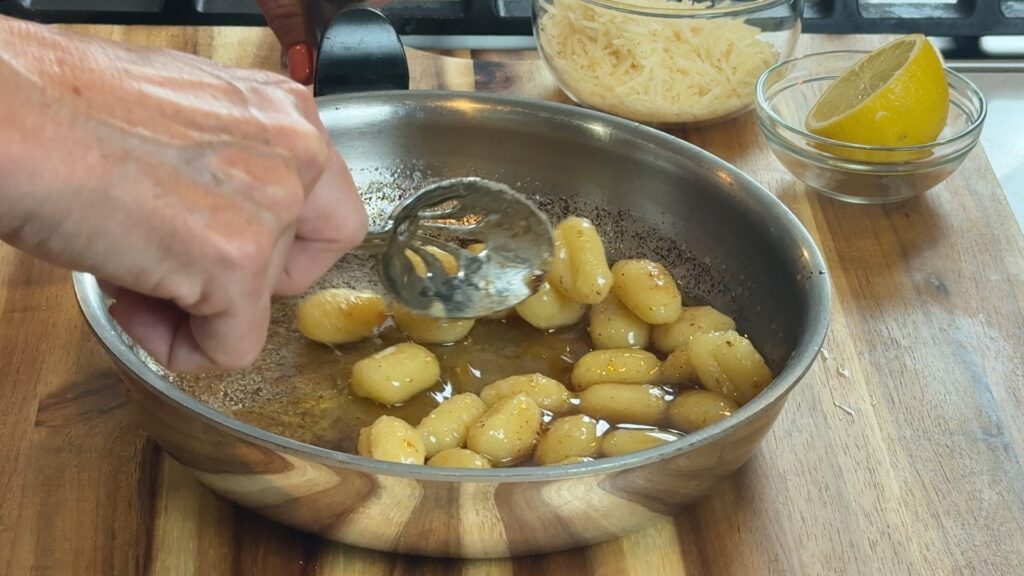
Off the heat, toss everything gently until each piece is glossy and coated in that nutty butter. Then comes the finishing move: a squeeze of fresh lemon. Brown butter is rich, deep, almost toffee-like — genuinely delicious, but on its own it can start to feel heavy after a bite or two. That little hit of acid is what keeps it feeling bright instead of dense. Notice the timing difference from beurre blanc, too: there, acid was the foundation the whole sauce was built on. Here, it’s the very last thing that happens. Same ingredient, same series, two completely different jobs.
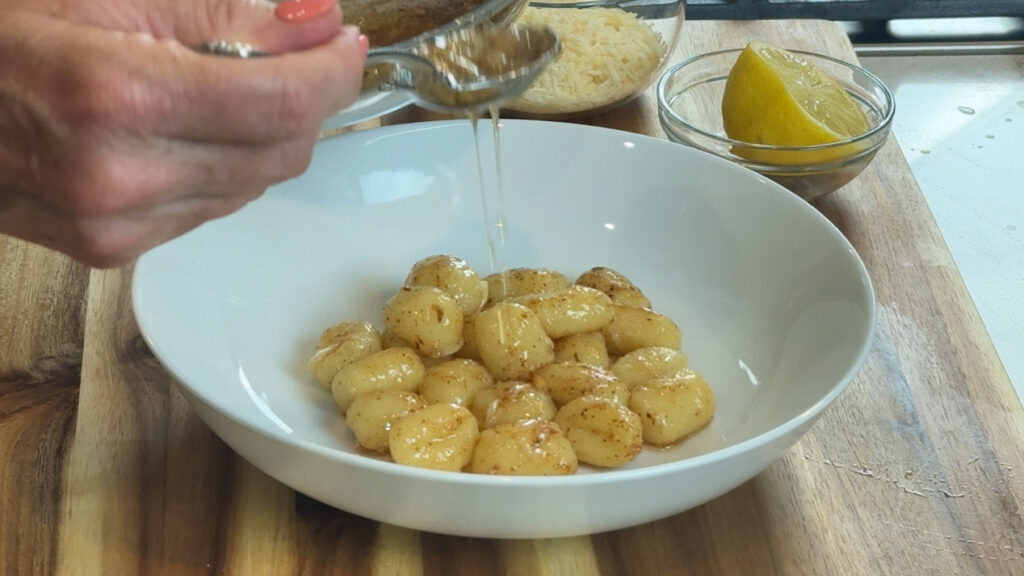
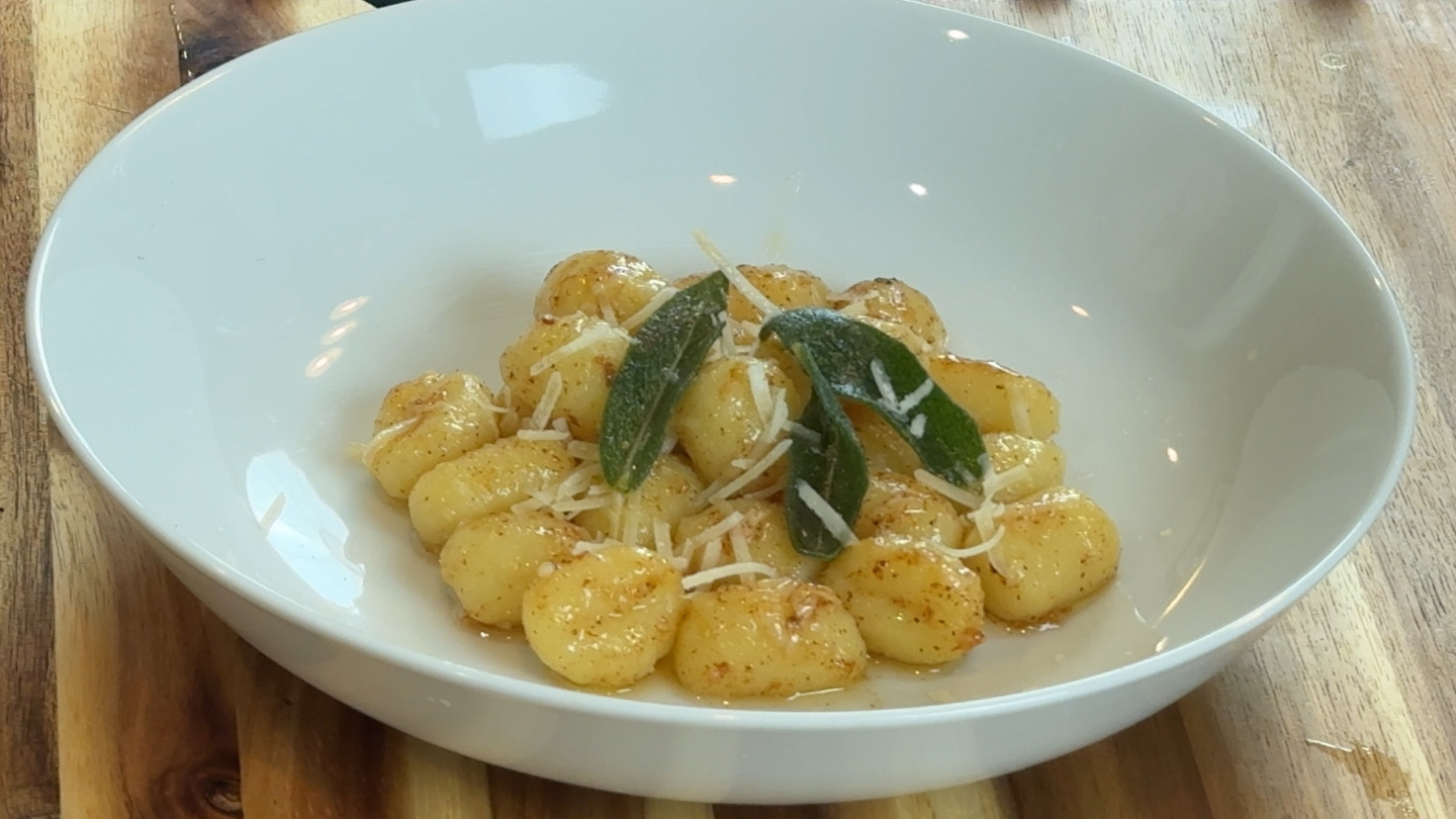
Plate it into a warm bowl, spoon a little extra brown butter over the top because you earned it, then scatter the crisp sage and a final shower of parmesan on top. Take a step back and look at what you just made in five minutes flat.
The Payoff
The gnocchi should be soft and pillowy, practically melting the second you bite in. The sage brings a savory, almost herbal snap against all that richness. And the butter itself — deep, nutty, a little toffee-like — gets pulled right back from “too much” by that thread of lemon running through it. Richness and balance, working together instead of against each other. That’s the whole trick, and now you know it.
Ingredients
Method
- Set a light-colored or stainless pan over medium heat. Add the butter and let it melt, then foam.
- As the foam settles and color begins to build, add the sage leaves and smashed garlic clove.
- Continue cooking, watching the color and smelling for a nutty aroma. Once the butter is amber and smells toasted, remove from heat immediately — it will continue cooking briefly off the burner. Lift the sage out onto a paper towel.
- Meanwhile, bring a pot of salted water to a gentle boil. Add the gnocchi. When they float, they're nearly done; taste one about 30 seconds after floating to confirm, then remove with a slotted spoon.
- Add the cooked gnocchi directly to the brown butter pan. Toss gently off the heat until glossy and coated.
- Finish with a squeeze of fresh lemon and toss again.
- Plate, spoon extra brown butter over the top, and finish with the crisp sage and grated Parmesan.
Notes
- Use unsalted butter so you can see the true color of the milk solids and control seasoning at the end.
- A light-colored or stainless pan is essential for tracking the color change accurately.
- Remove the pan from heat a few seconds before the butter looks fully done — carryover heat will finish the job.
Notes
Why unsalted butter, specifically: salted butter can mask the exact moment the milk solids start to turn, which makes it harder to catch your window. It also makes it tougher to season the finished sauce with any real precision — better to salt at the very end, once you can taste what you’re working with.
Why the pan matters more than the recipe does: this sauce was never really about the ingredient list. It’s about being able to see and smell a chemical change happening in real time, in your own kitchen. A dark pan takes that ability away from you before you’ve even started.
Why we pull it early, every time: carryover heat is the single most common reason brown butter tips from perfect into burnt. The pan stays hot well after it leaves the burner, and butter is thin enough that it keeps right on cooking in that residual heat.
If your butter jumps straight from foaming to black, with no amber stage in between: your heat was too high from the start. Pour it out, start over on medium (not medium-high), and stay at the stove the entire time — this is not the sauce to multitask through.
Related Recipes
FAQ
Can I make brown butter without burning it? Yes — the key is watching the bottom of the pan, not the top, and pulling it the moment it smells nutty and turns amber. It keeps cooking for a few seconds after you remove it from heat, so pull it a touch before it looks perfect.
What’s the difference between brown butter and burnt butter? Brown butter smells nutty and the milk solids are golden to amber. Burnt butter smells bitter and acrid, and the solids are dark, almost black. There’s no fixing burnt butter — you start over.
Can I use salted butter for brown butter sage sauce? You can, but unsalted is recommended — it lets you see the true color of the milk solids as they toast and control the seasoning at the end instead of guessing.
Do I have to make gnocchi from scratch for this sauce? No — good store-bought gnocchi works fine here. The sauce is the star of this episode; the gnocchi is the pairing. If you do want to make it from scratch, the full recipe is linked above.
Why does this recipe use lemon at the end instead of at the start, like the beurre blanc recipe? In beurre blanc, acid is the structural foundation the sauce is built on. In brown butter, it’s a finishing touch that balances richness. Same ingredient, two different roles depending on the sauce.
Series Navigation
Butter Sauces series: Ep8 Beurre Blanc → Ep9 Brown Butter Sage Sauce → Ep10 Lemon Butter Sauce