
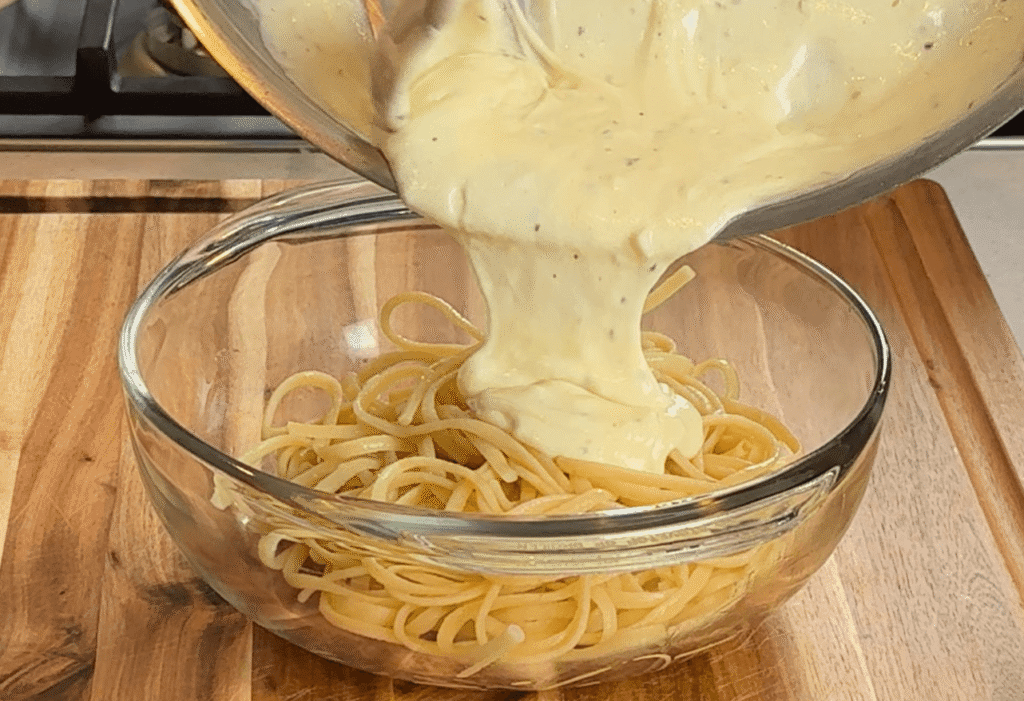
Parmesan cream sauce has a reputation for going grainy, oily, or breaking the moment it hits heat — and it’s almost never the cheese’s fault.
If you’ve ever made a garlic parmesan sauce that turned out grainy, clumpy, or oily, here’s the part nobody tells you: it’s not the cheese. It’s the heat. And once you understand what’s actually happening to the parmesan when it hits a too-hot pan, the fix becomes obvious — and the sauce comes out smooth every single time.
Why your parmesan sauce goes grainy (it’s protein science)
Parmesan is one of the most flavorful cheeses you can put in a sauce. It’s also one of the trickiest, and the reason is in the structure of the cheese itself.
Parmesan is a hard, aged cheese with a high protein content and very little water. When you add it to a sauce, those proteins need to gently soften and disperse into the cream — that’s what gives you a silky, glossy texture. But proteins behave very specifically under heat. When proteins get too hot, too fast, they tighten and seize up. Instead of melting smoothly into your sauce, they clump together and squeeze out the fat trapped between them.
That’s what you see when a Parmesan sauce “breaks.” The graininess is tightened protein. The oily slick on top is fat that got squeezed out of the cheese. Both happen for the same reason: the pan was too hot when the cheese went in.
This is why home cooks tend to blame the cheese — they assume they bought the wrong kind, or that pre-grated parmesan is too dry, or that the brand was off. None of that is usually the problem. The problem is almost always heat and timing.
Building on the cream sauce formula
This recipe builds directly on the foundation we covered in Episode 1 — The Cream Sauce Formula. That episode focused on controlling the cream itself: getting heavy cream to reduce gently, monitoring fat percentage, using heat, and timing to avoid splitting.
Garlic parmesan sauce uses the same foundation and then adds cheese on top of it. So, before we get to the Parmesan, the cream has to be in the right state to receive it. A cream sauce that hasn’t reduced enough won’t accept cheese smoothly — it stays thin, the cheese won’t disperse, and you’ll be tempted to crank the heat to compensate. Don’t do that. That’s the doom loop. Get the cream reduction right first, and the cheese step becomes easy.
The fix: temperature, timing, and technique
There are three rules. Together, they’re the whole technique.
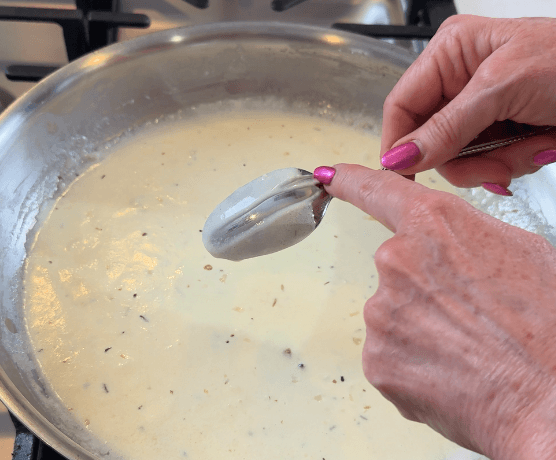
Rule one: reduce your cream first. Before any cheese hits the pan, your heavy cream needs to have reduced down to the point where it visibly coats the back of a spoon — when you drag your finger across the back of a spoon, and it leaves a line. Or when you drag your spoon along the bottom of the pan, and you see a clean line that doesn’t immediately fill back in, you know it’s ready. That’s the texture you need for the cheese to integrate properly. Rushing this step is the most common reason Parmesan sauces fail.
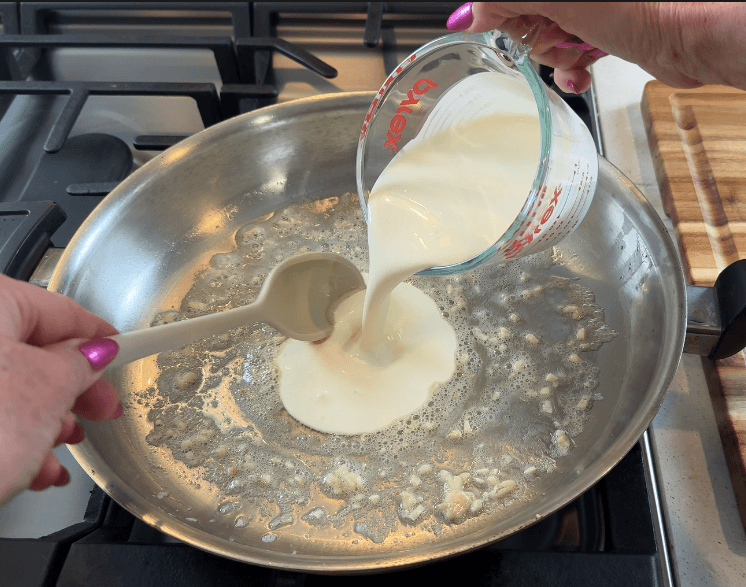
Rule two: lower the heat before the cheese goes in. Not when you add it — before. Your cream sauce simmers gently as it reduces, but the moment you’re ready to add Parmesan, drop the heat as low as your burner allows. The pan should be hot enough to encourage the cheese to melt, but not so hot that the proteins seize. If you’re not sure, lower. You can always nudge the heat back up; you can’t un-grain a sauce.
Rule three: add the cheese gradually, stirring constantly. A small handful at a time. Stir it in until it disappears before adding more. This does two things — it keeps any single area of the pan from getting overloaded, and it gives the proteins time to gently melt and disperse rather than clumping. If you dump all the cheese in at once, even with the heat low, the bottom layer will hit the pan, seize, and ruin the whole batch.
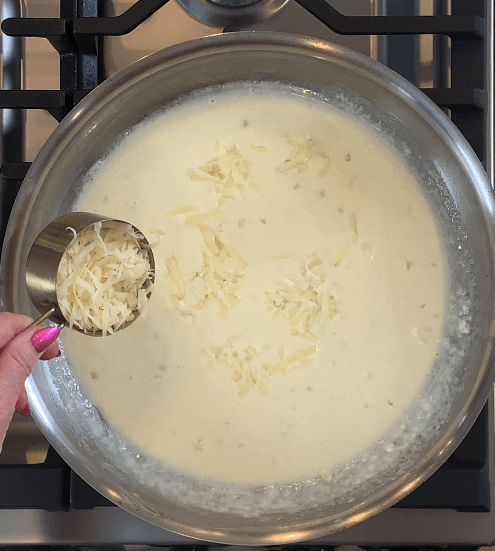
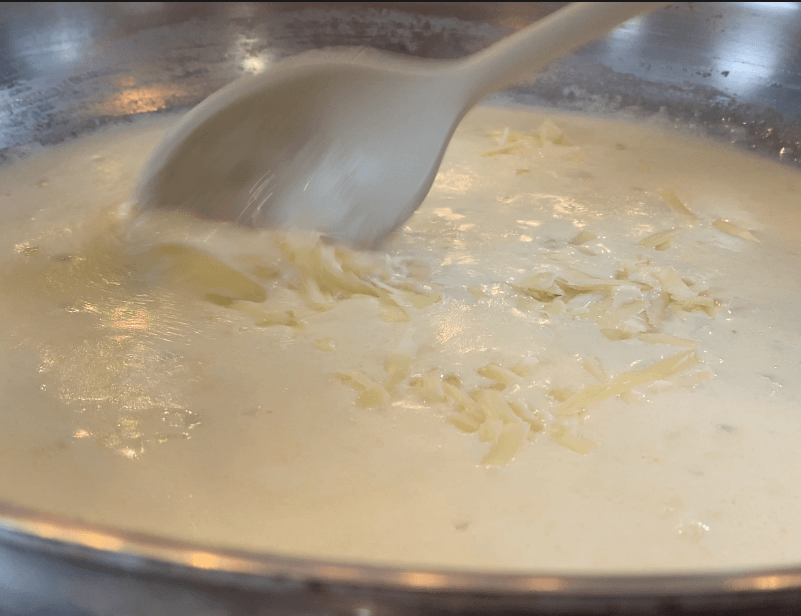
That’s the entire technique. Lower heat, gradual addition, constant motion. Simple to describe, transformative when you actually do it.
Ingredient notes
Heavy cream — 36% fat or higher. Same rule as the cream sauce formula. Milk and half-and-half don’t have enough fat to support cheese addition without breaking. This is non-negotiable for a stable Parmesan sauce.
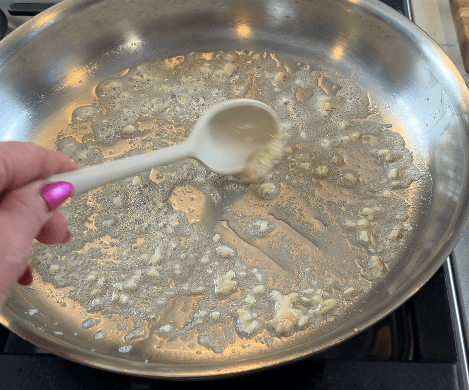
Garlic, gently softened. You want the flavor of garlic dissolved into the butter, not the bite of raw garlic or the bitterness of burned garlic. Low heat is the answer. If the garlic browns, restart — bitter garlic flavors the entire sauce.
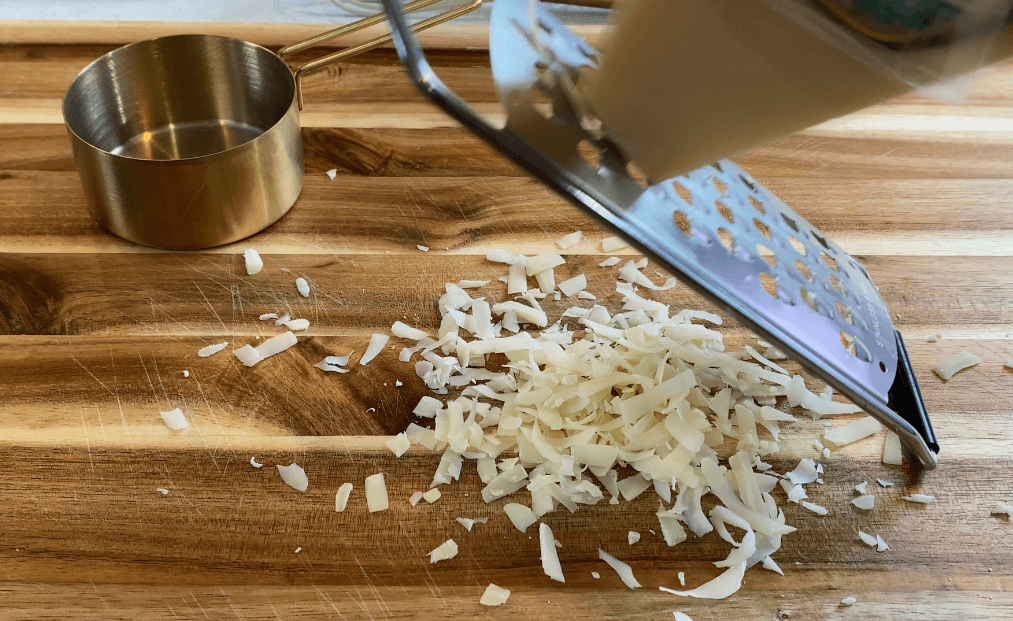
Parmesan, freshly grated, light and fluffy. Pre-grated parmesan from a shaker contains anti-caking agents (cellulose powder) that interfere with melting. Grate from a wedge of real Parmesan, and grate it fine — light and airy, not packed. Fluffier grates dissolve faster, which means less time exposed to heat, which means less risk of seizing.
Italian seasoning and white pepper. White pepper adds warmth without the visible specks of black pepper, keeping the sauce visually clean. Italian seasoning is optional, but I add it because it brings the sauce closer to a restaurant version — a quiet herbal background that you taste as “Italian” without identifying any single herb.
A squeeze of lemon, off the heat. Just like in mushroom cream sauce, acid balances the richness. The lemon doesn’t make the sauce taste lemony — it cuts through the fat so every other flavor reads clearer. Critical: add it after you’ve taken the pan off the heat. Acid added to a hot pan will break the sauce instantly, and you’ll have done all this work for nothing.
Salt — taste before you add it. Parmesan is already heavily salted. Always taste the sauce before adding salt. Most of the time, you won’t need any. If you do, a small pinch is plenty.
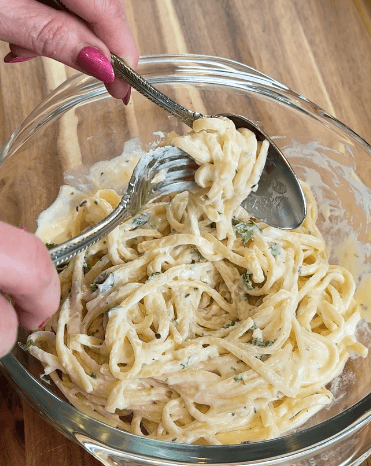
Garlic Parmesan Cream Sauce
Ingredients
Method
- Melt the butter in a saucepan over low heat. Watch carefully — you want it melted, not browned.
- Add the minced garlic and cook gently for 30–60 seconds, just until softened and fragrant. Do not let it brown.
- Pour in the cold heavy cream. Bring the sauce to a very gentle simmer with small bubbles, not a hard boil.
- Let the cream reduce gently for 5–7 minutes, until it coats the back of a spoon and a finger drawn across leaves a clean line.
- Lower the heat to its lowest setting before adding the cheese. This is the critical step.
- Add the parmesan gradually — a small handful at a time, stirring constantly until each addition fully melts in before adding the next.
- Stir in the white pepper and Italian seasoning. Taste the sauce.
- Remove the pan from the heat. Add a small squeeze of lemon juice and stir gently. The sauce should taste balanced, not lemony.
- Add salt only if needed after tasting (parmesan is already heavily salted).
- Garnish with fresh parsley and serve immediately over linguini or your favorite pasta shape.
Video
Notes
Frequently asked questions
Why is my Parmesan sauce grainy?
The pan was too hot when the cheese went in. Parmesan is a high-protein, low-water cheese, and its proteins tighten and seize when heated too quickly. The fix is to lower your heat to its lowest setting before adding cheese, then add the cheese gradually — a small handful at a time, stirring constantly until each addition has melted in completely. If your sauce has already gone grainy, you usually can’t fully recover it, but pulling it off the heat immediately and whisking in a few tablespoons of cold cream can sometimes pull it back partway.
Can I use pre-grated Parmesan from a shaker?
You can, but it works against you. Most pre-grated Parmesan contains cellulose powder and other anti-caking agents that interfere with smooth melting. Freshly grated Parmesan from a wedge melts cleaner, faster, and integrates into the sauce much more reliably. It also tastes significantly better.
What about Parmigiano-Reggiano versus regular Parmesan?
Both work for this recipe. Parmigiano-Reggiano is the protected-origin Italian version and has a deeper, more complex flavor, but it’s also significantly more expensive. Regular Parmesan from a wedge (the American or domestic version) is more affordable and still performs well in cream sauces. For a recipe like this, where the cheese is one component of a balanced sauce, either is fine.
Can I add other cheeses?
Yes. Pecorino Romano is the most natural addition — it’s a similarly hard, aged cheese that behaves the same way under heat. A 50/50 blend of Parmesan and pecorino gives you a sharper, more savory sauce. Asiago also works. Avoid soft melting cheeses like mozzarella or fontina here — they change the texture into something entirely different (closer to a cheese sauce than a Parmesan cream sauce).
What’s the best pasta to use?
Almost any pasta shape works. I filmed this with linguini because the long, flat strands catch the sauce beautifully and the visual is striking, but I originally tested it with rotini, which works just as well — the spirals catch sauce in their grooves. Fettuccine, pappardelle, penne, and farfalle are all excellent. The only shapes I’d avoid are very small pastas (orzo, ditalini) where the sauce overwhelms the pasta.
More from the science of sauces series
This is Episode 2 in an ongoing series on the science behind classic sauces. Each post tackles one specific failure mode and the technique that fixes it.
Episode 1: Never Split a Cream Sauce Again — The Cream Sauce Formula.
The foundation of every cream sauce in this series. Why cream curdles, how fat percentage protects against breaks, and the timing rules that make the formula work every time.
Episode 3: The Mushroom Cream Sauce Mistake Almost Everyone Makes.
Why your mushrooms come out spongy instead of golden — and the cold-pan water technique that fixes both spongy mushrooms and bland sauce at once.
For new episodes, the moment they go live, subscribe to Cream and Cloves on YouTube — that’s where every recipe in this series starts as a video.
Most home cooking problems have a real explanation — usually rooted in a single principle you can apply across dozens of dishes. That’s what Cream and Cloves is built around. If this post helped you understand why parmesan sauces fail (and how to fix them), subscribe on YouTube for new episodes and follow along here for the written companion recipes.