Ingredients
Method
- Melt the butter in a saucepan over low heat. Watch carefully — you want it melted, not browned.
- Add the minced garlic and cook gently for 30–60 seconds, just until softened and fragrant. Do not let it brown.
- Pour in the cold heavy cream. Bring the sauce to a very gentle simmer with small bubbles, not a hard boil.
- Let the cream reduce gently for 5–7 minutes, until it coats the back of a spoon and a finger drawn across leaves a clean line.
- Lower the heat to its lowest setting before adding the cheese. This is the critical step.
- Add the parmesan gradually — a small handful at a time, stirring constantly until each addition fully melts in before adding the next.
- Stir in the white pepper and Italian seasoning. Taste the sauce.
- Remove the pan from the heat. Add a small squeeze of lemon juice and stir gently. The sauce should taste balanced, not lemony.
- Add salt only if needed after tasting (parmesan is already heavily salted).
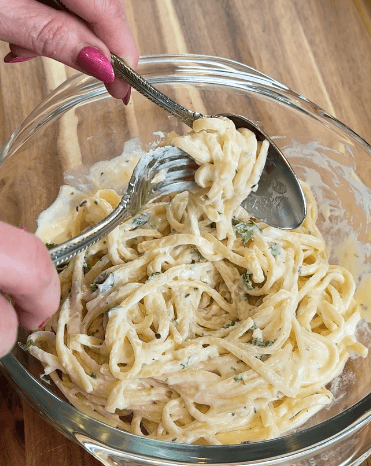
- Garnish with fresh parsley and serve immediately over linguini or your favorite pasta shape.
Video
Notes
Why low heat matters: Parmesan is a high-protein, low-water cheese. Protein tightens under heat — if the pan is too hot when the cheese goes in, it seizes instead of melting, causing graininess.
Why freshly grated: Pre-grated Parmesan contains anti-caking agents (cellulose powder) that interfere with smooth melting. Grate from a wedge for best results.
If your sauce goes grainy: Pull the pan off the heat immediately and whisk in 1–2 tablespoons of cold heavy cream. This sometimes recovers the sauce partially. Once it's gone fully grainy, it usually can't be saved.
Pasta pairings and storage: Linguini and fettuccine are classic pairings; rotini, penne, farfalle, and pappardelle all work too. Avoid very small pasta shapes. This sauce is best fresh — if reheating leftovers, use very low heat with a splash of cream stirred in.