
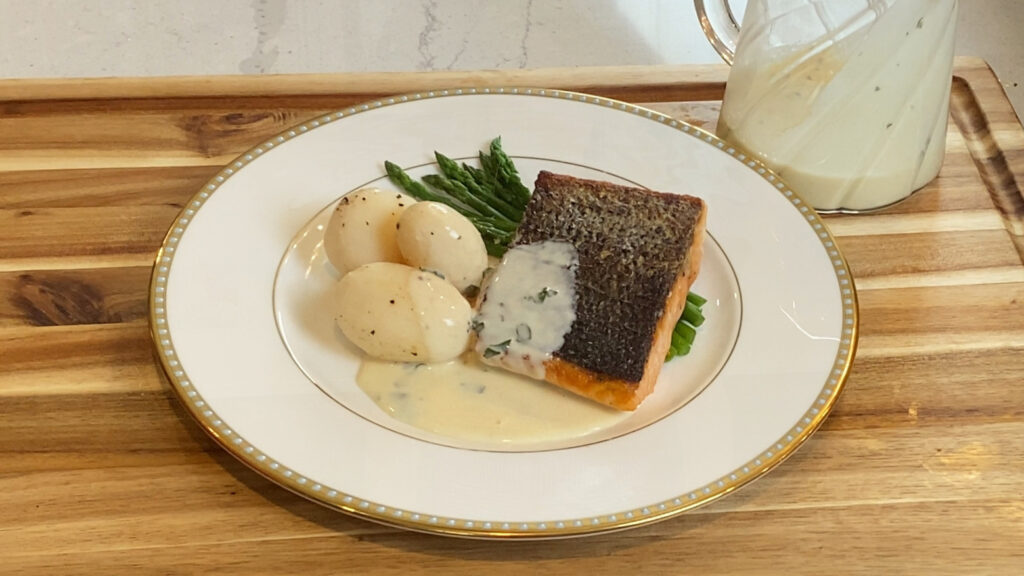
This looks like beurre blanc, but Norway does butter sauce with a little flair all of its own.
Same formula you’ve seen all series — reduce an acid, mount in cold butter — but this one’s made with lemon and cream, and it’s called Sandefjordsmør (I’ll be honest, I had to practice pronouncing that one, even with my Norwegian heritage). It’s a Norwegian butter sauce that’s rich, lightly tangy, and surprisingly forgiving, and today it’s going over crispy seared salmon.
Table of Contents
Why This Works
Sandefjordsmør is Norway’s take on beurre blanc. Same idea — reduce an acid, mount in cold butter — but here cream gets added for stability, and lemon juice takes the place of the classic wine-and-vinegar reduction.
It’s credited to a chef named Otto Fredrik Borchgrevink, who studied in France during World War II and became familiar with beurre blanc, then managed the Park Hotel in the town of Sandefjord, Norway — which is where the sauce gets its name. In 1959, he simplified the French formula by removing the shallot and white wine, adapting it to the Norwegian palate, where cream shows up often in cooking. Leaning into that wasn’t about substitution — it was about taste.
That’s not a break from technique. That’s what happens once you understand the foundations: you can begin to modify a sauce to suit your own palate.
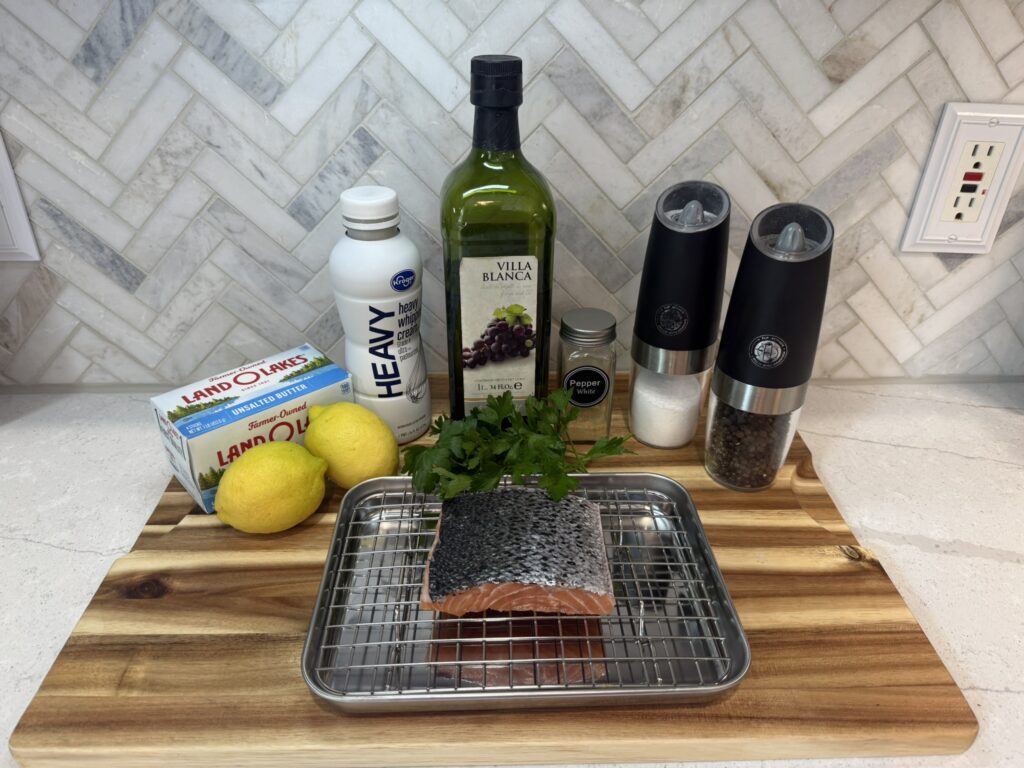
The Salmon
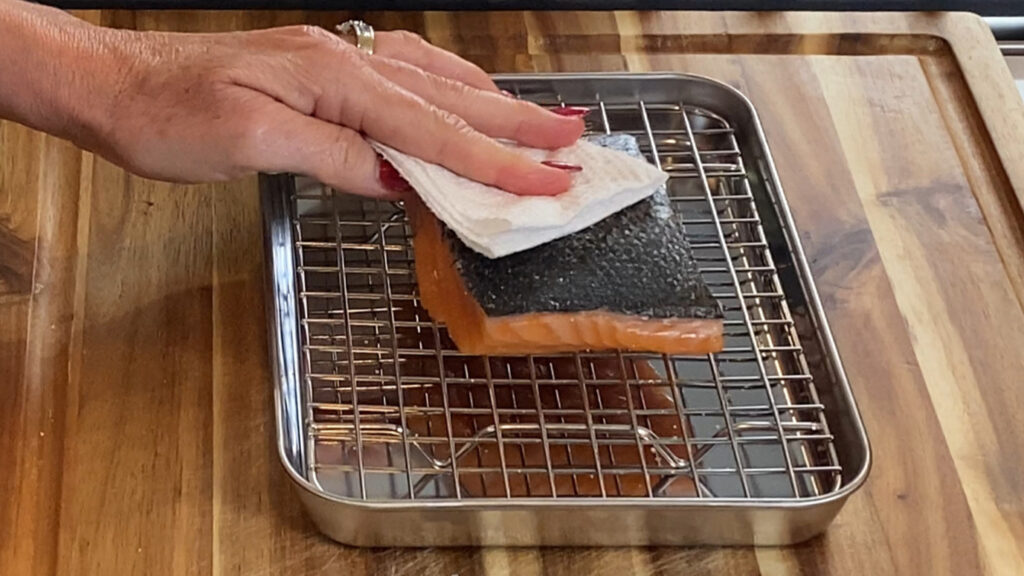
I’m using skin-on salmon fillets, patted completely dry. I even left mine in the refrigerator, uncovered, for about half an hour to dry out further — that’s what gives you a crisp skin instead of a steamed, flabby one.
Season both sides with salt and pepper. Use a high-heat-tolerant oil, like grapeseed, in an oven-safe pan, heated until it’s shimmering — that’s medium-high heat.
Lay the fillet skin-side down and leave it alone — three to four minutes depending on thickness, no moving it around. Watch closely and you’ll notice the salmon turn from dark pink to light pink, almost like there’s a visible “cookline.” Transfer the salmon to the oven, still in the same pan, once that cookline reaches about a third to halfway up the fillet.
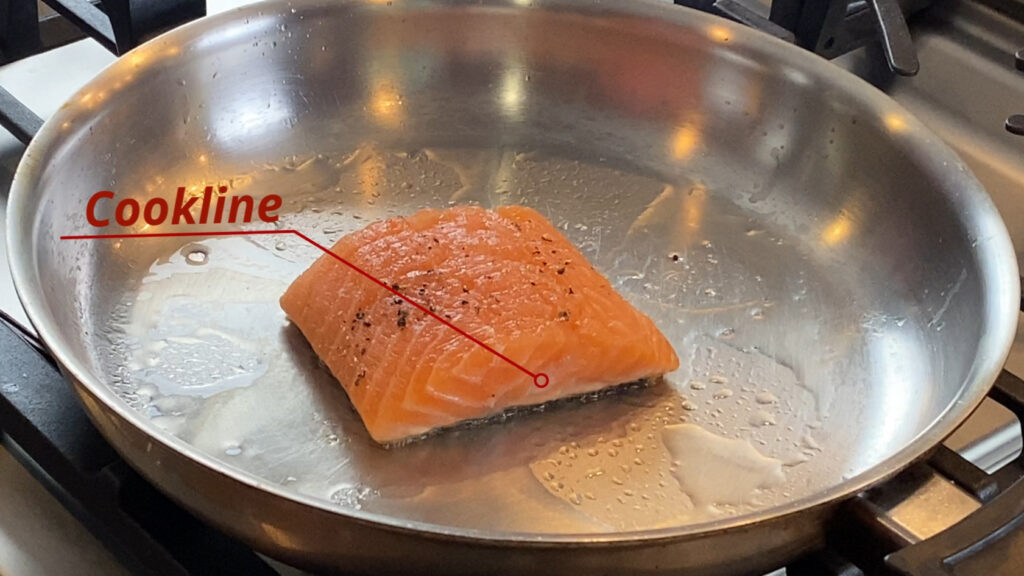
Move it straight into a 400°F oven, still skin-side down, for five to seven minutes depending on thickness.
The Sauce
While the salmon finishes, start the sauce. Add freshly squeezed lemon juice to a pan over medium heat and reduce until it’s almost gone — four to five minutes. Watch closely near the end; it can scorch fast once the liquid’s mostly cooked off. You’re looking for less than a tablespoon left, syrupy, not burnt.
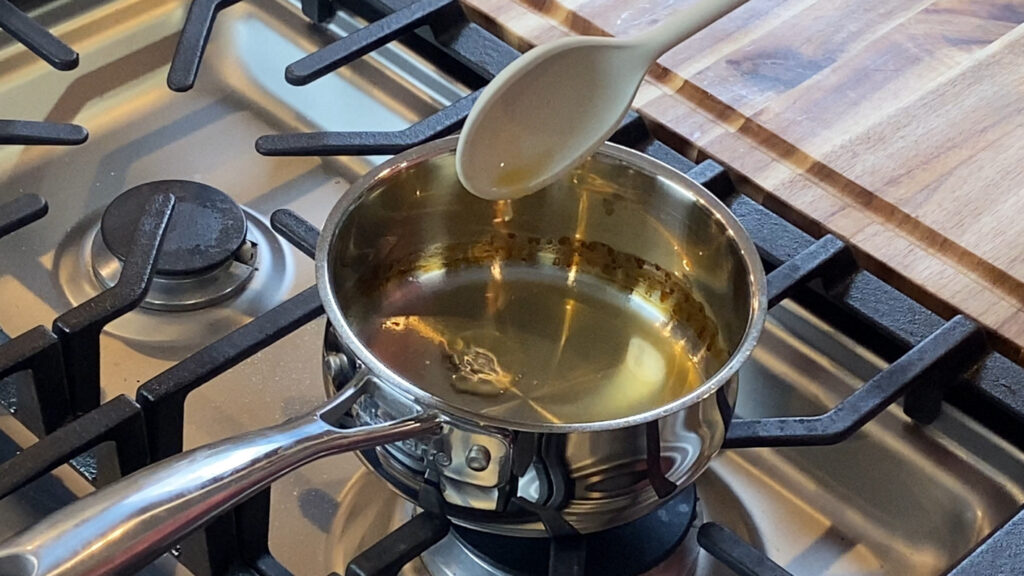
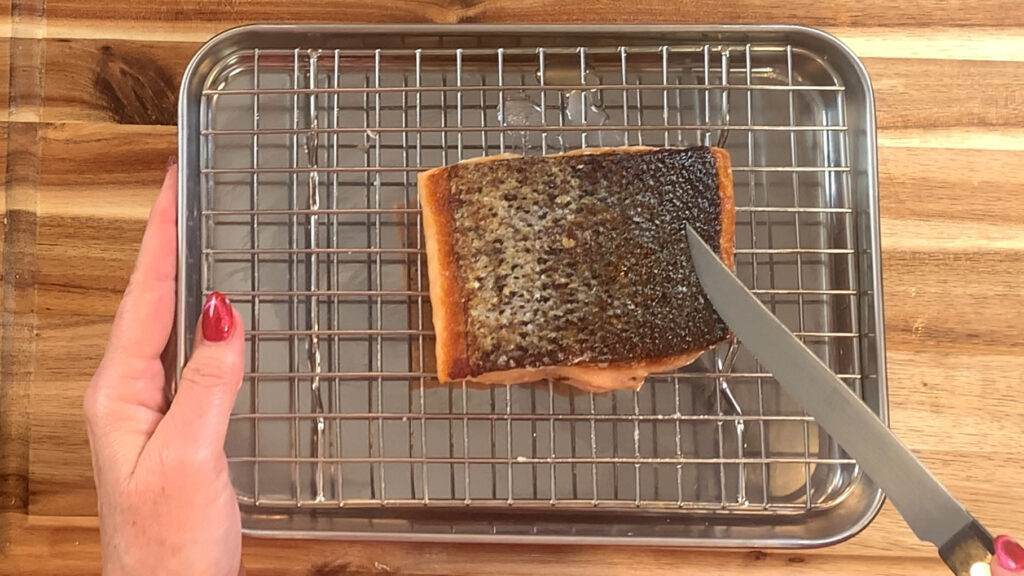
Check the salmon — the skin should be beautifully crisp. Let it rest a few minutes while you finish the sauce.
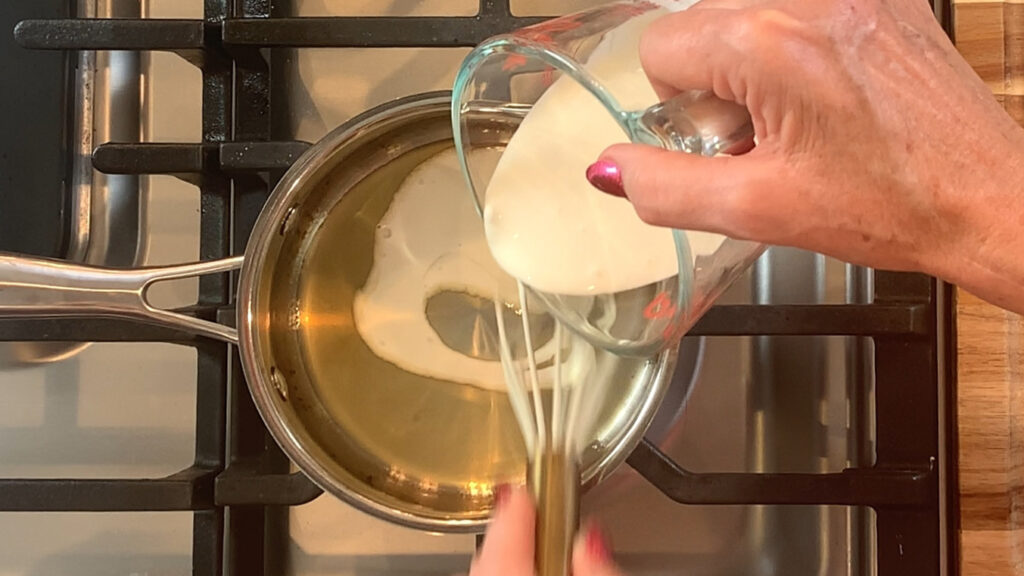
Add the cream right away and whisk to combine, then let it reduce. You’re not trying to make a thick gravy — you simply want to evaporate some of the water and concentrate the cream. This takes another five to six minutes.
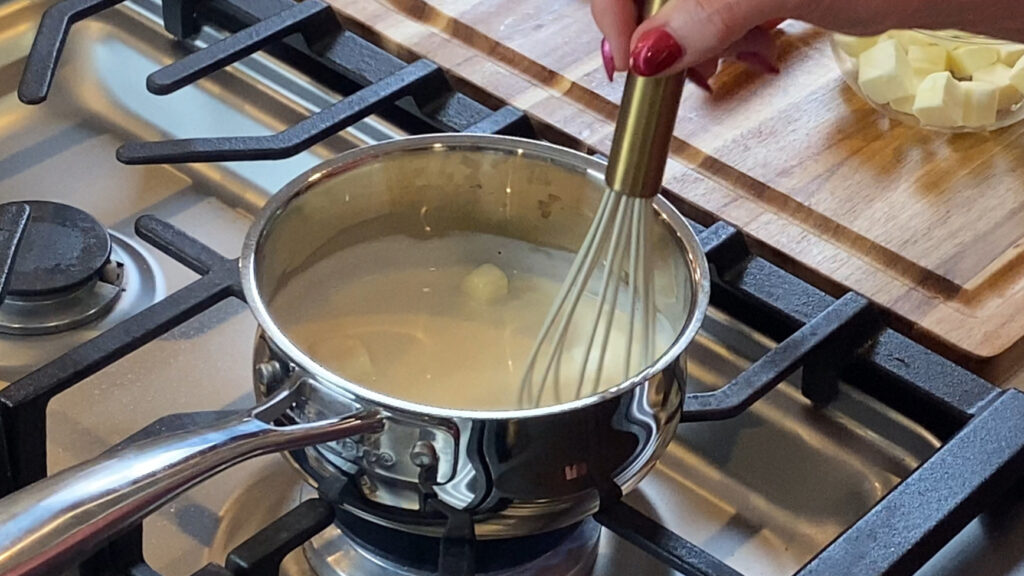
Bring the heat down further. Now you’re ready to mount in cold butter, and the base needs to stay warm, not hot. Add a few pieces at a time, whisking until each addition is fully melted before adding more. If the pan gets too hot, pull it off the burner for a second — you’re looking for a gentle melt, not a simmer. That gradual pace keeps the fat evenly suspended so the sauce doesn’t break.
This is the third time you’ve seen this move in the series. That’s not repetition for its own sake — recognizing the pattern is worth more than memorizing any single recipe. Once you can see it, you can build it into almost anything. It takes eight to ten minutes for the butter to fully emulsify and reach the right thickness.
Finishing
Add a little salt and white pepper — or cayenne, if you’d prefer. You want just enough for warmth in the background, not heat you notice outright. The traditional version uses white pepper; cayenne has become a popular swap over the years. It’s another small way to adapt the sauce, the same way you can with herbs.
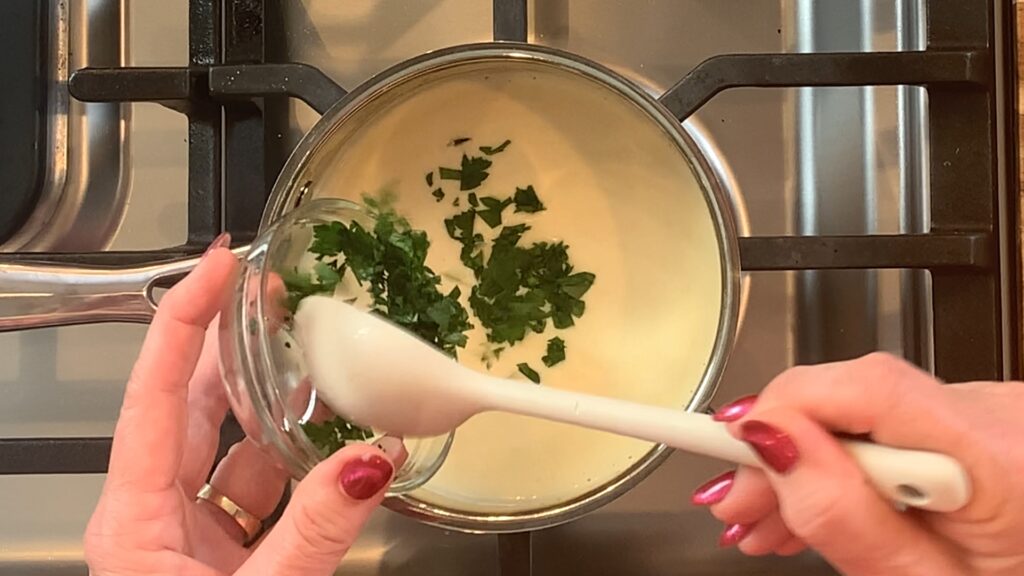
I’m staying traditional today and adding parsley, but dill or chives both work beautifully here too — dill especially, since it’s classic with Norwegian fish dishes. I’ve even made this with cilantro, and it still holds up. Once you understand why a sauce holds together, swapping an herb isn’t a risk — it’s just a choice.
Tasting
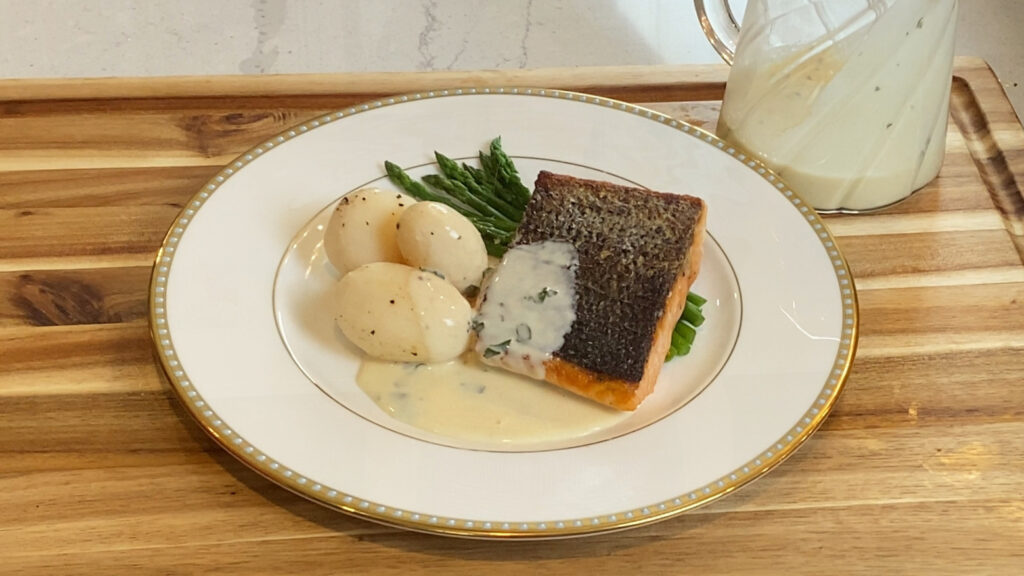
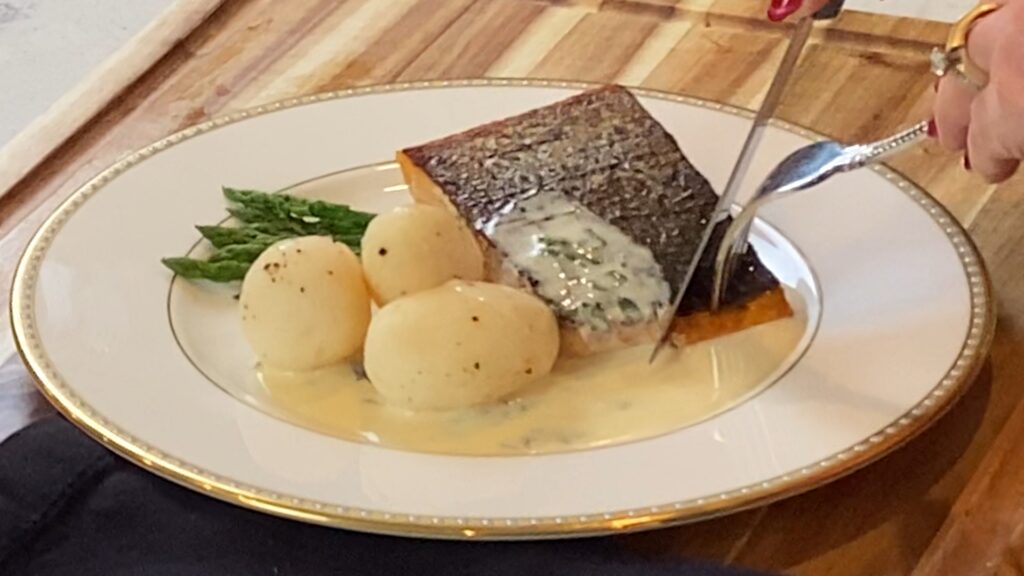
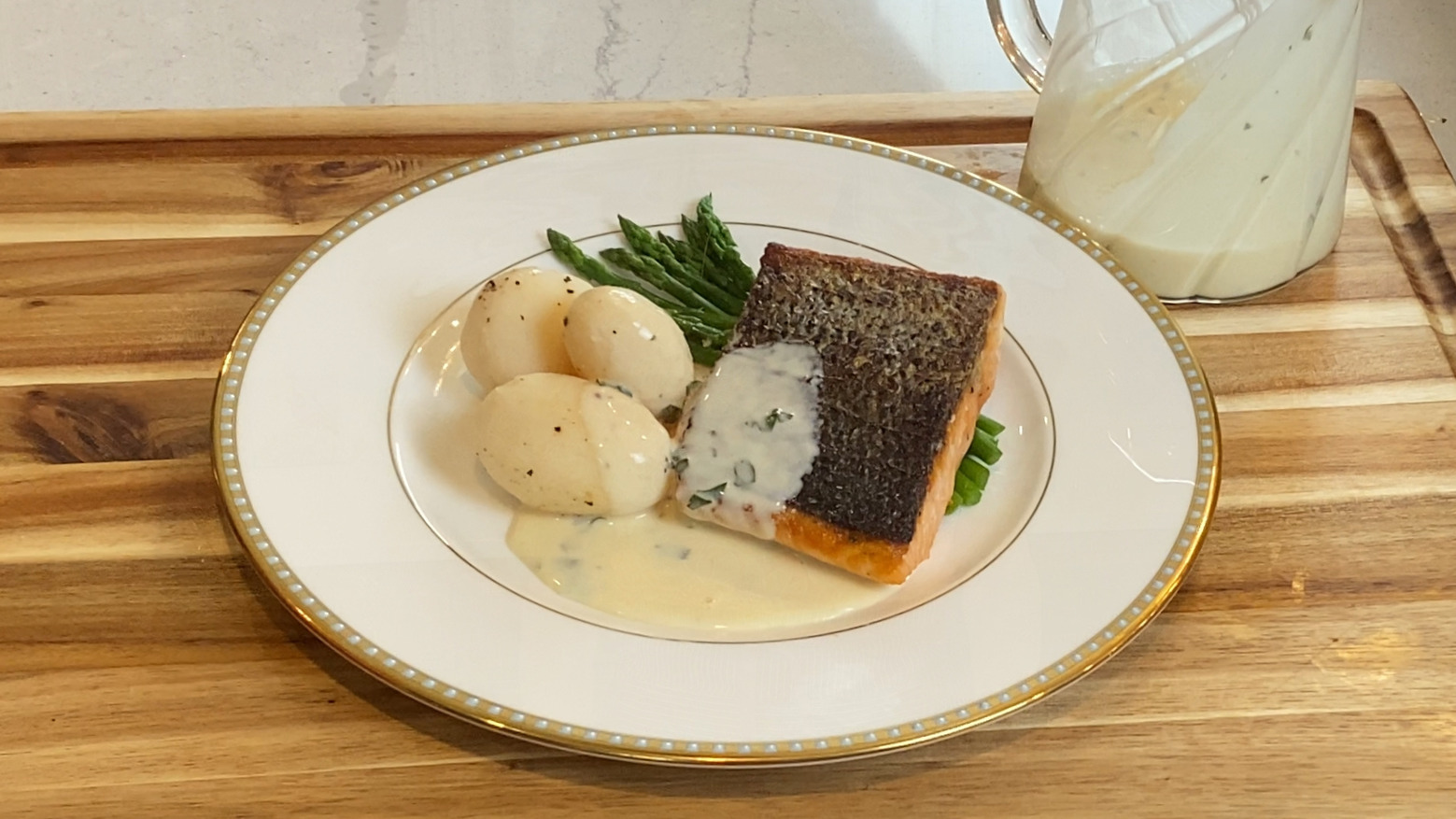
Nice and bright, rich, with a real lemon zip. Look at how glossy and creamy this Norwegian butter sauce is — not oily, not separated, not even thick like a custard. This is where Sandefjordsmør separates itself from a standard cream sauce: it contains cream, but butter is still the star.
Plate the salmon with a little sauce over the potatoes too, then dig in. The butter brings richness, the lemon brings brightness to balance it, and the herbs bring freshness on top of it all.
Ingredients
Method
- Place lemon juice in a saucepan over medium heat. Simmer until reduced to less than a tablespoon, 4–5 minutes, watching closely so it doesn't scorch.
- Add the cream immediately and whisk to combine. Cook until reduced and concentrated, 5–6 minutes.
- Reduce heat to very low.
- Whisk in cold butter, 2–3 cubes at a time, letting each addition melt fully before adding more, 8–10 minutes total.
- Whisk in salt and white pepper to taste, then fold in the parsley. Keep warm until ready to serve.
- Preheat oven to 400°F
- Pat salmon very dry and season with salt and pepper.
- Heat oil in an oven-safe skillet over medium-high heat until shimmering.
- Place fillets skin-side down and sear undisturbed, 3–4 minutes, until the cookline reaches about a third of the way up the fillet.
- Transfer the skillet to a preheated 400°F oven, skin-side down, and finish 5–7 minutes depending on thickness.
- Rest briefly before plating skin-side up.
Notes
- Why pat the salmon so dry? Moisture is the enemy of crispy skin — it has to evaporate before the skin can actually crisp, which wastes your sear time and can leave you with steamed, rubbery skin instead. Patting dry (and even air-drying uncovered in the fridge, if you have time) gets you a genuinely crisp result.
- Why cold butter, added gradually? Cold butter melts slowly, which keeps the fat evenly suspended in the sauce instead of splitting into a greasy layer on top. Adding it a few pieces at a time — rather than all at once — gives the sauce time to stay emulsified as it comes together.
- Why cream in a beurre blanc-style sauce? Classic beurre blanc relies on an emulsion held together mostly by careful technique. Adding cream gives the sauce a built-in stabilizer, which is part of why Sandefjordsmør is more forgiving than a traditional beurre blanc — a helpful entry point if you’re newer to butter sauces.
- Why white pepper instead of black or cayenne? White pepper adds warmth without visible flecks or the more assertive heat of cayenne, keeping the sauce’s pale color clean. It’s the traditional choice, though cayenne is a common modern swap if you’d like a bit more heat.
- If your sauce breaks: Take it off the heat immediately and whisk in a tablespoon of cold cream or an ice cube — the sudden drop in temperature can help re-emulsify it. If it doesn’t come back together, don’t panic; strain and start the butter-mounting step again with a fresh spoonful of warm cream as your new base.
FAQ
Is Sandefjordsmør a traditional Norwegian recipe? Not an old one — it’s a 20th-century creation credited to chef Otto Fredrik Borchgrevink at the Park Hotel in Sandefjord, Norway. It’s best understood as a Norwegian adaptation of French beurre blanc rather than a centuries-old dish.
Can I use a different herb? Yes. Parsley is the traditional choice, but dill and chives both work well — dill especially, since it pairs naturally with Norwegian fish dishes. Cilantro is a further example of how flexible this sauce can be once you understand the technique behind it.
Why white pepper instead of cayenne? The traditional version uses white pepper for warmth without added color or sharper heat. Cayenne has become a popular modern substitute if you prefer more noticeable heat.
What else can I serve this sauce with? It’s traditionally served with fish, but it works beautifully with shrimp and lobster too.
Related Recipes (Butter Sauce Formula Series)
This is the fifth and final sauce in the Butter Sauce Formula series:
- Ep8 — Foolproof Beurre Blanc with scallops
- Ep9 — Brown Butter Sage Sauce with gnocchi
- Ep10 — Lemon Butter Sauce with shrimp
- Ep11 — Chimichurri Butter Sauce with flank steak
New to the series? Start with Ep8 to see the foundational technique this sauce builds on.
Closing
This is the fifth sauce using this one formula. The technique stays constant — the flavor is never fixed. Once you understand why a butter sauce works, you get to decide what it becomes.