
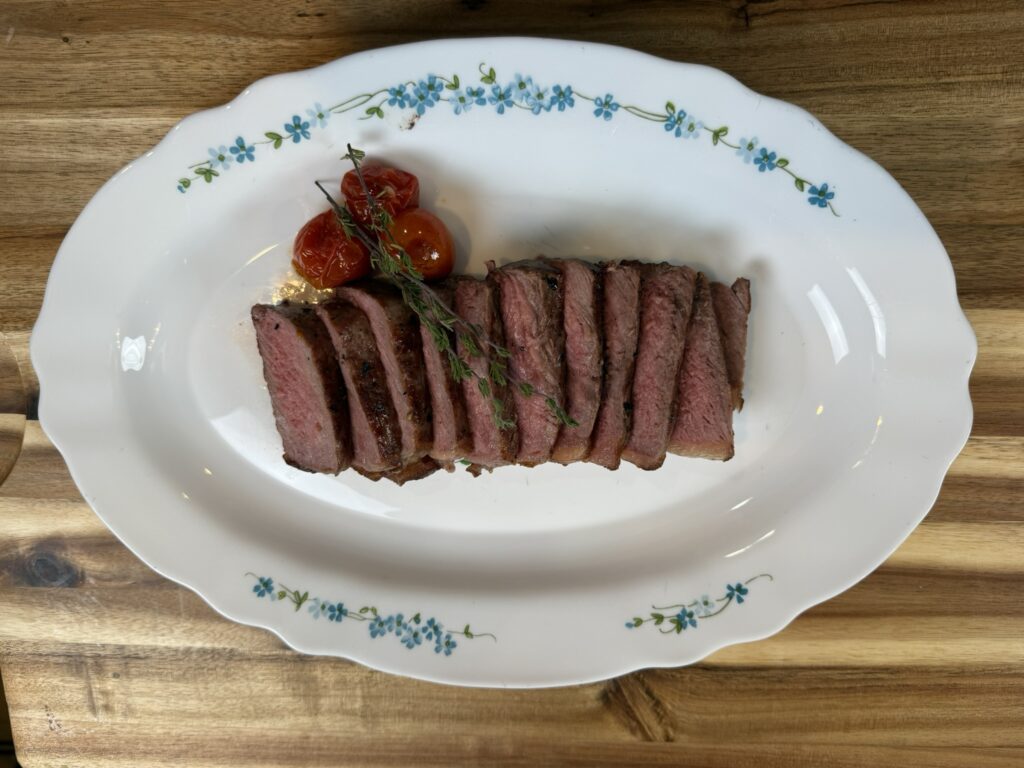
Most steak mistakes happen before the pan even gets hot. A wet surface. A cold steak straight from the fridge. Too much movement in the pan. Any one of these can stand between you and the crust you’re looking for — and without the crust, you don’t have fond, and without fond, you don’t have a pan sauce.
This sear and oven steak method fixes all of that. A high-heat sear builds the deep brown crust that gives steak its flavor. A quick finish in the oven brings it to temperature evenly without overcooking the outside. And the fond left in the pan afterward becomes the base for a red wine shallot reduction — or any pan sauce you want to build.
This is the steak method I used in Episode 5, The Sauce That Makes Steak Taste Like a Steakhouse Steak, linked here.
The two things that change everything
Most home cooks try to cook steak entirely on the stovetop. The problem is heat direction — on the stovetop, heat only comes from below. By the time the center reaches temperature, the outside is overdone and the fond is at risk of burning.
The sear-and-oven method solves this by splitting the job. The stovetop builds your crust and your fond. The oven finishes the interior from all directions at once — gentle, even heat that brings the steak to temperature without scorching anything.
The second thing this method protects is your fond. When you finish a steak entirely on the stovetop, you’re constantly managing the heat to avoid burning. Moving to the oven frees you up — and keeps those browned bits dark and flavorful rather than scorched and bitter.
Why a dry surface matters
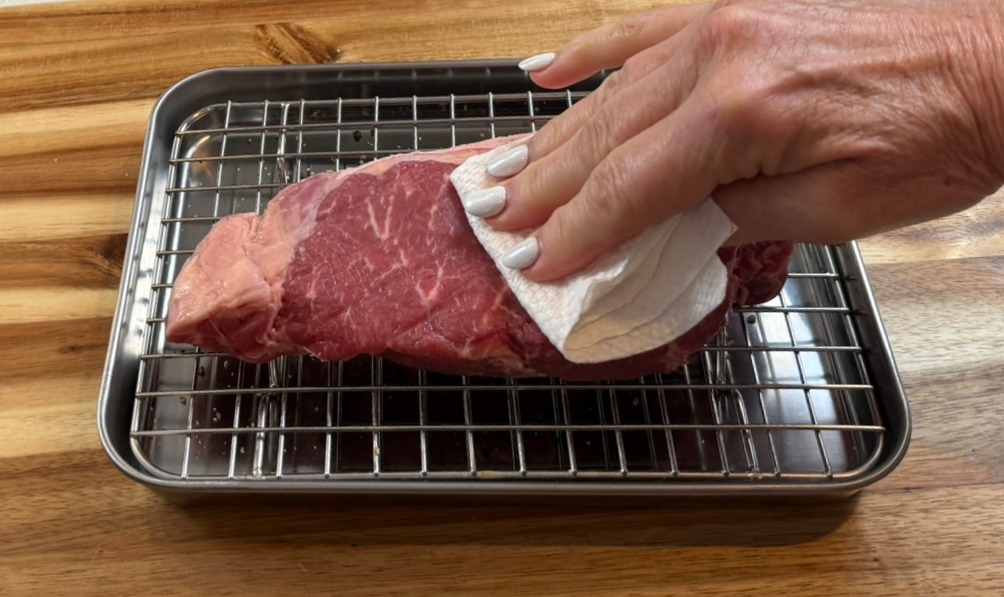
Moisture is the enemy of browning. When a wet steak hits a hot pan, that moisture has to evaporate before the surface temperature can rise high enough for the Maillard reaction — the browning reaction that creates crust and flavor — to occur. By the time it does, the outside is often already overcooked.
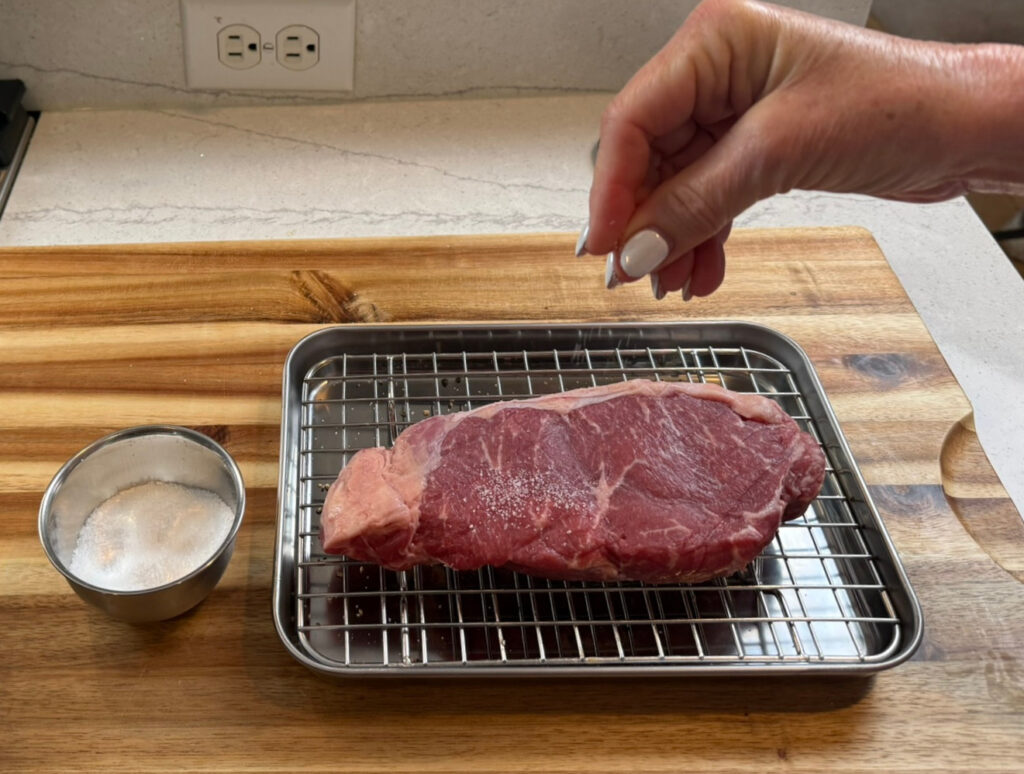
Pat your steak completely dry with paper towels. Then season generously with kosher salt and freshly cracked black pepper. Press the seasoning in lightly with your hand. Let it sit at room temperature for 30 to 45 minutes before cooking — a cold steak hitting a hot pan cooks unevenly.
The sear — what you’re looking for
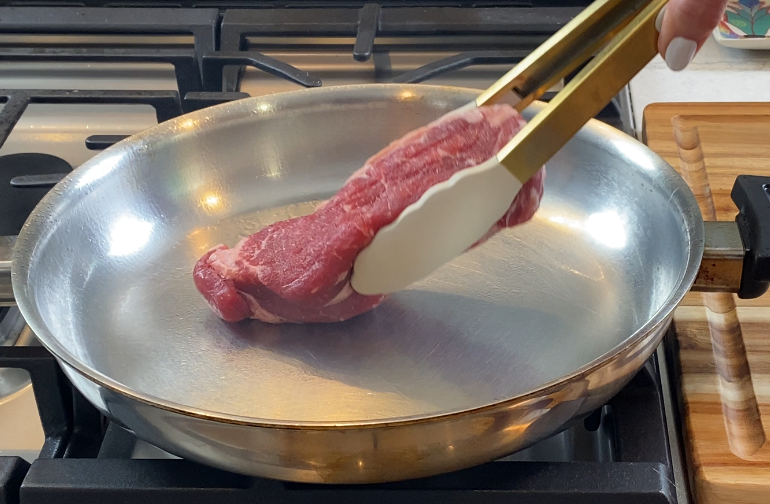
Heat a stainless steel or cast iron skillet over medium-high to high heat for 2 to 3 minutes. It should be very hot before anything goes in. Add your oil and heat until it shimmers.
Place the steak in the pan and leave it alone. Sear for 2 to 3 minutes without moving it. Still contact with the pan is what builds the deep brown crust. Do not press down or move the steak — you’ll break the crust and lose fond.
Flip once and sear the second side for 2 minutes. If your steak has a thick fat cap, hold it on its edge briefly to render and brown the fat.
Finishing in the oven
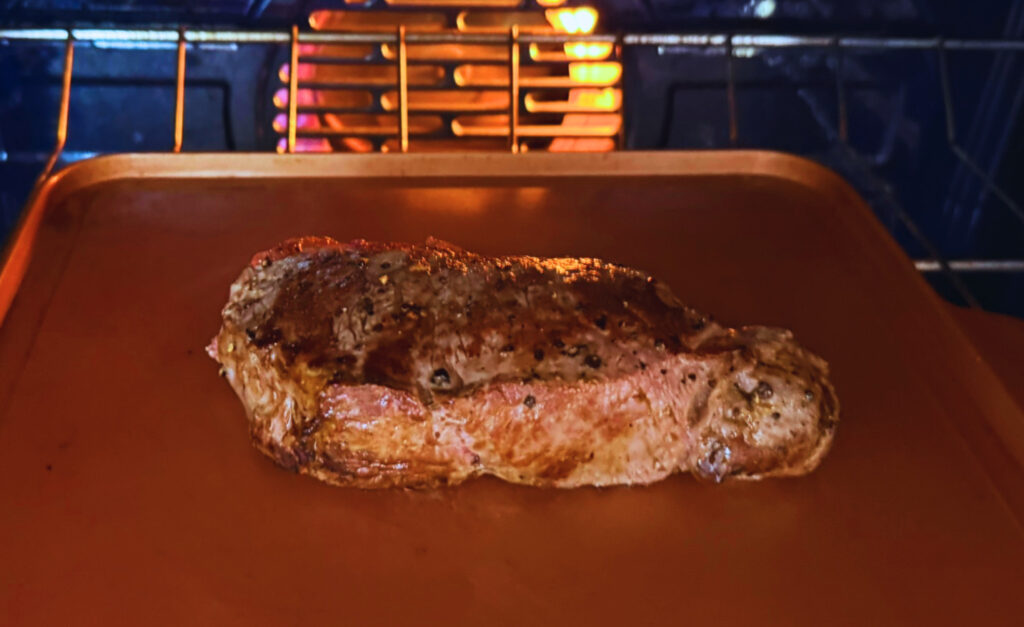
Transfer the pan to a 400°F oven. This is where the magic happens — heat comes from all directions at once, bringing the interior to temperature evenly while the crust that’s already set on the stovetop stays intact.
Cook until the internal temperature reaches your target doneness. Use a thermometer, not the clock — every steak is different depending on thickness and how cold it was when it went in.
What Temperature to Pull Your Steak
The single most important tool for this method is an instant-read thermometer. Pull temperatures matter because the steak continues to cook as it rests.
| Doneness | Pull Temperature |
|---|---|
| Rare | 120–125°F |
| Medium Rare | 128–132°F |
| Medium | 135–140°F |
For ribeye and New York strip, medium rare is the sweet spot. The fat renders fully and the texture is at its best.
The rest — don’t skip this
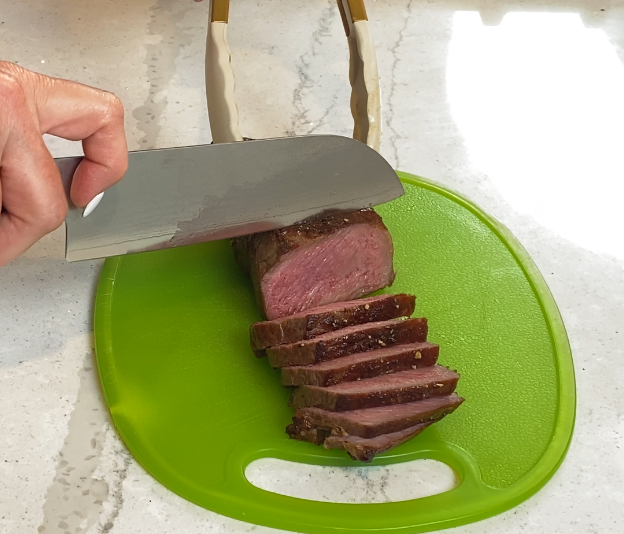
Remove the steak from the pan and transfer it to a cutting board. Rest for 5 to 10 minutes before slicing. As meat cooks, muscle fibers contract and push moisture toward the center. Resting allows those fibers to relax and reabsorb that moisture. Slice too early and the juices run out onto the cutting board instead of staying in the meat.
Get the Full Recipe
[wprm-recipe-container id=”4202″]
Make It a Full Steakhouse Meal
The fond left in your pan after the steak rests is the starting point for a restaurant-quality pan sauce. If you want to take this all the way, the red wine shallot reduction from Episode 5 comes together in about 15 minutes using what’s already in the pan.
🍷 The Sauce That Makes Steak Taste Like a Steakhouse
More From Cream & Cloves
New to the channel? The Pan Sauces series breaks down the technique behind every sauce in this series — starting with the 5-step formula that makes them all work.
- Episode 4 — The Pan Sauce Formula
- Episode 3 — Mushroom Cream Sauce
- Episode 2 — Garlic Parmesan Cream Sauce
- Episode 1 — The Cream Sauce Formula
How to Cook a Perfect Steak — Sear and Oven Method
Ingredients
Method
- Remove the steak from the refrigerator 30 to 45 minutes before cooking and set it on a plate at room temperature. Cold steak hitting a hot pan cooks unevenly.
- Pat the steak completely dry with paper towels. Moisture on the surface creates steam, which prevents browning. Dry surface = better crust = better fond for any pan sauce.
- Season generously on both sides with kosher salt and freshly cracked black pepper. Press the seasoning in lightly with your hand.
- Preheat your oven to 400°F (205°C).
- Heat a stainless steel or cast iron skillet over medium-high to high heat for 2 to 3 minutes until very hot. Add 1 tbsp neutral oil and heat until it shimmers.
- Place the steak in the pan and leave it alone. Sear for 2 to 3 minutes without moving it. Still contact with the pan builds the deep brown crust. Do not press down or move the steak — you'll break the crust and lose fond.
- Flip once and sear the second side for 2 minutes. If the steak has a thick fat cap, hold it on its edge briefly to render and brown the fat.
- Transfer the pan to the oven (use oven mitts — the handle is extremely hot). Cook until the internal temperature reaches your target doneness (see chart below).
- Remove the steak from the pan and transfer to a cutting board. Rest for 5 to 10 minutes before slicing — this allows the juices to redistribute. Do not skip this step.
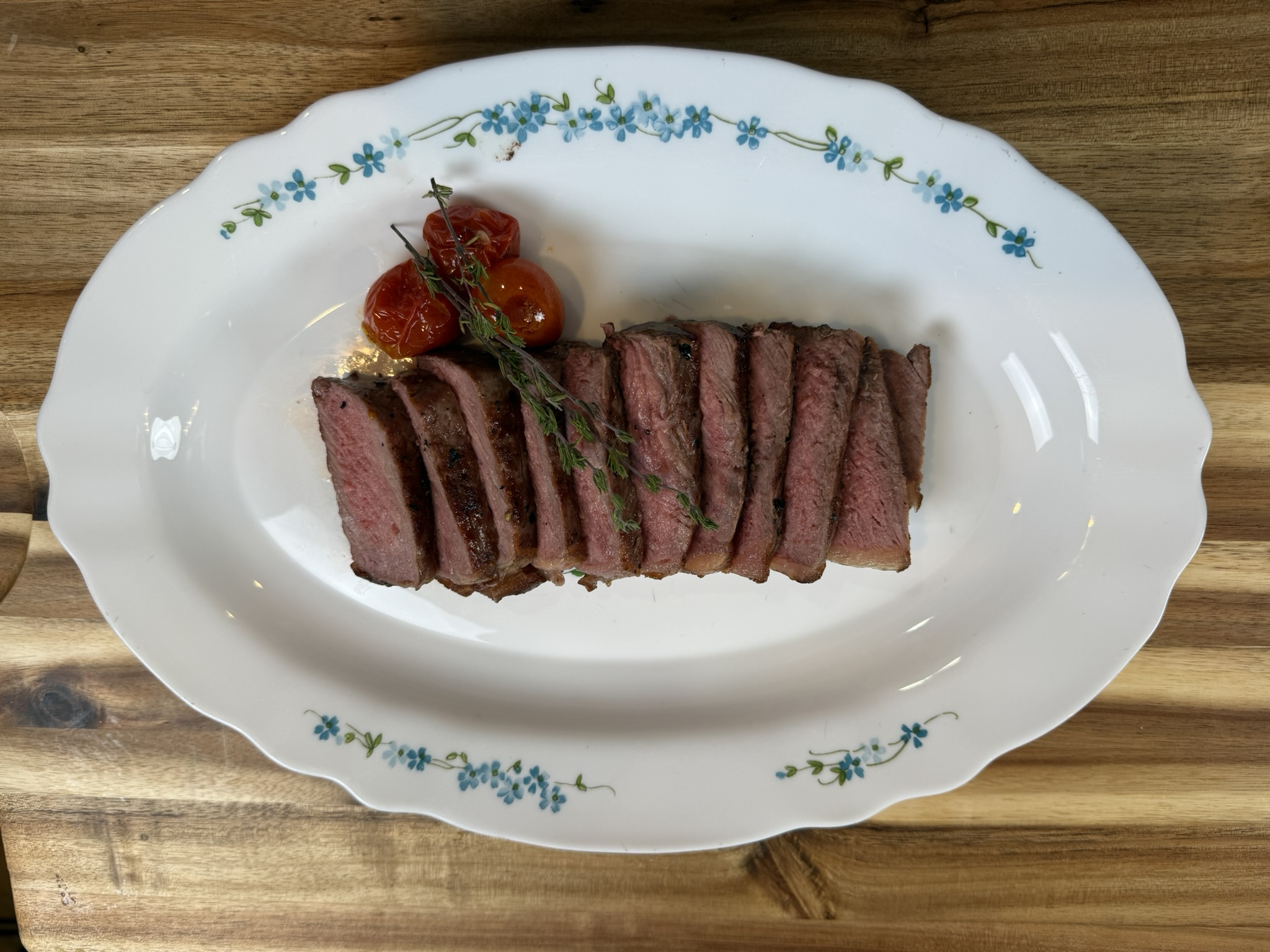
- Slice against the grain and serve immediately.
Notes
Why rest the steak after cooking: As meat cooks, its muscle fibers contract and push moisture toward the center. Resting allows those fibers to relax and reabsorb that moisture. Slice too early and the juices run out onto the cutting board instead of staying in the meat. Five to ten minutes of resting makes a significant difference in how juicy the steak tastes.
Why use a stainless steel or cast iron pan: Both materials tolerate the high heat needed to build a proper crust without warping. Non-stick pans are not oven-safe at 400°F and cannot develop the same fond. The fond left in the pan after the steak rests is the starting point for a red wine shallot reduction or any pan sauce.
If the steak is sticking to the pan: It isn’t ready to flip yet. A properly seared steak releases naturally from the pan when the crust has formed. If you feel resistance when you try to move it, wait another 30 seconds and try again.
Doneness Temperature Chart
| Doneness | Pull Temperature | Final Temp (after rest) |
|---|---|---|
| Rare | 120–125°F | 125–130°F |
| Medium Rare | 128–132°F | 130–135°F |
| Medium | 135–140°F | 140–145°F |