
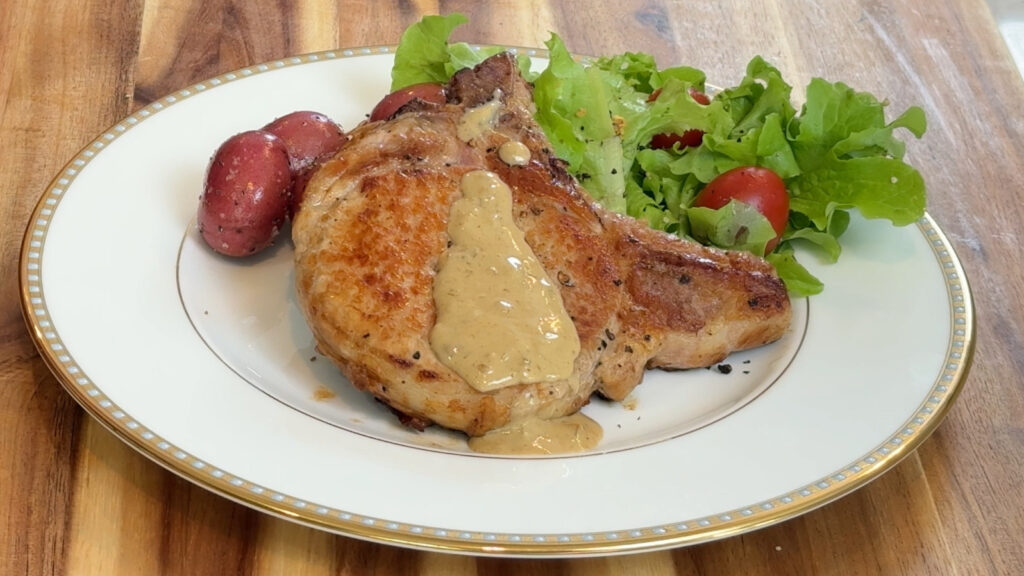
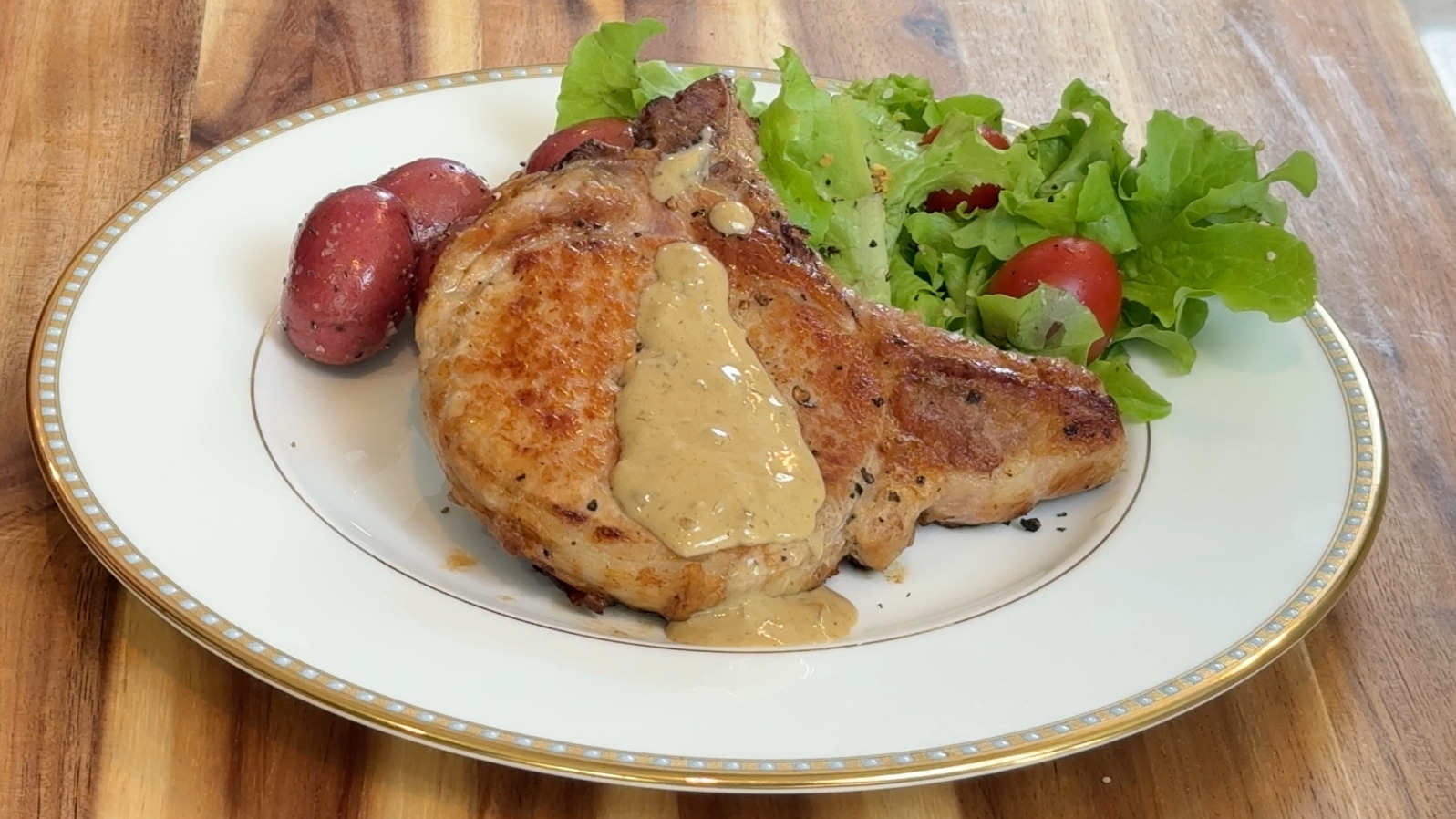
A mustard cream pan sauce isn’t just about mustard. It’s about balance — rich, savory, and just tangy enough to keep all that cream from feeling heavy.
If you’ve ever made one that broke into a greasy, grainy mess, or one that tasted like watered-down cream soup with no real flavor, those feel like two different problems. They’re usually the same mistake, and it comes down to order: when the cream goes in, and what happens before it does.
This sauce sits right between two formulas we’ve built on this channel — the Cream Sauce Formula and the Pan Sauce Formula. If you’ve followed both, you already have every skill you need here. If you haven’t, don’t worry. Everything is right below.
Why This Mustard Cream Pan Sauce Works
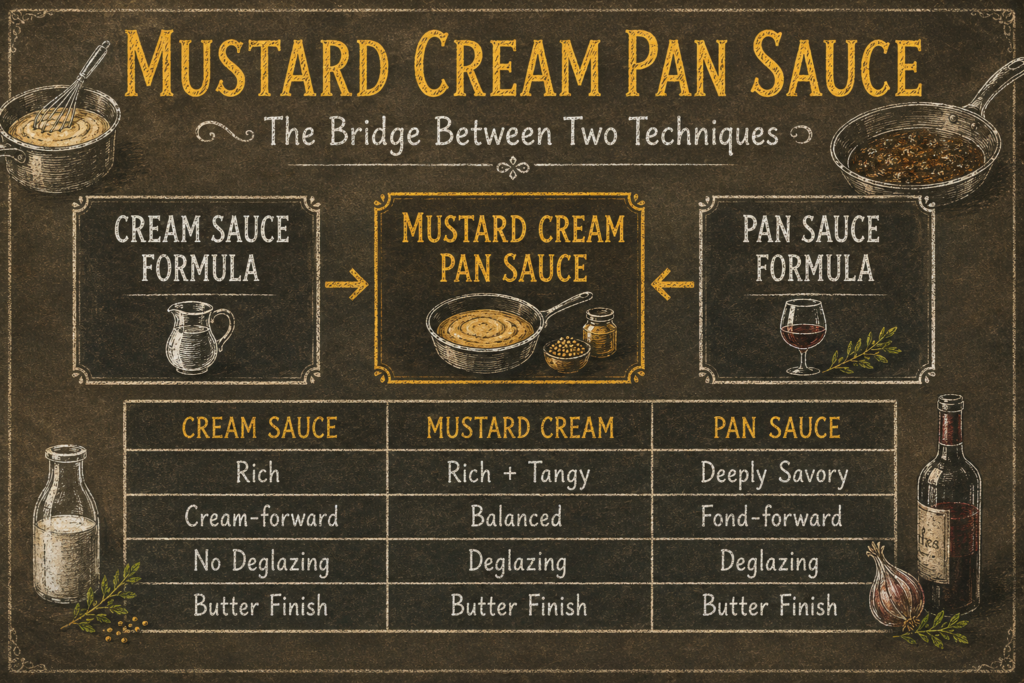
This is the bridge recipe. From the cream sauce side, it takes a smooth, enriched finish. From the pan sauce side, it takes fond and deglazing — the browned bits left in the pan after searing, lifted with wine and turned into the backbone of the sauce. Put them together and you get something richer than a pan sauce and more savory than a cream sauce.
The order is the whole game. Most recipes tell you to add the cream early and let it reduce down. That’s how you end up either thin and bland or thick and broken. We do the hard reduction first, with just the wine and stock, so the flavor concentrates while the liquid cooks off. Only then does the cream go in — and because the reduction is already done, the cream’s only job is to enrich. It never has to boil hard, so it stays silky instead of breaking.
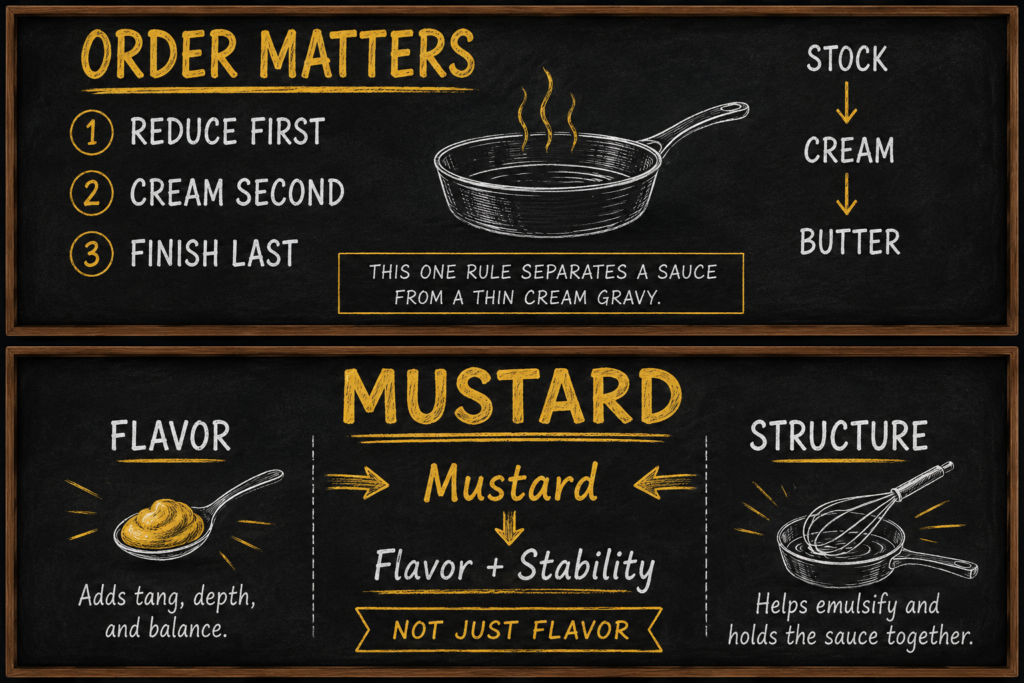
Then there’s the mustard, which is doing two jobs at once. The obvious one is flavor: tang, warmth, and the balance that cuts the richness. The quieter one is structure. Mustard contains natural emulsifiers — compounds that help fat and liquid stay together — so it isn’t just seasoning. It’s part of what holds the sauce together. It’s part of the flavor, and part of the structure.
HOW TO MAKE IT
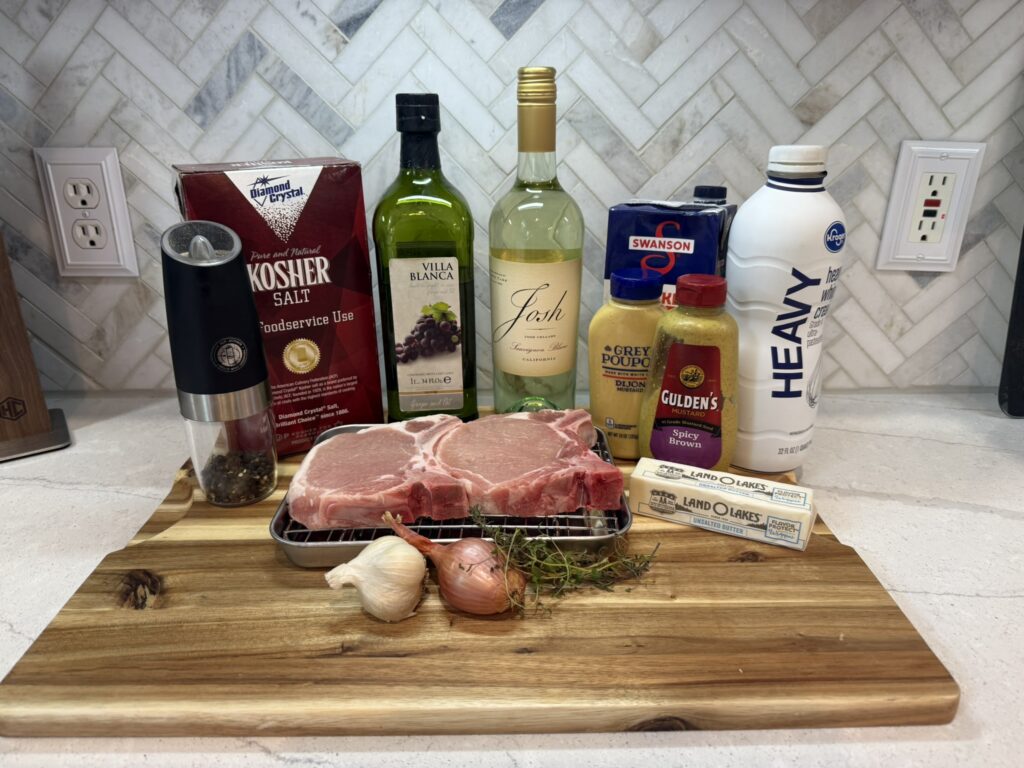
1. Sear the pork and build the fond
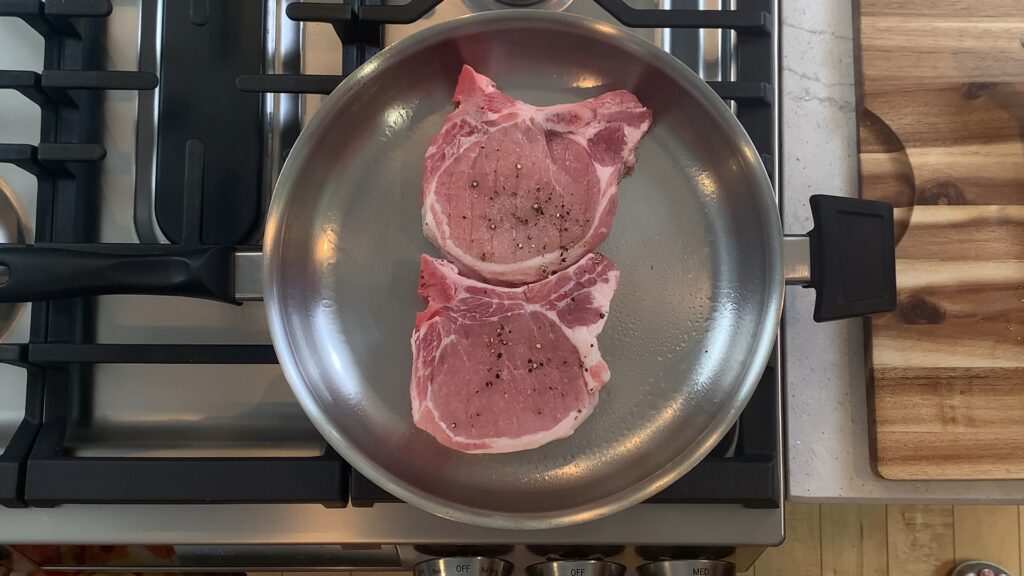
Pat the chops completely dry and season with salt and pepper. Heat a stainless skillet over medium-high heat with a little neutral oil until it’s properly hot. Lay the chops down and leave them alone — that solid, still contact is what builds the browned crust and the fond underneath. For the full pork chop method, see the linked post below.
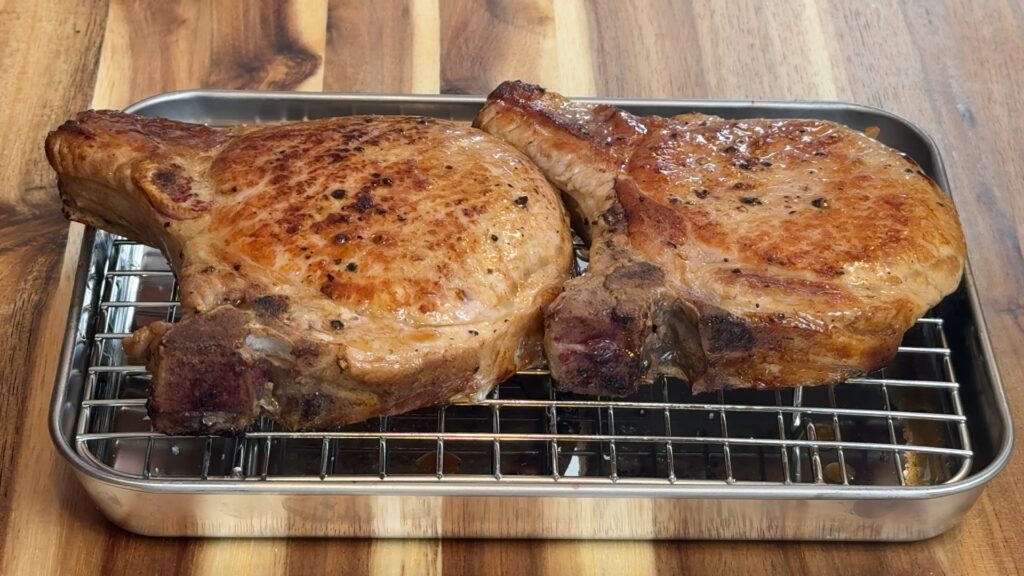
Once the chops are done, move them to a rack to rest. Don’t clean the pan. That’s not a dirty pan — that’s flavor.
2. Soften the aromatics
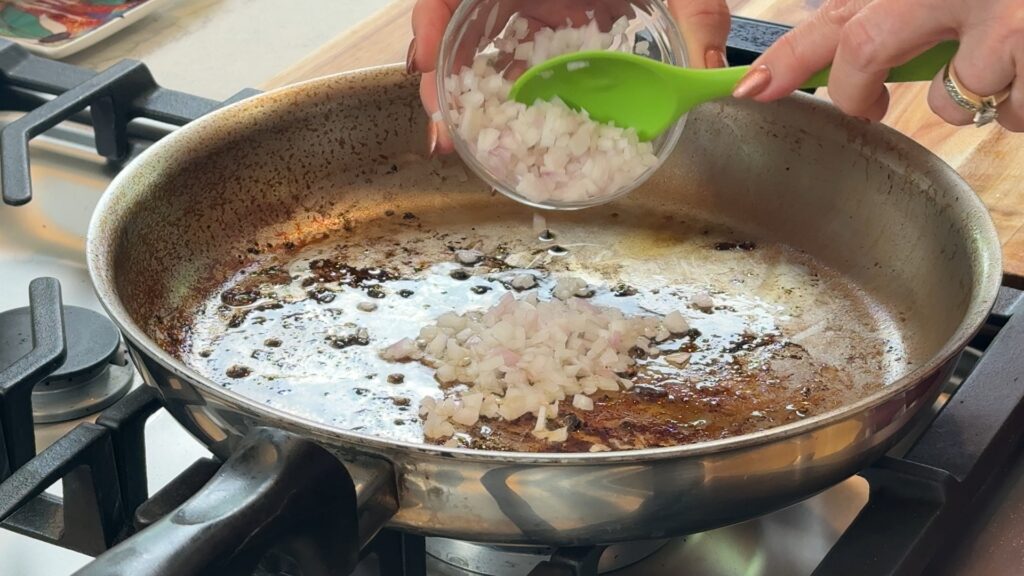
Lower the heat and add the shallots. Shallots bring a sweetness that balances mustard’s natural sharpness. Add the garlic and let it soften without taking over.
3. Deglaze and lift the fond
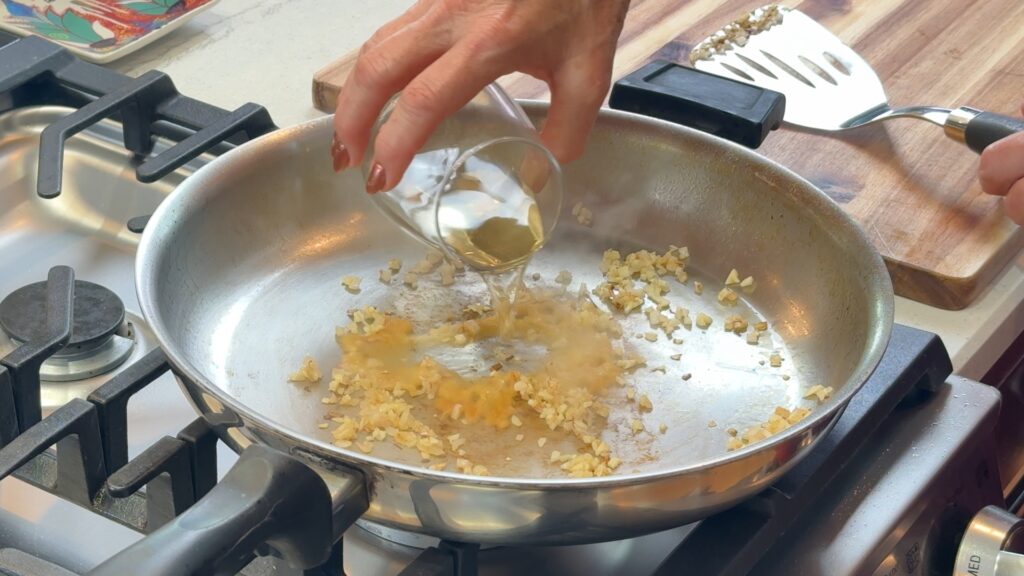
Add the white wine and scrape up the fond. Unlike a red wine reduction, this sauce starts on a lighter foundation — white wine and chicken stock keep the flavors bright and let the cream become part of the sauce instead of competing with it.
4. Reduce — this is the step that matters
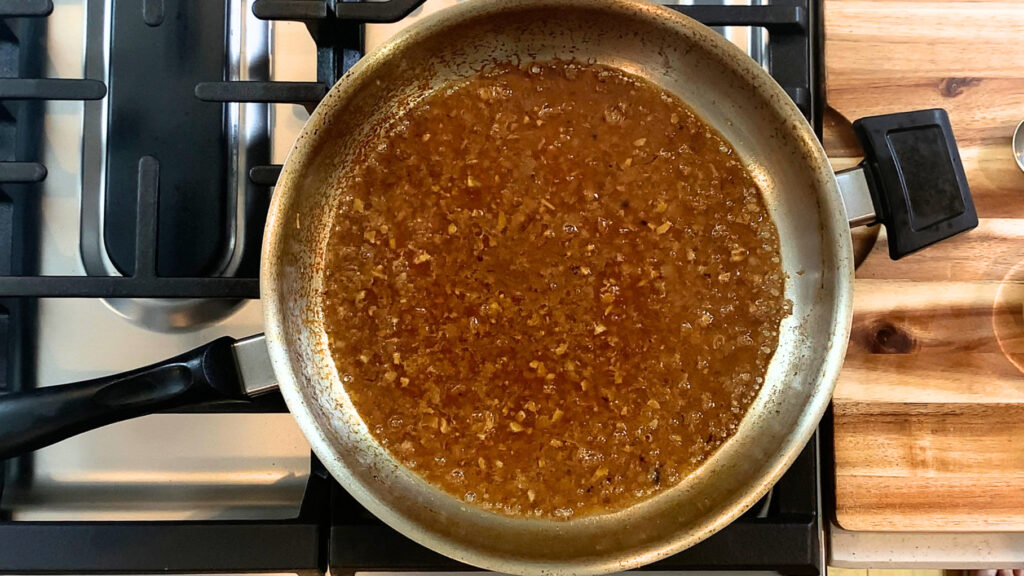
Reduce the liquid by about half, roughly 5 to 6 minutes. You’ll know it’s ready when it looks slightly darker and moves more slowly across the pan. All the hard reduction happens now, before any cream enters the pan.
5. Add the mustard
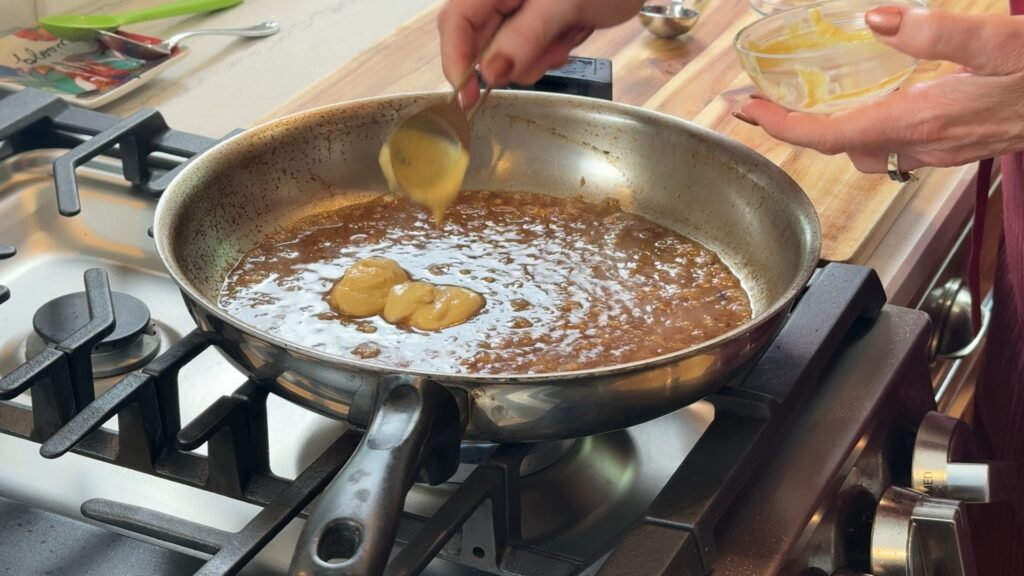
Whisk in the Dijon and spicy brown mustard. This is where the flavor and the structure both come in — the tang you taste, and the emulsifiers that help the sauce hold together.
6. Add the cream
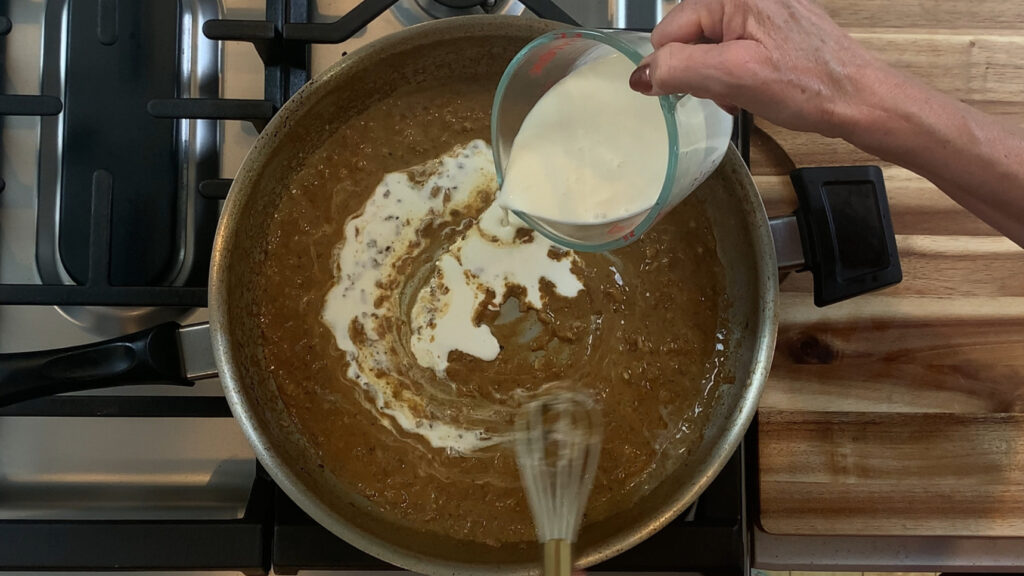
Only now does the cream go in. Because the reduction is finished, you’re enriching the sauce, not reducing the cream. Keep it at a gentle simmer — just enough movement to see the surface barely ripple.
7. Add the thyme
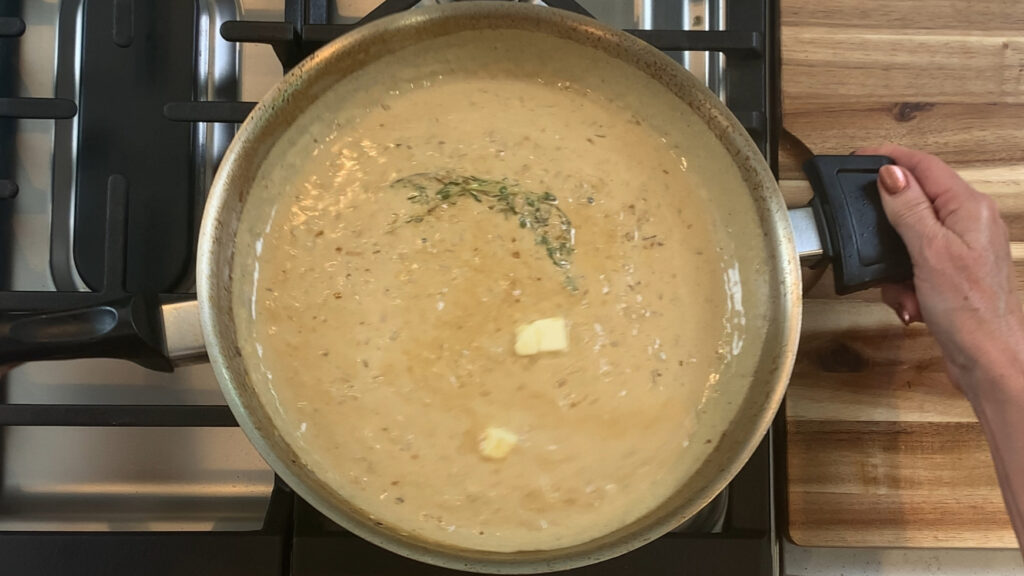
Add the fresh thyme. It brings a faint herbal note that cuts the richness without competing with the mustard. Give it 2 to 3 minutes to infuse, until the sauce coats the back of a spoon.
8. Finish with cold butter
Off or low heat, swirl in the cold butter to emulsify the fat without breaking the sauce. The butter adds shine, richness, and body. Taste, adjust salt, and spoon it over the rested chops.
WPRM RECIPE
Ingredients
Method
- Pat the pork chops dry and season with salt and pepper. Heat a little neutral oil in a stainless skillet over medium-high until hot. Sear the chops undisturbed until browned and they release cleanly, then finish to an internal temperature of 145°F. Move to a rack to rest. Do not clean the pan.
- Lower the heat and add the shallots. Cook until softened, then add the garlic and cook briefly until fragrant.Add the white wine and scrape up the fond. Add the chicken stock.
- Reduce by about half, 5 to 6 minutes, until slightly darker and moving slowly across the pan.
- Whisk in the Dijon and spicy brown mustard.
- Add the heavy cream and bring to a gentle simmer. Add the thyme and simmer 2 to 3 minutes, until the sauce coats the back of a spoon.
- Off the heat, swirl in the cold butter until glossy. Taste and adjust salt. Spoon over the rested chops.
Video
Notes
RELATED RECIPES
⚠️ Format this block to match your Ep6 RELATED RECIPES standard. Logical cross-links for this post:
- The Pan Sauce Formula
- The Cream Sauce Formula
- Pan-Seared Pork Chops (the protein method for this episode) →
/pan-seared-pork-chops
FAQ
Why did my mustard cream sauce break or turn grainy? It’s almost always because the cream went in too early or the heat stayed too high after it. Reduce the wine and stock first, then add the cream and keep it at a gentle simmer. Finishing with cold butter off the heat also helps pull a borderline sauce back together.
Can I make this without wine? Yes. Replace the wine with an equal amount of extra chicken stock, plus a small squeeze of lemon or a splash of white wine vinegar at the end for brightness. You’ll still get a good reduction and deglaze.
What kind of mustard should I use? This sauce uses Dijon for smooth depth and a little spicy brown for extra warmth and texture. Plain yellow mustard will work in a pinch, but tastes sharper and more one-note. Whole grain is a fine swap if you like visible seeds.
What else can I serve this sauce over? It’s built on the pan sauce formula, so it works over anything you sear in a stainless pan — chicken, steak, or fish. Just build the fond from whatever protein you’re cooking and follow the same order.
Why do I have to reduce before adding the cream? Because reducing concentrates flavor while the water cooks off. If you add the cream first and try to reduce everything together, the cream is forced to boil hard and either breaks or thins out. Reduce first, enrich second.
THE PAN SAUCE SERIES (navigation block)
Episode 1 — The Cream Sauce Formula
Episode 2 — Garlic Parmesan Cream Sauce
Episode 3 — Mushroom Cream Sauce
Episode 4 — The Pan Sauce Formula
Episode 5 — Red Wine Shallot Reduction
Episode 6 — Lemon Caper Pan Sauce
Episode 7 — Mustard Cream Pan Sauce (you’re here) — the bridge between the Cream Sauce Formula and the Pan Sauce Formula: reduce first, add mustard for flavor and structure, finish with cream and cold butter.
Subscribe to Cream and Cloves on YouTube → https://www.youtube.com/@CreamAndCloves?sub_confirmation=1