
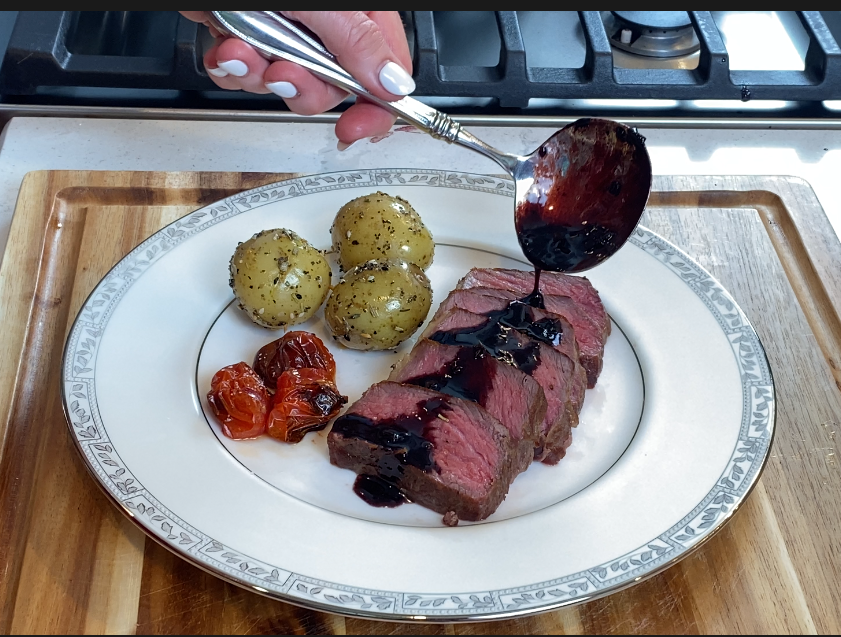
There’s a reason steak at a great restaurant tastes different from steak at home — and most of the time, it isn’t the cut of meat. It’s what happens in the pan after the steak comes out.
A red wine shallot reduction is one of the most classic pan sauces in French cooking, and it’s built entirely from what’s already in your pan. No special equipment. No restaurant-only ingredients. Just fond, wine, stock, and a little patience while the sauce does its work.
In this episode, I’ll show you exactly how to make it using the same 5-step pan sauce formula we’ve been building throughout this series — just adapted for steak.
What Makes a Red Wine Reduction Different
Most pan sauces are built the same way: fond, aromatics, liquid, reduce, finish. What changes is the liquid you choose — and red wine changes everything.
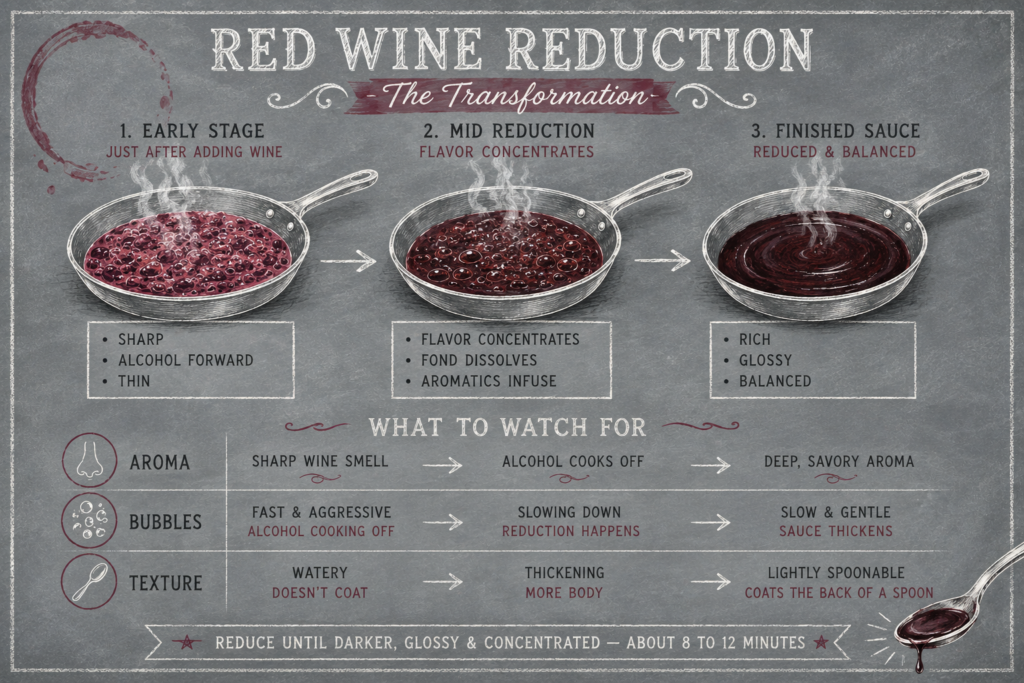
Wine brings three things a stock alone can’t: acidity, fruit depth, and tannins that balance the richness of the steak. As the wine reduces, the alcohol cooks off and the fruit notes concentrate. What starts as something sharp and boozy becomes something deep, glossy, and savory.
The key is giving the wine time to reduce before you add the stock. This is the step most home cooks skip — and it’s why their pan sauces sometimes taste thin or acidic. A brief wine reduction first protects the sauce’s body and keeps the flavor balanced.
The 5-Step Formula, Applied to Steak
If you’ve watched Episode 4, you already know this structure. Here’s how each step plays out with a red wine reduction:
Step 1 — Build the Fond: Sear the steak over high heat and leave it alone. Still contact with the pan builds the deep brown crust that becomes the flavor foundation of your sauce.
Step 2 — Aromatics: Once the steak comes out, lower the heat and add finely minced shallots. Shallots bring sweetness and depth without overpowering the wine.
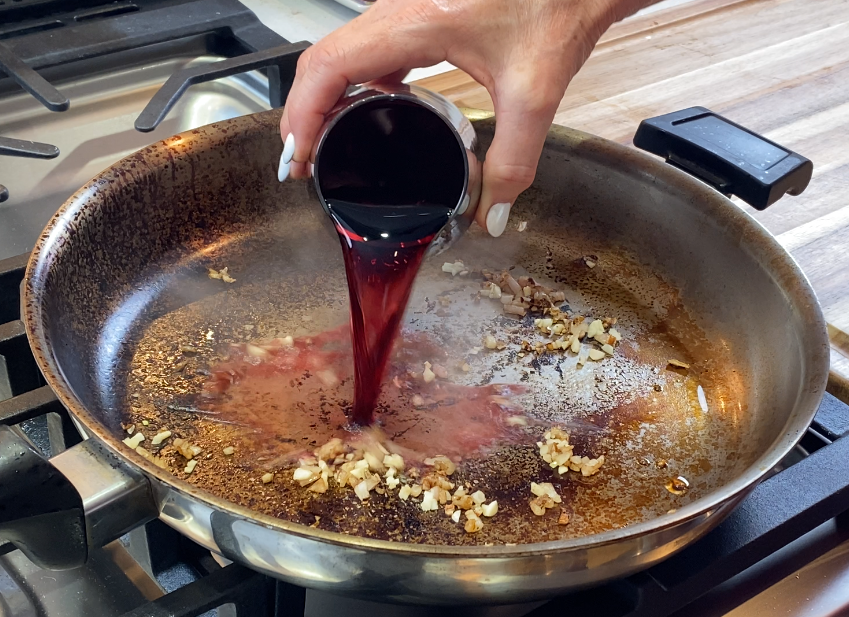
Step 3 — Deglaze: Add the red wine. As it hits the pan, it dissolves the fond and pulls all that concentrated flavor back into the sauce. Use a wine you’d actually enjoy drinking — a cabernet or merlot works beautifully.
Step 4 — Add Stock and Reduce: Let the wine reduce slightly first, then add beef stock and a sprig of fresh thyme. The sauce will simmer for 8 to 12 minutes, concentrating in flavor and body as the water evaporates.
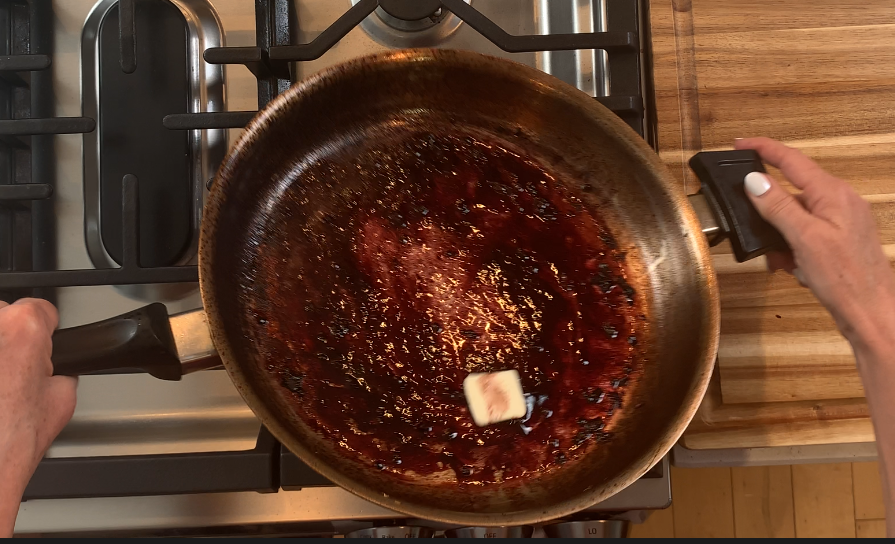
Step 5 — Finish with Butter: Lower the heat and swirl in cold butter. Gentle movement is the key here — it helps the butter melt smoothly into the sauce instead of turning greasy.
How to Know When It’s Done
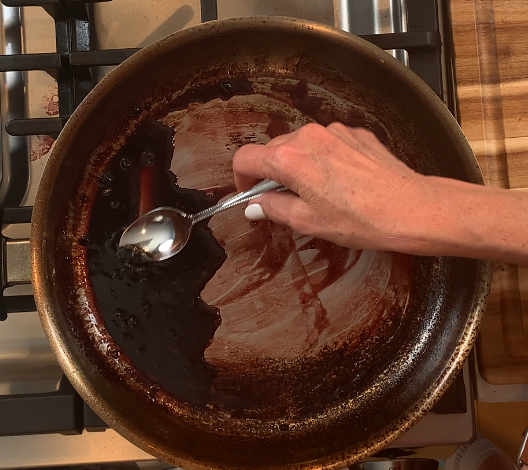
You’re not looking for a heavy gravy. A finished red wine reduction should be:
- Glossy — it should have a noticeable sheen
- Coating — it should lightly coat the back of a spoon
- Dark and rich — noticeably deeper in color than when you started
If your sauce is too thin, keep reducing. If it gets too thick before you’re happy with the flavor, add a small splash of stock to loosen it.
The Optional Finish: Balsamic or Worcestershire
Once you’ve tasted the sauce, you have two optional additions that can take it even further:
A teaspoon of balsamic vinegar adds brightness and a subtle sweetness that balances the tannins in the wine.
A teaspoon of Worcestershire sauce amplifies the savory, umami depth of the reduction.
You don’t need both — and you may not need either. Taste first, then decide.
Red Wine Shallot Reduction
Ingredients
Method
- Lower the heat to medium after removing the steak from the pan. Leave any fond (the browned bits) in the pan — that's your flavor base.
- Add the minced shallots and cook, stirring occasionally, until softened and translucent, about 2 to 3 minutes. Do not let them brown.
- Stir in the garlic and cook for 30 seconds until fragrant.
- Pour in the red wine and scrape up all the fond from the bottom of the pan. Let the wine reduce by about half, approximately 3 to 4 minutes. The sharp alcohol smell will fade as it reduces.
- Add the beef stock and thyme sprig. Bring to a simmer and reduce until the sauce is glossy and lightly coats the back of a spoon, about 8 to 12 minutes. Do not rush this step — the reduction is where the flavor concentrates.
- Remove the thyme sprig. Lower the heat to low.
- Swirl in the cold butter using gentle circular pan movements. Do not stir aggressively — gentle movement keeps the butter emulsified and the sauce glossy rather than greasy.
- Taste before adjusting. If you want more depth, add 1 tsp balsamic vinegar or Worcestershire sauce. Stir once to combine.
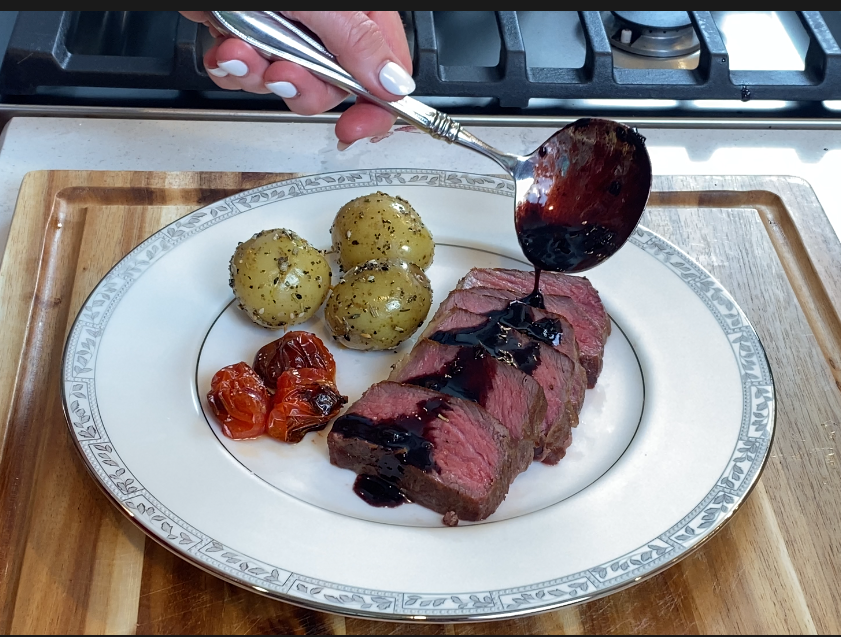
- Spoon immediately over steak and serve.
Video
Notes
Why cold butter matters: Warm or melted butter will break the emulsion and turn the sauce greasy. Cold butter, added off or over very low heat with a gentle swirl, melts gradually and binds with the reduced liquid to create that glossy, velvety finish you see in restaurant sauces. This technique is called monter au beurre in French cooking.
Why the fond is the foundation: Steak creates some of the deepest, darkest fond of any protein. Those browned bits dissolved by the wine carry concentrated Maillard reaction flavor that no amount of seasoning can replicate — which is why a pan sauce made from steak fond tastes so different from one made with store-bought stock alone.
If your sauce tastes too sharp or acidic: The wine likely needed more time to reduce before you added the stock. Continue simmering until the sharpness mellows. A small pinch of sugar or a teaspoon of balsamic can also help balance residual acidity without masking the wine flavor.
How I Cooked the Steak
The focus of this episode is the sauce, but I promised a full walkthrough of how I prepared the steak. You’ll find the complete method — including searing temperature, oven finish, and pull temperatures for every doneness level — in the recipe post below.
🥩 How to Cook a Perfect Steak — Sear and Oven Method
More Pan Sauces in This Series
This red wine reduction is Episode 5 in the Pan Sauces series. If you’re just joining us:
- Episode 4 — The Pan Sauce Formula: The 5-step method that all of these sauces are built on
- Episode 3 — Mushroom Cream Sauce
- Episode 2 — Garlic Parmesan Cream Sauce
- Episode 1 — The Cream Sauce Formula
FREQUENTLY ASKED QUESTIONS
What red wine should I use for a pan sauce? A dry red you’d actually drink — Cabernet Sauvignon or Merlot both work beautifully. Avoid anything labeled “cooking wine,” which is often salted and harsh. You don’t need an expensive bottle; you need a sound one, because as the wine reduces, whatever’s in it concentrates — including flaws. The alcohol cooks off during the reduction, leaving behind only the fruit and depth.
Why does my red wine sauce taste bitter or too sharp? Almost always because the wine didn’t reduce long enough before the stock went in. Raw wine carries a harsh, boozy edge and thin acidity; reducing it by half first cooks off the alcohol and concentrates the natural sugars into rounded depth. If it still tastes sharp, keep simmering — and a small pinch of sugar or a teaspoon of balsamic can balance residual acidity without masking the wine.
Can I make this without wine? You can approximate it, but it won’t be the same sauce — the wine is the whole point of this one. If you need an alcohol-free version, use extra beef stock with a splash of balsamic or a little grape juice for fruit, and accept that you’ll lose the tannin and complexity wine brings. For a true wine-free pan sauce, the cream or mushroom episodes are a better fit.
What cut of steak goes best with a red wine reduction? Any cut that builds good fond — the browned bits left in the pan are the sauce’s foundation. Ribeye, strip, and filet all work; the richer the sear, the deeper the sauce. The cut matters less than getting a hard, dark sear and leaving those browned bits in the pan for the wine to dissolve.
My sauce turned greasy after adding the butter. What happened? The butter broke instead of emulsifying — usually from too much heat or stirring too aggressively. Pull the pan to low or off the heat entirely, add the cold butter a small piece at a time, and use gentle swirling motions rather than vigorous stirring. The fat needs to disperse slowly into the liquid; rushing it pools the butter into a greasy layer on top.